Why Japan plans to burn the world’s biggest wooden structure
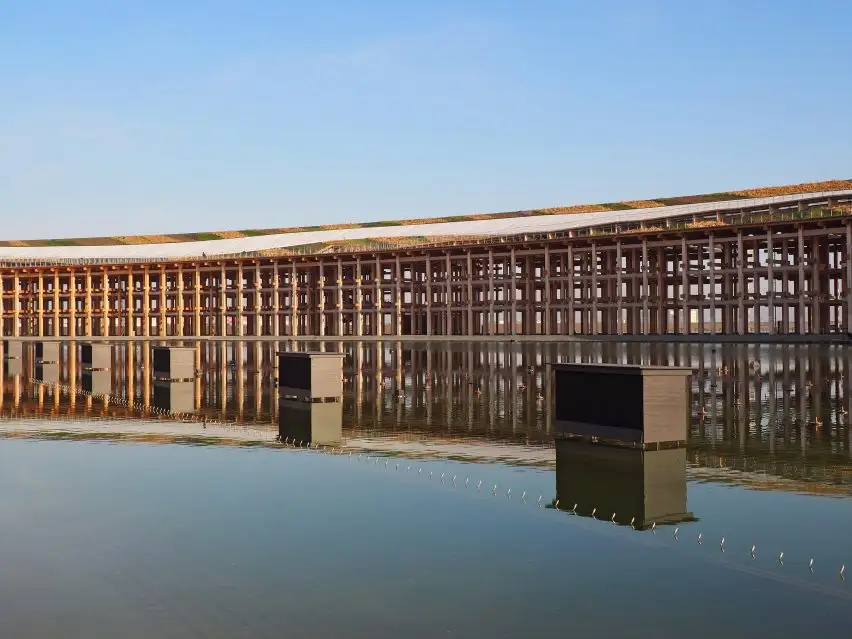
Japan is preparing to burn most of the world’s largest wooden structure — an outcome its architect never wanted.
The Grand Ring, designed by Sou Fujimoto for Expo 2025 Osaka, was a two-kilometre timber loop that wrapped around the entire fairground and briefly became one of the year’s most recognisable pieces of architecture.
In an interview with London-based architecture magazine Dezeen, Fujimoto said that despite the Ring’s scale, sophistication and global attention, its timber is now largely destined for fuel.
The Grand Ring opened in April and closed with the expo in October. Built as a temporary landmark, it combined modular construction with traditional Japanese joinery and covered more than 61,000 square metres.
Demolition began in early December, and only a 200-metre stretch is set to remain.
RECOMMENDED FOR YOU

Families wait for news as 140 remain missing from Indonesian ferry
Fujimoto said political leaders have effectively decided that around 70% of the timber will be chipped and burned, with roughly 20% potentially reused in smaller projects and just 10% preserved in place.
He described burning the wood as “the worst thing to do,” arguing that Japanese policymakers still lag behind global expectations on sustainability. He had hoped the Ring’s engineering would encourage authorities to keep it for longer.
The structure was assembled using Nuki joints — traditional slots that allow timber beams to be removed, replaced, transported and rebuilt with relative ease. The technique has kept temples standing for centuries, and Fujimoto designed the Ring with the same long-term potential in mind.
With a protective canopy and regular maintenance, he believes it could have lasted 50 to 100 years.
Yet the expo site was always planned as a temporary landscape, and officials appear determined to clear it quickly for redevelopment. Burning the timber is the fastest and cheapest option, even if it undermines the Ring’s sustainable design.
Fujimoto said he disagreed with the basic policy of dismantling the entire expo venue, calling it a missed opportunity for smarter long-term planning. Still, he emphasised that his responsibility was to deliver the best possible architecture within the constraints he was given.
The Grand Ring is now undergoing the final stages of demolition — its vast timber frame reduced piece by piece, much of it soon to become fuel.
RECOMMENDED FOR YOU

Syria’s first deaf basketball team dreams of international competition
This story is written and edited by the Global South World team, you can contact us here.