Will Senegal pay for its AFCON protest at the World Cup? — Opinion
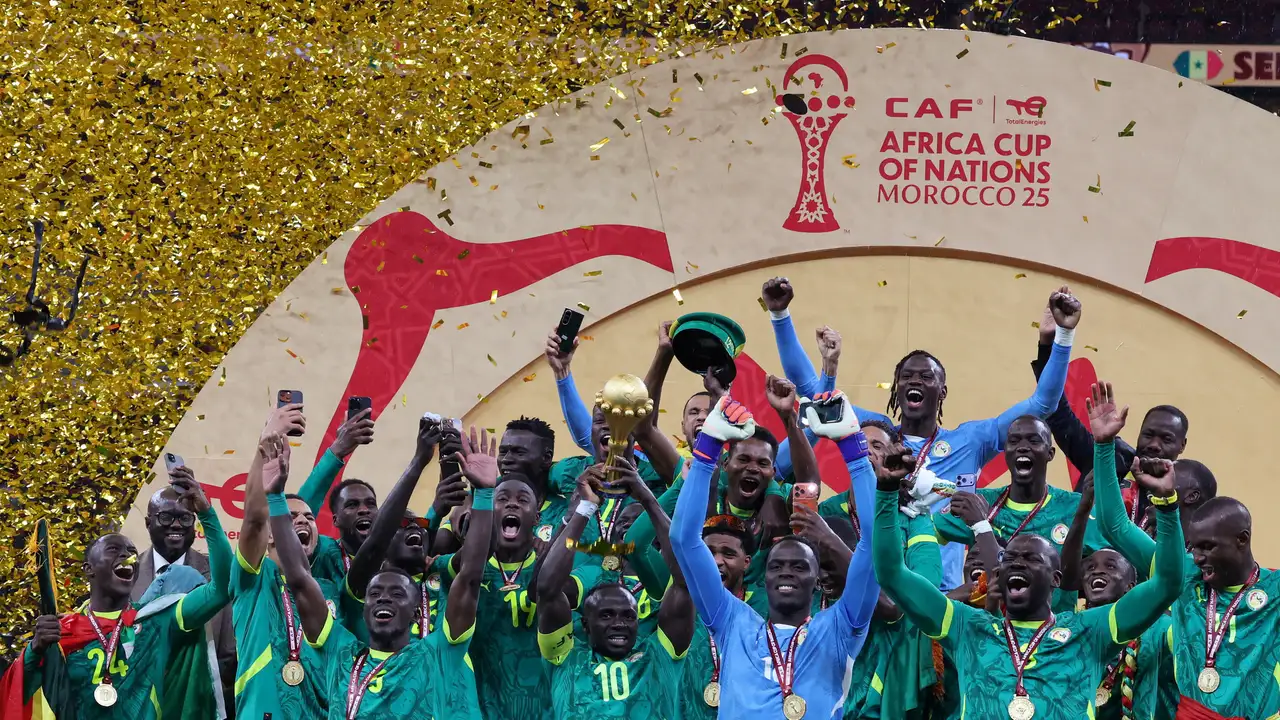
This past week, Senegalese from all walks of life, from New York’s Harlem to Dakar, Senegal’s capital, and beyond, celebrated their country’s second trophy grab at the African Cup of Nations (AFCON) tournament in Morocco.
The final match between Senegal and Morocco was 90-plus minutes of rain and tension with a dramatic ending.
As if the so-called “towel-gate” scandal during the final game hadn’t generated enough tension between the two teams, coach Pape Thiaw’s decision to have Senegal’s players walk off the field in protest of a contentious Video Assisted Referee (VAR) awarded penalty has left fans divided.
Across social media, many who support Senegal’s walk-off believe it is justified as they point to moments throughout the tournament when they felt Morocco had been given undue advantage by referees and being spared punishment even for fouls they committed.
The fans have criticised the Confederation of African Football (CAF) for poor officiating and criticised FIFA president Gianni Infantino for taking sides by calling out Senegal for their walkout, but not the Moroccan fans.
RECOMMENDED FOR YOU
Six countries account for three-quarters of Europe’s unicorn startups
“Unfortunately, we also witnessed unacceptable scenes on the field and in the stands,” Infantino wrote on Instagram as part of his message congratulating Senegal for their win and Morocco’s hosting of the tournament. “We strongly condemn the behaviour of some 'supporters' as well as some Senegalese players and technical staff members. It is unacceptable to leave the field of play in this manner, and equally, violence cannot be tolerated in our sport, it is simply not right.”
Since the tournament wrapped, Pape Thiaw has apologised for calling on his players to walk off. The Moroccan football federation, on the other hand, has hinted at its plans to pursue legal action over their final match with Senegal, indicating that the 15-minute delay in play impacted the result.
While CAF has condemned the “unacceptable behaviour from some players and officials” in a statement, it has not stated what form of punishment, if any, Senegal would face. CAF’s statement noted that it was “reviewing all footage and will refer the matter to competent bodies for appropriate action to be taken against those found guilty.”
The question on many minds, therefore, is what kind of punishment Senegal is likely to face.
Many commentators have pointed to FIFA regulations that call for a docking of 3 points from the team that walks off during a match. That rule references when a team walks off the pitch and decides not to continue the game. In this case, Senegal returned to finish the game. So do they lose three points?
Sports journalist Benedict Owusu says it is not likely, as this was the final match of the tournament.
But will there be punishment? It is highly likely that there would be some form of punishment based on CAF’s review of footage from the match, and those who are identified as culprits. Benedict explains that punishment in this case could be monetary.
“Potential punishments from CAF could be heavy financial fines, long-term suspensions for coaching staff, and key players who disrupted the game. It could be 4–6 matches and potential disqualification from future tournaments.”
RECOMMENDED FOR YOU
Burkina Faso to stop importing armoured vehicles, Traore says
That is likely to be the extent of the punishment, as this was a CAF-related event and not FIFA. “The only time a punishment from a CAF tournament is carried over to a FIFA tournament is for player sanctions. So, for instance, if a player was red-carded in the final or in the qualifiers, that player will serve the ban should their team qualify for the World Cup,” Benedict adds.
While CAF pores over video footage of the final match before reaching a decision, the Teranga Lions of Senegal can focus their energies on the upcoming World Cup this summer. The only worry they may have would be about the ever-changing and expanding US immigration policy. Senegal and the Ivory Coast, which have both qualified for the World Cup, were among the 15 African nations slapped with partial bans from entering the United States in December.
It is highly unlikely that Senegal will play their World Cup matches in half-empty stadiums as there is a sizeable Senegalese population in the United States. That aside, the large Senegalese diaspora in France, especially those with French passports, will be able to travel to the US, probably with less scrutiny than those with Senegalese passports.
In African football, the fans have always been the 12th player on the team. For many fans, being able to watch their national team play in person is akin to a religious experience that is miles away from the television experience. It is why, despite the many challenges with air travel in Africa, thousands of fans still found their way to Morocco to support their national teams.
Unfortunately, that may not be the case this summer as nearly 30 African countries face full or partial travel bans to the US. But whether at the stadium or on television, the one thing that is certain for now is that the Teranga Lions are the new champions of African football, and many would look up to them for a repeat of what happened in Rabat. Not the walkout, but victory in all their matches and possibly best Morocco’s 2022 semi-final finish at the global tournament.
The opinions and thoughts expressed in this article reflect only the author's views.
Nii Akrofi Smart-Abbey is an award-winning international journalist, writer, and host of the A55 Podcast. Nii Akrofi has worked with local and international media in Ghana, Congo and the United States. He has contributed to news platforms like Zenger News, Africanews, W42ndST, and foreignpresscorrespondents.com.
