Williams-Sonoma leads global furniture industry by market value in 2026
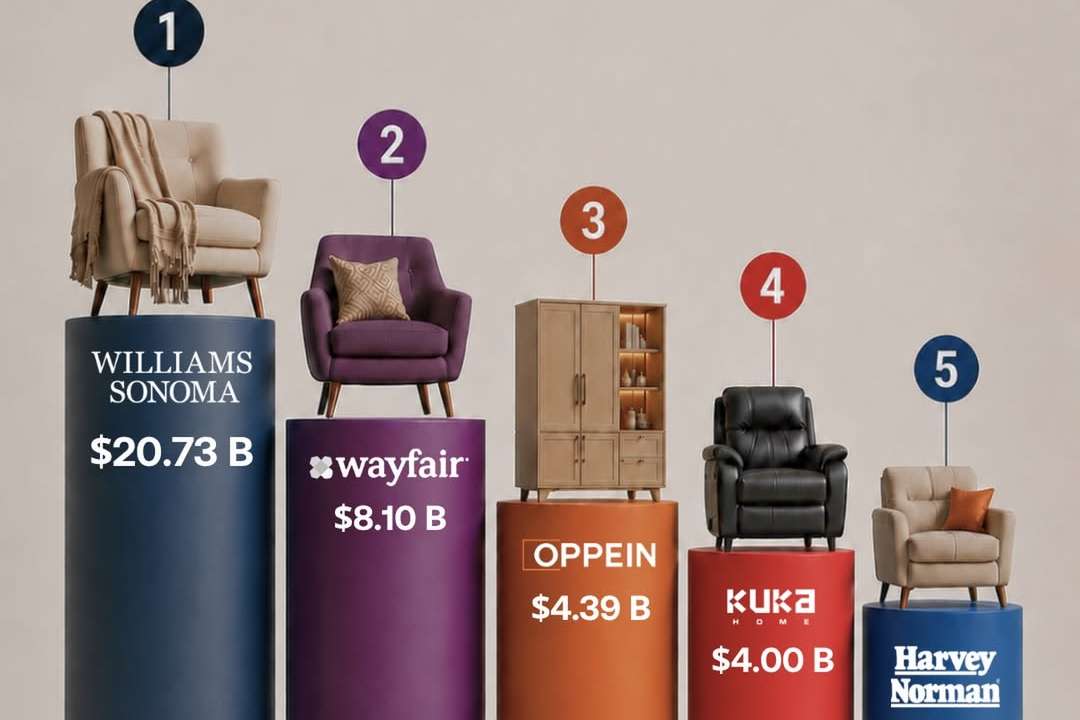
U.S.-based Williams-Sonoma has emerged as the world’s largest publicly traded furniture company by market capitalisation in 2026, underlining the growing dominance of premium home furnishing brands in a rapidly evolving global retail market.
U.S.-based Williams-Sonoma has emerged as the world’s largest publicly traded furniture company by market capitalisation in 2026, underlining the growing dominance of premium home furnishing brands in a rapidly evolving global retail market.
According to data from Companies Market Cap for May 2026, Williams-Sonoma holds a market value of roughly $20.73 billion, placing it well ahead of competitors in the global furniture sector.
Online furniture retailer Wayfair ranked second with a market capitalisation of approximately $8.10 billion, followed by China’s Oppein Home Group at $4.39 billion and KUKA Home at $4.00 billion. Australian retail giant Harvey Norman rounded out the top five at roughly $3.92 billion.
The rankings reflect major shifts in consumer behaviour since the pandemic-era housing boom, which accelerated global demand for home furnishings, interior renovation and e-commerce-driven furniture sales.
Williams-Sonoma, which owns brands including Pottery Barn and West Elm, has benefited from strong demand for premium home décor and higher-end furnishings, particularly in North America. Analysts say the company’s combination of physical retail operations and digital sales platforms has helped it outperform many traditional furniture retailers.
Wayfair’s position near the top of the rankings highlights the continued expansion of online furniture retailing, despite broader concerns over slowing consumer spending and higher interest rates in several major economies.
China’s presence through Oppein and KUKA Home also reflects the growing scale of Asia’s furniture manufacturing and home improvement industries. China remains one of the world’s largest furniture exporters, supported by great domestic demand and integrated supply chains.
Harvey Norman’s inclusion among the top five underscores the resilience of Australia’s retail sector, where demand for furniture and household goods has remained relatively stable despite inflationary pressures.
The global furniture market has undergone a significant transformation over the past decade, driven by urbanisation, remote work trends, rising housing costs and growing interest in home design.
Industry researchers say consumers are increasingly prioritising multifunctional furniture, sustainability and digital shopping experiences, forcing traditional retailers to adapt to changing expectations.
The rankings also highlight the widening gap between dominant global furniture brands and smaller regional competitors struggling with supply chain disruptions, shipping costs and fluctuating raw material prices.
Despite concerns over slower global economic growth, furniture companies tied to premium branding, digital commerce and international supply networks continue attracting strong investor interest.
This story is written and edited by the Global South World team, you can contact us here.