World War II remains costliest U.S. war at $4.7 trillion
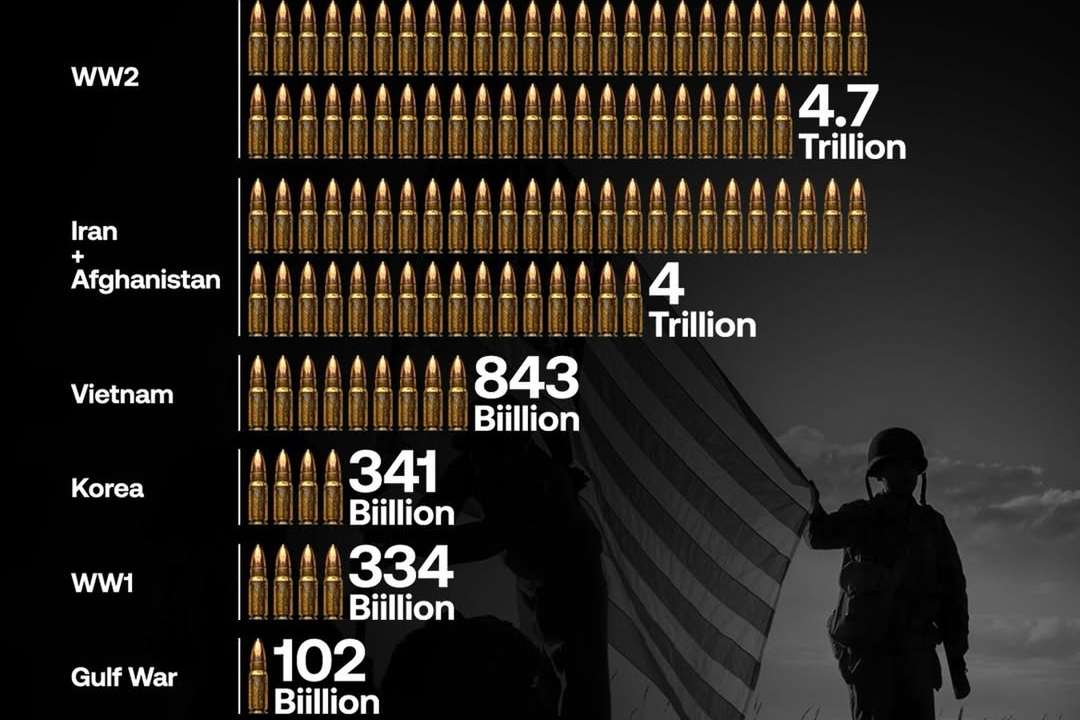
The world has experienced all forms of war over the years; however, World War II remains the most expensive conflict in U.S. history when adjusted for inflation, costing roughly $4.7 trillion, according to historical estimates.
The world has experienced all forms of war over the years; however, World War II remains the most expensive conflict in U.S. history when adjusted for inflation, costing roughly $4.7 trillion, according to historical estimates.
The United States spent an estimated $4.7 trillion (inflation-adjusted) on World War II between 1941 and 1945, making it the most expensive war in American history.
According to historical cost estimates analysed by Norwich University and U.S. Naval History and Heritage Command, the spending surge was driven by massive industrial mobilisation, troop deployments across multiple continents and large-scale wartime production.
The conflict required the United States to convert large parts of its economy to wartime manufacturing, producing ships, aircraft, tanks and weapons on an unprecedented scale.
RECOMMENDED FOR YOU

Premier League dominates summer transfer spending as clubs set new record
The wars in Afghanistan and Iraq, launched after the September 11 attacks, rank as the second most expensive U.S. conflicts, with total costs estimated at around $4 trillion.
Research from the Costs of War Project at Brown University’s Watson Institute shows that the total financial burden includes military operations, reconstruction, veterans’ healthcare and long-term interest payments on war borrowing.
The study notes that these wars became some of the longest military engagements in modern U.S. history.
The Vietnam War ranks third in inflation-adjusted costs at roughly $843 billion, according to historical analyses cited by Norwich University and U.S. government sources.
The conflict, which lasted from the mid-1950s to 1975, required sustained troop deployments and extensive air and naval operations.
Other major conflicts include:
- Korean War — about $341 billion
- World War I — about $334 billion
Both wars required large-scale mobilisation and had significant long-term economic impacts on the United States.
Additionally, the 1990–1991 Gulf War cost about $102 billion, though a large portion of that expense was offset by financial contributions from U.S. allies, according to reports summarised by the U.S. Congress and historical defence spending analyses.
RECOMMENDED FOR YOU

Turkmenistan Roundup: Halk Maslahaty preparations, smart energy, and Caspian diplomacy
More limited conflicts or short military operations tend to cost far less, though they can still involve billions in military expenditures.
For example, a brief six-day military campaign against Iran since February 28, 2026, is calculated at roughly $11 billion, reflecting the high cost of modern precision warfare and advanced weapon systems even during short engagements.
The enormous financial burden of large-scale wars has shaped U.S. foreign policy and defence strategy over time.
Despite advances in military technology and changes in warfare, the historical data show that major conflicts remain among the most expensive undertakings any nation can face.