Billionaire quant investing pioneer and philanthropist James Simons dies at 86
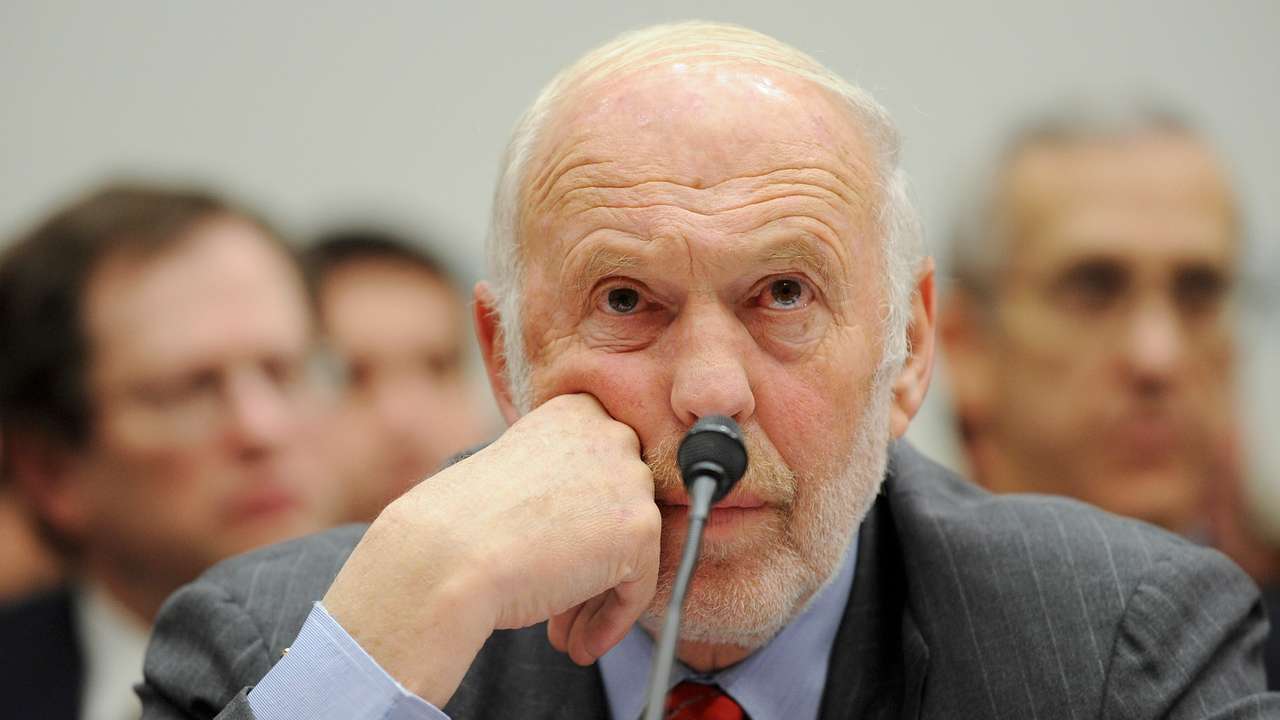
Billionaire quant investing pioneer and philanthropist James Simons dies at 86
By Niket Nishant, Svea Herbst-Bayliss and Nell Mackenzie
Billionaire investor James Simons, the mathematician and Cold War code-breaker who founded one of the world's most prominent and profitable hedge funds, Renaissance Technologies, has died at 86, his foundation said on Friday.
The Simons Foundation did not give a cause of death.
RECOMMENDED FOR YOU

Six countries account for three-quarters of Europe’s unicorn startups
Sixty years ago Simons -- who preferred to be known as Jim -- shifted course from teaching mathematics and working in U.S. intelligence to investing. His pioneering use of computer signals for trading decisions earned him the nickname "Quant King."
With a net worth estimated at $31 billion by Forbes, Simons also became a prominent philanthropist, giving away billions of dollars during his lifetime to support medical and science research, teaching and Democratic candidates.
"Churchill said ‘great and good are seldom the same man.’ Jim Simons was the exception that proves Churchill's rule," said Clifford Asness, managing and founding principal of AQR Capital Management, referring to British war-time Prime Minister Winston Churchill.
As a mathematician, Simons was used to working large sets of data and comfortable finding patterns to guide buying and selling.
He founded Renaissance in 1978 in East Setauket, New York, 70 miles east of Wall Street. He quickly forged a new way to invest, laying the foundations of quantitative trading that has been embraced by dozens of firms in recent years.
"We hire physicists, mathematicians, astronomers and computer scientists and they typically know nothing about finance," Simons, told a 2007 New York conference. "We haven't hired out of Wall Street at all," he added.
On Wall Street Simons was revered, as well as a little feared.
Renaissance, whose Medallion Fund delivered average annual returns of more than 60% over three decades, became one of the world's most successful hedge funds under Simons. He retired as chief executive officer in 2010 and stepped down as chairman in 2021.
RECOMMENDED FOR YOU

Olympic flame arrives on African soil for first time as Senegal begins Dakar 2026 countdown
Simons was secretive about how his firm made money. He was described as someone who viewed the markets as a code to be cracked, Wall Street Journal writer Gregory Zuckerman wrote in his 2019 book "The Man Who Solved the Market."
The Medallion trading system relied on buying and selling that works in concert to generate high returns at low risk across asset classes, in such a way that patterns normally remain hidden to other traders.
In 1994, Simons and his wife, Marilyn, established the Simons Foundation, which supports scientists and organizations worldwide in advancing the frontiers of research in mathematics and the basic sciences.
He is survived by his wife, three children, five grandchildren, and a great-grandchild.
"I did a lot of math. I made a lot of money, and I gave almost all of it away," Simons told a 2022 event honoring Abel Prize winners who have been singled out for their mathematical achievements.
"That's the story of my life."
This article was produced by Reuters news agency. It has not been edited by Global South World.