Brazil leads 2025 fertiliser imports
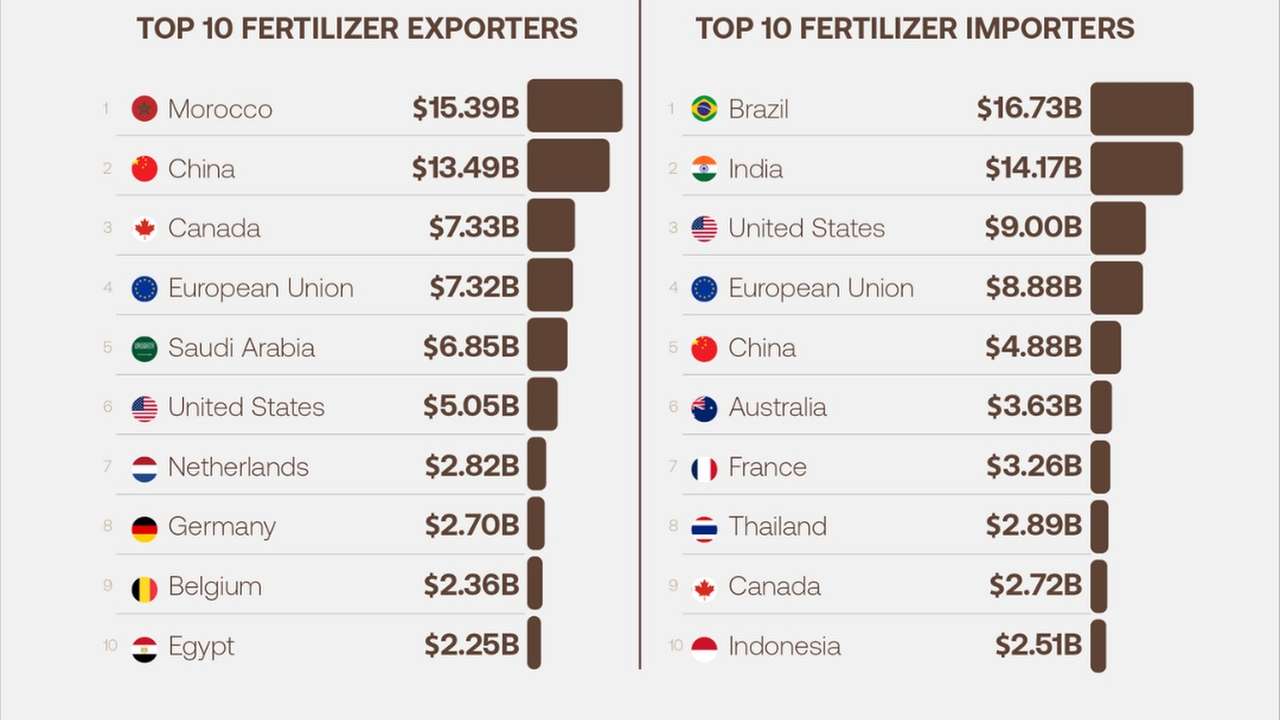
Brazil imported $16.73 billion worth of fertiliser in 2025, the highest total in World Bank trade data. India followed with $14.17 billion, while the United States ranked third at $9 billion.
Main points
- Brazil led reported imports at $16.73 billion.
- Russia supplied about a quarter of Brazil’s imports by value.
- Morocco led reported exports at $15.39 billion.
Brazil spent $16.73 billion on fertiliser imports in 2025, up 11.4% from a year earlier and the highest total in World Bank trade data. India ranked second at $14.17 billion, followed by the United States at $9 billion.
Russia remained Brazil’s biggest supplier, accounting for $4.36 billion, or about a quarter of its import bill. China supplied $3.15 billion, up from $2.11 billion in 2024. That increase accounted for roughly 60% of the rise in Brazil’s spending on imported fertiliser. Canada was the third-largest supplier at $1.75 billion, followed by Morocco at $1.20 billion and Nigeria at $750 million.
The volume Brazil bought also hit a record. The country imported 45.5 million tonnes in 2025, up from 44.3 million tonnes in 2024, according to its national food supply agency, Conab. Mato Grosso, Paraná and São Paulo led fertiliser consumption, while Brazil shipped more soybeans, maize and soybean meal abroad.
Morocco recorded $15.39 billion in fertiliser exports, ahead of China at $13.49 billion and Canada at $7.33 billion. The European Union exported $7.32 billion to markets outside the bloc, while Saudi Arabia recorded $6.85 billion. The United States exported $5.05 billion, making its imports about 78% larger than its exports by value. Russia has no entry in the World Bank’s 2025 export table, so Morocco’s lead applies to the exporters listed.
RECOMMENDED FOR YOU

Thieves drill through wall, steal $3 million in Chile bank heist
Brazil imported 28.46 million tonnes of fertiliser in the first nine months of 2026, down about 16% from the same period in 2025, according to Conab. Global fertiliser prices rose nearly 1% in October from September. The World Bank expects them to average 14% higher in 2026 than in 2025, after an early surge in urea prices, before returning to 2025 levels in 2027.
This story is written and edited by the Global South World team, you can contact us here.