Bridging the Sino-US trust deficit and the peril of failing to try: Opinion
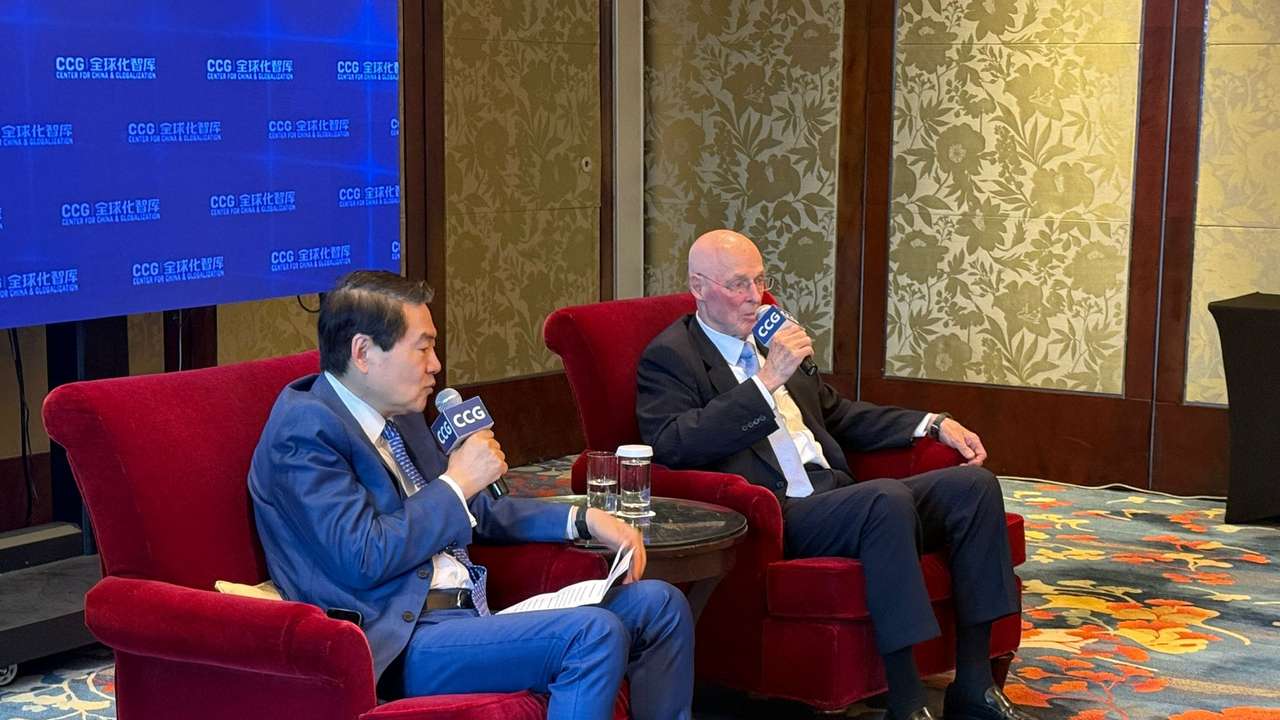
Watching former US Treasury Secretary Henry Paulson address a gathering at the Centre for China and Globalization (CCG) in Beijing, I was struck by a profound sense of contrast.
During my years as a foreign correspondent based in Washington, D.C., beginning in 2012, I witnessed the enduring impact of U.S.–China Strategic and Economic Dialogue , the bilateral dialogue mechanism Paulson was instrumental in establishing.
Launched in 2006, that dialogue proved invaluable in navigating the turbulent 2008 financial crisis, helping to usher in what many now view as a golden era of Sino-US cooperation.
Paulson built a reservoir of goodwill that granted him rare access and insight. Indeed, as he recounted in his book Dealing with China, President Xi Jinping personally shared with him the vision for a new development zone in Hebei province, south of Beijing.
RECOMMENDED FOR YOU

Indonesia drops 3.2 tonnes of dry ice to combat wildfire haze
Paulson became the first to reveal to the world the blueprint for the Xiong'an New Area—China’s ambitious "millennium plan". Yet, the geopolitical landscape Paulson surveys today is drastically different.
The trust deficit
At the CCG event, he characterised the current bilateral relationship as one of "managed stability"—a fragile equilibrium rooted in a state of "mutually assured economic disruption".
Both nations are acutely aware of their capacity to derail the other’s economy. However, as Paulson rightfully noted, the true peril we face is not the much-debated trade deficit, but rather a profound and widening "trust deficit".
Bridging this divide is an urgent global imperative. We are staring down a relatively high probability of future global financial disruptions, and with global sovereign debt at dizzying heights, the international community has significantly less flexibility to respond to an economic crisis. In such a climate, maintaining open lines of communication between US and Chinese economic monitors is not a diplomatic luxury, but a vital necessity. Whilst dialogue alone cannot predict a financial crash, pre-established trust is essential to minimise the global fallout when it inevitably occurs. But how do we begin to rebuild that trust?
The most viable bridge remains the undeniable reality of our planet's health. As Paulson highlighted, environmental crises—specifically climate change and biodiversity destruction—are not mere geopolitical risks; they are absolute certainties that no single country can solve alone.
A few years ago, whilst reporting from the World Economic Forum in Davos, I asked China’s Special Climate Envoy Xie Zhenhua and US Climate Envoy John Kerry about the state of their collaborative efforts. Both men emphatically affirmed the tightness and necessity of Sino-US cooperation in the climate sphere.
RECOMMENDED FOR YOU

LIVE: Lula stays in power, beats Bolsonaro in stunning comeback
Today, navigating the drastically altered political realities and protective policies of Donald Trump’s second term, that era of seamless alignment can feel like a distant memory. Despite these shifting political winds, Paulson used his appearance in Beijing to emphasise that the immense, untapped potential for Sino-US collaboration in conservation and climate remains.
The Paulson Institute has long been at the vanguard of this effort, having famously helped introduce the national park system to China through groundbreaking pilot programmes in Yunnan province.
China, for its part, has made commendable strides on the supply side, leading the charge in electric vehicles, batteries, solar panels, and the diversification of energy sources. The geopolitical headwinds are undoubtedly fierce, and for today's global CEOs facing unpredictable export controls and sanctions, the temptation to retreat is strong.
Yet, Paulson’s warning remains stark: walking away from China is done "at your own peril".
Overcoming the defining challenges of our era demands pragmatic leadership. The world’s two largest economies must look beyond their mutual suspicion and close the trust deficit. The cost of failing to do so is simply too high for the rest of the world to bear.
Du Yubin is a journalist and chief editor for CGTN. He was stationed in Washington, D.C. and London for six years each, focusing on China-US and China-EU relations. He has over 16 years of experience in international communication and new media. The views expressed in this article are the author’s own.
