Can Indonesia be Asia’s next EV powerhouse?
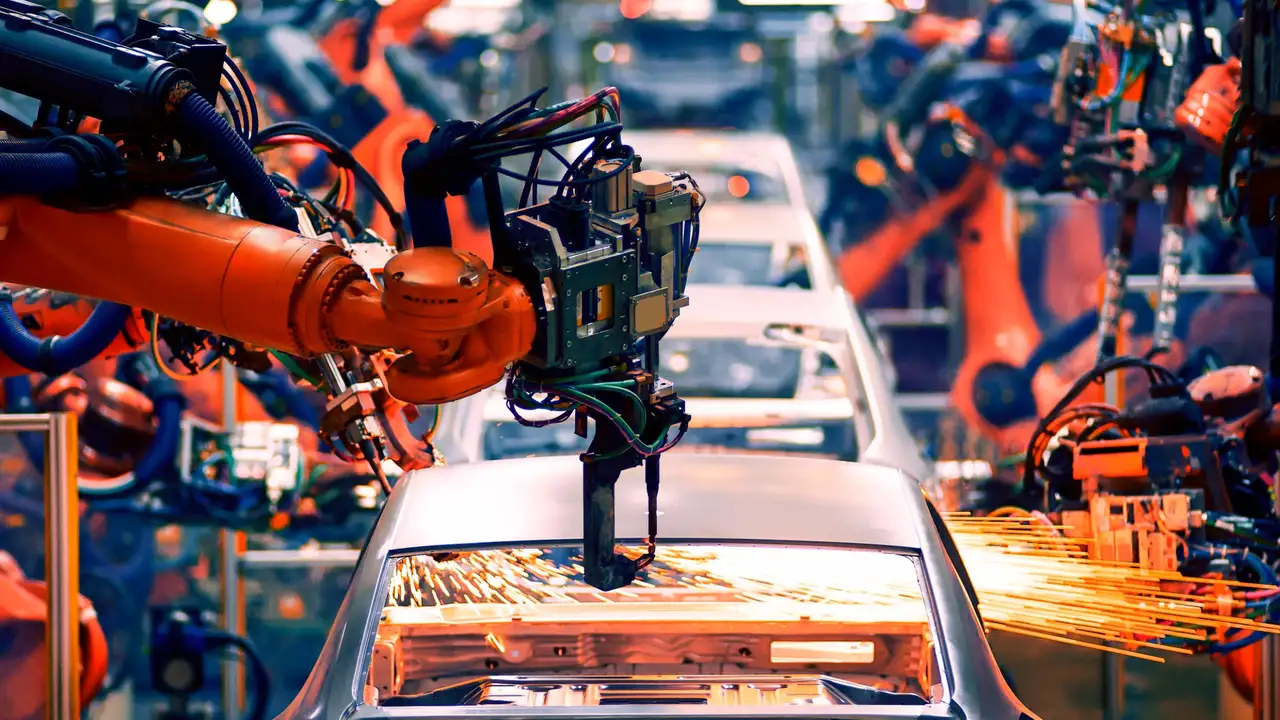
Already Southeast Asia’s largest economy and a treasure trove of critical minerals, Indonesia is shifting into higher gear in electric-vehicle (EV) production as the lingering oil crisis draws greater attention to alternatives to petrol-powered transport.
Carmakers have established manufacturing bases, and battery factories are taking root. But President Prabowo Subianto has set another ambition: mass production of homegrown electric cars by 2028.
After all, an Indonesian EV powerhouse is more than a distant prospect.
By combining nickel resources, investment incentives and Southeast Asia’s largest domestic automotive market, the country is positioning itself to capture more of the value of electrification, from battery production to vehicle assembly.
- Mobility and Advanced Manufacturing is one of eight strategic pillars of the New Asia Forum. The forum will discuss investment opportunities throughout the region
Now, the question becomes how far those advantages can take it towards becoming a regional manufacturing hub, or eventually competing with China.
RECOMMENDED FOR YOU

LIVE: Lula stays in power, beats Bolsonaro in stunning comeback
Attractive market
Across West Java, that ambition is becoming visible on factory floors.
South Korea’s Hyundai announced a $1.55 billion investment in 2019 to build its first Indonesian car plant. China’s Wuling, which began manufacturing in the country in 2017, started local EV production in 2022.
Vietnam’s VinFast inaugurated its Subang factory in December 2025, with initial annual capacity of 50,000 vehicles and first-phase investment exceeding $300 million. China’s BYD opened a Subang plant in September 2026 capable of producing 150,000 vehicles annually.
These companies, and more, are competing for the same burgeoning market.
Battery EV wholesales reached 103,931 units in 2025, according to Jessada Thongpak, a senior analyst covering light vehicle production across Southeast Asia at Mobility Global. Indonesia aims to have 2 million electric cars and 13 million electric motorcycles on its roads by 2030.
For manufacturers, however, the attraction extends beyond potential buyers.
“Indonesia’s appeal comes from the combination of a large long-term consumer market domestically, an established manufacturing base and access to battery raw materials,” Thongpak told Global South World.
RECOMMENDED FOR YOU

‘It is Bolsonaro!’ - Supporters rally against Lula ahead of Brazil runoff
“Its opportunity is to turn those advantages into deeper component localization and a broader range of export output,” he added.
Government support
Alongside those resources, government support has helped persuade manufacturers to establish production, said Edmund Araga, president of the Asian Federation of Electric Vehicle Associations.
In 2023, it announced a programme covering sales of 200,000 electric motorcycles and 35,900 electric cars, with payments of 7 million rupiah ($385)to producers and retailers for each eligible new motorcycle sold or conventional motorcycle converted to electric power.
In 2024, it introduced luxury-tax relief for qualifying EVs and import-tax exemptions running through 2025. It also extended a reduction in VAT for eligible EV purchases to 1%, from 11%.
In August, officials outlined stimulus covering 500,000 electric motorcycles, following an earlier proposal for a subsidy of 5 million rupiah ($275) per purchase. Support for charging infrastructure has included licensing assistance and financial incentives to encourage investment beyond vehicle assembly.
Indonesia’s sovereign wealth fund Danantara said its financial subsidiaries, including state-owned banks, were ready to offer lower-interest loans with longer repayment periods to support the national electric motorcycle programme.
“That’s how they were able to attract Hyundai and Wuling and other manufacturers to build plants — because the incentives they give out are good,” Araga told Global South World.
RECOMMENDED FOR YOU

‘Hamas could reach Paris’ - Netanyahu warns Macron amid France protests
Stiff regional competition
Those investments strengthen Indonesia’s position, but its regional competitors retain advantages built over decades.
Thailand has deeper supplier networks, stronger engineering capabilities and established export programmes for pickups, pickup-based SUVs and smaller passenger cars. Vietnam offers competitive costs and rapid market growth; Malaysia benefits from good infrastructure and a strong electronics base.
“Thailand is currently the more mature export hub, while Indonesia has the stronger domestic-scale and EV industrialization story,” Thongpak told Global South World.
Indonesia’s domestic demand remains its investment anchor, but exports are increasingly necessary to sustain efficient production.
Its wider automotive industry produced approximately 1.15 million vehicles in 2025 and exported around 518,000 completely built-up units, according to Thongpak. Exports were equivalent to roughly 45% of output, although inventory and timing differences prevent direct reconciliation.
That business remains concentrated among selected manufacturers and models. Meanwhile, approximately 2.59 million units of installed annual capacity imply utilisation of roughly 44% against reported production.
“The greater risk is model-specific overcapacity: production lines for vehicles that cannot achieve domestic scale or secure export allocations,” Thongpak said.
RECOMMENDED FOR YOU

Student-backed list claims victory in Serbia as Vucic concedes defeat
Araga nevertheless sees Indonesia’s domestic market as a foundation for a larger international role. “Why not?” he said when asked whether it could eventually rival China in EV manufacturing.
What’s next?
For now, manufacturers must navigate a market in which electrification is advancing at different speeds.
Thongpak forecasts light vehicle production of 1.27 million units in 2026, supported by recovering demand, local EV manufacturing and exports.
Alongside foreign investment, the government is pursuing its own production ambitions.

The development linked to Prabowo’s homegrown-car plan would initially occupy 60 hectares and produce up to 50,000 vehicles annually. An eventual expansion to 539 hectares would raise capacity to as much as 300,000 vehicles a year.
Indonesia has, in many ways, shown it has what it takes to attract manufacturers to build.
But their next decisions — which models to localise, which components to source domestically and which markets to serve — will determine how much of that investment becomes sustained production.
RECOMMENDED FOR YOU

New Asia Forum: Indonesia to set out progress on sustainable AI data centres
This story is written and edited by the Global South World team, you can contact us here.