Colombia’s presidential race heads to high-stakes runoff between right and left
Colombia’s presidential election will head to a runoff on June 21 after no candidate secured the majority needed to win outright in the first round, setting up a contest between right-wing candidate Abelardo de la Espriella and left-wing candidate Iván Cepeda.
Preliminary results from Colombia’s National Registry show de la Espriella, representing the Defenders of the Homeland movement, received approximately 10.4 million votes, or 43.7%, while Historical Pact candidate Cepeda secured nearly 9.7 million votes, or 40.9%.
The outcome highlights a deeply polarised political landscape, with voters largely backing candidates from either the political right or left, while centrist contenders failed to gain significant support.
The runoff campaign is expected to focus on issues including security, drug trafficking, economic management, democratic institutions and the legacy of President Gustavo Petro’s government.
Speaking to supporters after advancing to the second round, de la Espriella presented the election as a defining moment for the country.
RECOMMENDED FOR YOU
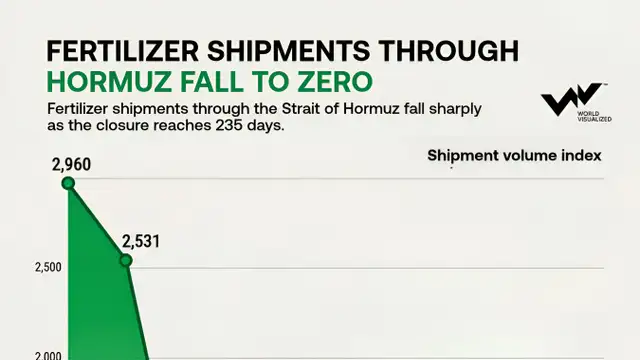
Fertilizer shipments through Strait of Hormuz fall to zero as food security fears grow
“This is tyranny or institutionality. The past or the future, complicity or independence and patriotism,” he said. “There is no more room for indifference.”
He also accused his rival of links to criminal groups, describing Cepeda as “a bandit allied with narco-terrorists.”
De la Espriella said that if elected, he would uphold judicial independence, work with local governments regardless of political affiliation, reduce poverty, strengthen security, combat drug trafficking and restore state authority across Colombia.
Cepeda, meanwhile, criticised what he described as foreign involvement in the election after Ecuadorian President Daniel Noboa publicly congratulated de la Espriella and criticised the left-wing candidate on social media.
“Foreign governments are meddling in our elections,” Cepeda said.
He also called for greater scrutiny of his opponent’s campaign finances and questioned the scale of spending behind the campaign.
Cepeda argued that the runoff represents a choice between preserving social policies advanced under the current administration and a shift toward a conservative government.
“Mr de la Espriella represents fascism, mafia fascism,” he said, warning that social gains achieved during the current government could be reversed if his opponent wins.
RECOMMENDED FOR YOU

Can Indonesia be Asia’s next EV powerhouse?
The June 21 runoff will determine whether Colombia continues with the left-leaning political agenda associated with the Historical Pact or moves toward a more conservative, security-focused approach under de la Espriella. With the first-round margin relatively narrow, both candidates are expected to intensify efforts to attract voters whose preferred candidates were eliminated, making coalition-building and voter outreach central to the final stage of the campaign.
This story is written and edited by the Global South World team, you can contact us here.
