Combatting Nigeria’s abduction crisis requires a community-centred approach — Opinion
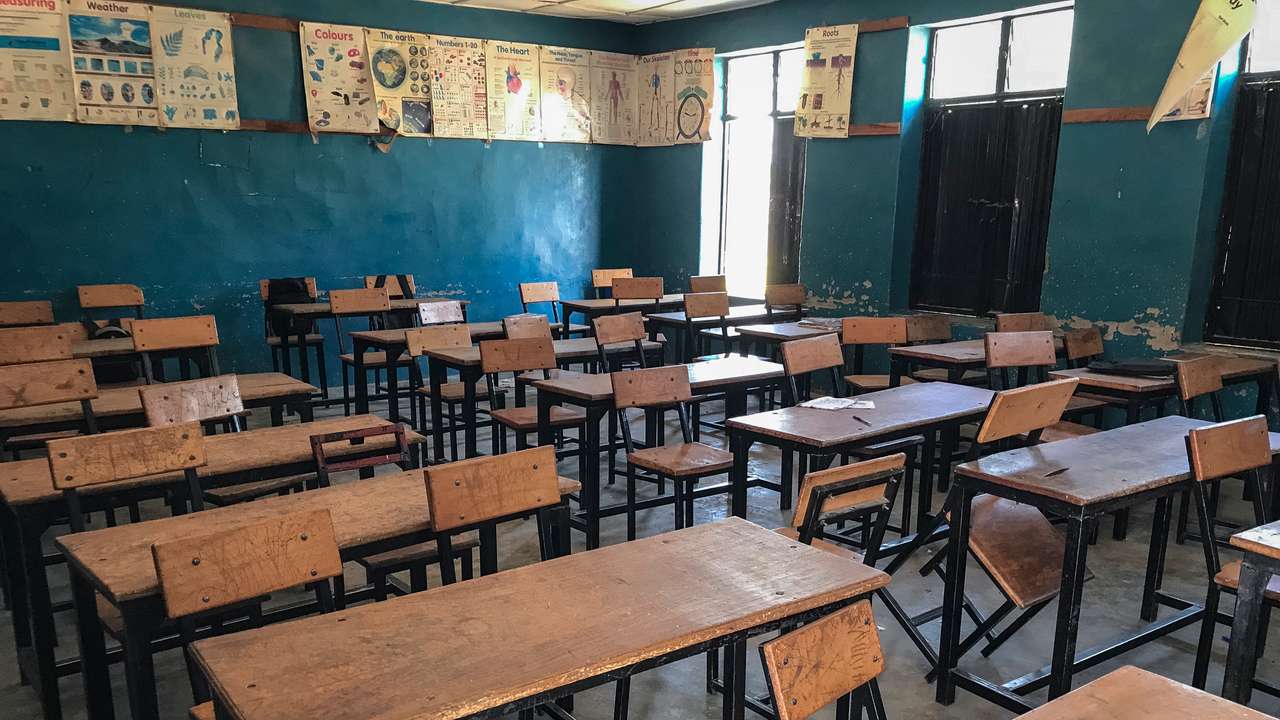
Nigeria’s abductions have reached a terribly alarming level. Nowhere in the world should school children live with the fear of being raided and forced into thick undergrowth at gunpoint. More so, such atrocities must never be this frequent.
The May 15 harrowing abduction of 39 schoolchildren and seven teachers from three schools in Oyo State, South-West Nigeria shook the affected families and the wider public. Days later, Michael Oyedokun, a mathematics teacher, was murdered in cold blood.
“Please, we are begging the government, we want our children back, alive,” pleads Aduke Balogun, a roadside soft drinks and bread seller and the mother of kidnapped eight-year-old Kausarat. “Every day, I pray and hope for their safe return,” she tells Reuters.
The Oyo State incident adds to the ever-growing list of similar cases. In another attack of November 2025, heavily armed gunmen stormed St Mary’s, a Catholic school in Niger state, in the country’s North-Central region, dragging off over 250 students and staff. Although state intervention led to the victims’ rescue, the emotional toll on their parents and the wider public deepened the sense of insecurity and fear.
Weeks earlier, the worsening violence and surging kidnappings had attracted the attention of US President Donald Trump, who called Nigeria “a disgrace”, threatened to halt all aid to Africa’s most populous nation, and to “go into that now disgraced country, guns-a-blazing” if the government didn’t arrest the situation quickly.
RECOMMENDED FOR YOU

‘They can’t hold out’ - Trump predicts Iran war will end after US election
Earlier, in March 2024, armed elements kidnapped over 300 students from LEA Primary and Secondary School in Kuriga village, located in Kaduna State.
Yet, these heart-rending kidnap-for-ransom and armed raids are merely a microcosm of the complex nightmare that Nigeria’s abductions have become – initially prevalent in the country’s northern region but gradually spreading to the south.
The crisis has not only disintegrated social order; scores have lost lives, communities have been displaced and the affected regions’ economies shattered, sowing uncertainty and a cycle of trauma.
Dr Joseph Ochogwu, the Director General for the Institute for Peace and Conflict Resolution attributes these challenges to structural gaps which manifest in weak rural governments and focusing on capitals while neglecting peripheral areas, which creates a vacuum readily exploited by criminals and terrorists.
The scale of the insecurity points to failures at different levels and suggests that the brutal actors’ capacity and level of sophistication should not be underestimated. The government must address the various dimensions of the problem, particularly the aspects of community engagement. Community policing, as a counterterrorism strategy, has shown great potential in some African countries, such as Uganda and Kenya.
Thus, there is a need for a more robust and coordinated response by Nigeria’s state apparatus, focused on strengthening civil-military cooperation, as this creates opportunities for rebuilding trust and improving the population’s vigilance, which are key ingredients to the success of any anti-terrorism effort.
These measures must be coupled with the government’s renewed commitment to safeguard all its citizens and their property, and to address the deep-seated problems, like social injustice and inequality, across the board.
RECOMMENDED FOR YOU

Iran rejects US claim of control over Strait of Hormuz
The article solely represents the views of Simpson Muhwezi, a Ugandan freelance writer and development practitioner.
