New COP28 draft deal stops short of fossil fuel 'phase out'
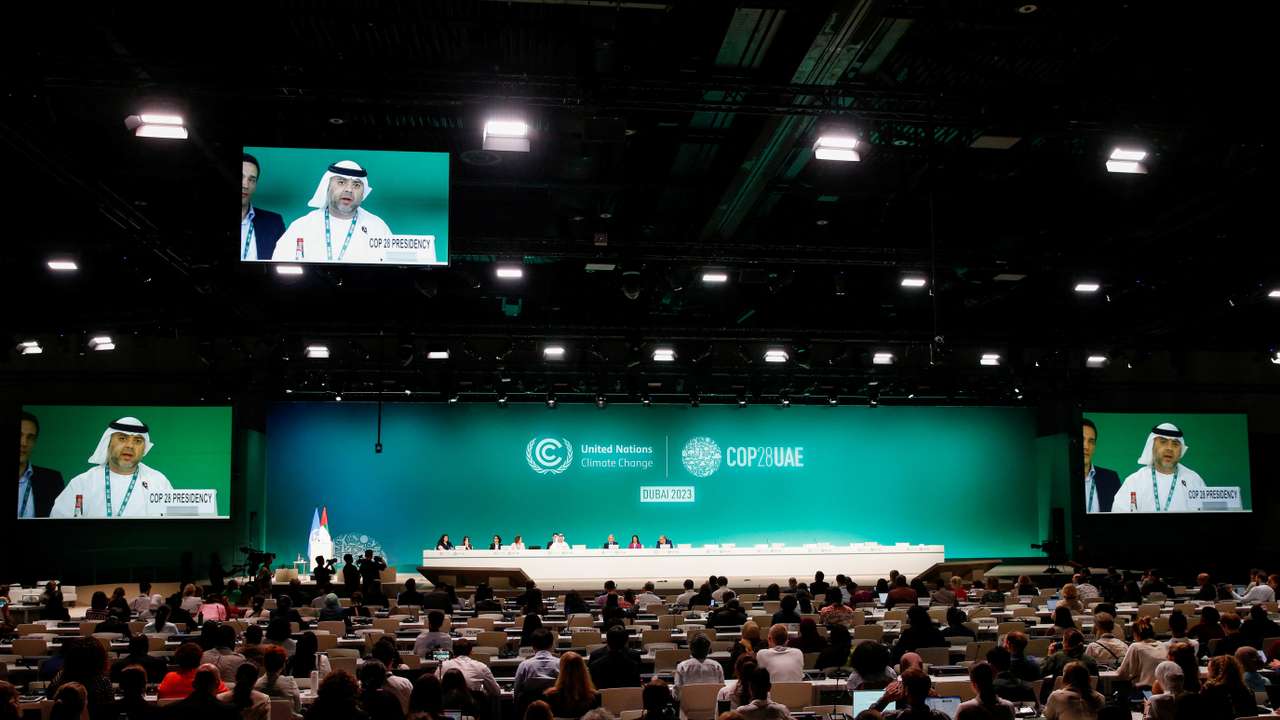
New COP28 draft deal stops short of fossil fuel 'phase out'
By Kate Abnett, Gloria Dickie and David Stanway
A draft of a potential climate deal at the COP28 summit on Monday suggested a range of measures countries could take to slash greenhouse gas emissions, but omitted the "phase out" of fossil fuels many nations have demanded - drawing criticism from the U.S., EU and climate-vulnerable countries.
The draft has set the stage for contentious last-minute negotiations in the two-week summit in Dubai, which has laid bare deep international divisions over whether oil, gas and coal should have a place in a climate-friendly future.
RECOMMENDED FOR YOU

A wake-up call: The countdown for Latin American democracy — Opinion
A coalition of more than 100 countries have been pushing for an agreement would for the first time promise an eventual end to the oil age - but are up against opposition from members of the oil producer group OPEC.
COP28 President Sultan Al Jaber - who has previously used the conference to call for a paradigm shift - urged the nearly 200 countries at the talks to redouble their efforts to finalize a deal ahead of the scheduled close of the conference on Tuesday, saying they "still have a lot to do".
"You know what remains to be agreed. And you know that I want you to deliver the highest ambition on all items including on fossil fuel language," he said.
The new draft of a COP28 agreement, published by the United Arab Emirates' presidency of the summit, proposed various options but did not refer to a "phase out" of fossil fuels.
Instead, it listed eight options that countries could use to cut emissions, including: "reducing both consumption and production of fossil fuels, in a just, orderly and equitable manner so as to achieve net zero by, before, or around 2050".
Other actions listed included tripling renewable energy capacity by 2030, "rapidly phasing down unabated coal" and scaling up technologies including those to capture CO2 emissions to keep them from the atmosphere.
Alden Meyer, a senior associate at environmental think tank E3G, criticised the new deal as "basically an a la carte menu that allows countries to individually choose what they want to do."
Despite the fact emissions from burning fossil fuels are by far the main driver of climate change, 30 years' worth of international climate negotiations have never resulted in a global agreement to cut their use.
RECOMMENDED FOR YOU

New Asia Forum: Indonesia to set out progress on sustainable AI data centres
The text triggered a protest from dozens of delegates who stood in near silence, holding hands and lining the long route into a room where negotiators gathered, forcing them to run an eerie gauntlet before getting back to work.
"Please give us a good text," one delegate pleaded as negotiators filed in.
U.S. Special Climate Envoy John Kerry told the meeting, which ran for around three hours, that the draft agreement had to be strengthened.
"We're not where we're meant to be in terms of the text," Kerry said. "Many of us have called for the world to largely phase out fossil fuels, and that starts with a critical reduction this decade."
Speaking with voice worn hoarse by the summit, he said the outcome of COP28 was existential: "This is a war for survival".
EU chief negotiator Wopke Hoekstra told reporters the draft was "clearly insufficient and not adequate to addressing the problem we are here to address."
Representatives from Pacific Island nations Samoa and the Marshall Islands, already suffering the impacts of rising seas, said the draft was a death sentence.
"We will not go silently to our watery graves," said John Silk, the head of the Marshall Islands delegation.
RECOMMENDED FOR YOU

Are universities failing us? Global South Thinkers LIVE
"We cannot sign on to a text that does not have strong commitment on phasing out fossil fuels," Samoa environment minister Cedric Schuster told reporters.
Dan Jorgensen, the Danish climate minister, said he believed many countries opposed the current text. "So, it was clear that this is only the starting point and that we are not even close to getting a result."
A new draft document is expected early on Tuesday, which would leave little time for further disagreement ahead of the conference's scheduled close at 0700 GMT. COP summits rarely finish on schedule.
Sources familiar with the discussions said the UAE had come under pressure from Saudi Arabia, de facto leader of the OPEC oil producers' group of which UAE is a member, to drop any mention of fossil fuels from the text.
Saudi Arabia's government did not respond to requests for comment on Monday.
CONSENSUS
It was unclear if China, currently the world's top greenhouse gas emitter, supported the draft.
Leaving their pavilion late on Monday, senior members of the China delegation, including chief envoy Xie Zhenhua, did not respond to questions.
RECOMMENDED FOR YOU
Africa's not boring enough. And it's definitely not 'mineral rich': Bright Simons
But observers noted that some of the language in the document was in line with China's previous policy positions, as well as parts of the Sunnylands agreement signed by China and the United States in November.
The Sunnylands agreement did not use phrases like "phasing out" but instead called for the accelerated substitution of coal, oil and gas with renewable energy sources, and backed the pledge to triple renewable energy by 2030.
Speaking to ministers and negotiators on Sunday, a representative for Saudi Arabia's delegation said a COP28 deal should not pick and choose energy sources but should instead focus on cutting emissions.
That position echoes a call made by OPEC in a letter to its members earlier in the summit, seen by Reuters, which asked them to oppose any language targeting fossil fuels directly.
Deals at U.N. climate summits must be passed by consensus among the nearly 200 countries present.
Developing nations have said any COP28 deal to overhaul the world's energy system must be matched with sufficient financial support to help them do this.
"We need support as developing countries and economies for a just transition," said Colombia's Environment Minister Susana Muhamad. Colombia supports phasing out fossil fuels.
Despite the rapid growth of renewable energy, fossil fuels still produce around 80% of the world's energy.
RECOMMENDED FOR YOU

Mahama sets 2030 deadline to end Ghana's raw mineral exports
Negotiators told Reuters that other OPEC and OPEC+ members including Russia, Iraq and Iran, have also resisted attempts to insert a fossil fuel phase-out into the COP28 deal.
This article was produced by Reuters news agency. It has not been edited by Global South World.