Europe’s supermarket map reveals who really rules retail
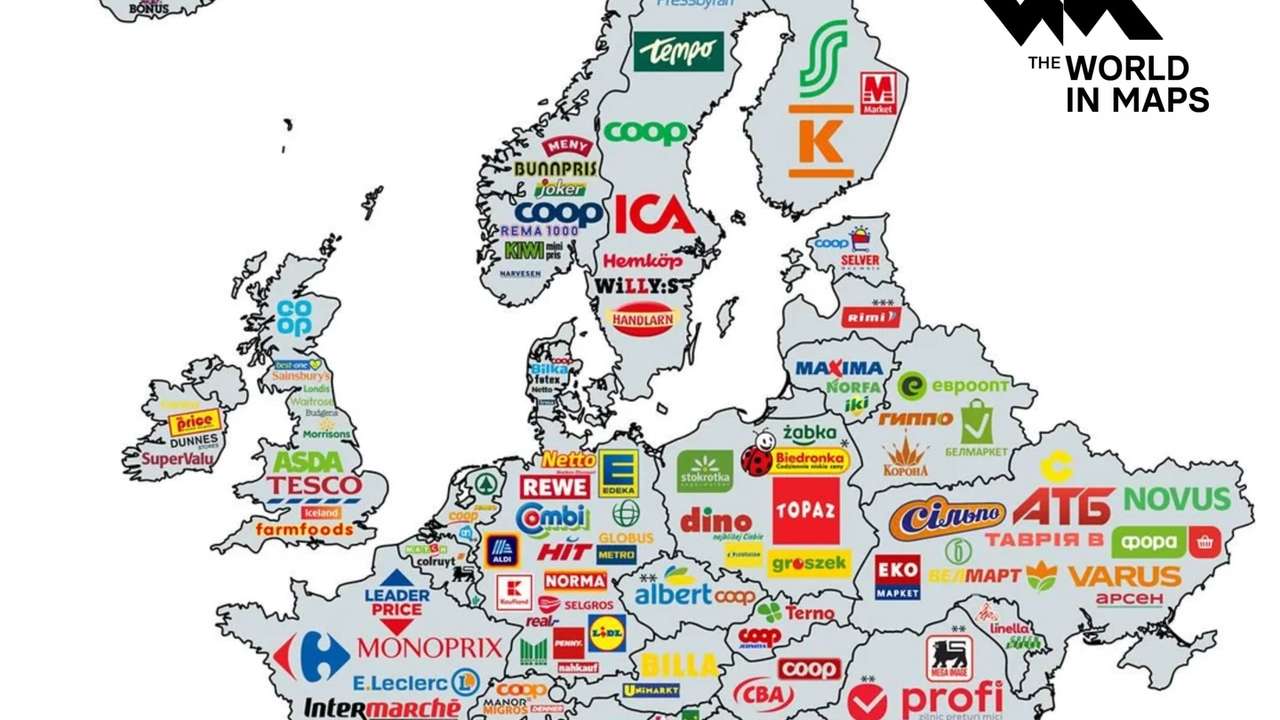
Europe's supermarket landscape remains highly fragmented, with domestic grocery chains continuing to dominate national markets despite decades of international expansion by retailers such as Lidl and Aldi, according to industry data and company market reports.
Key Points
- National supermarket chains continue to dominate European grocery markets.
- Germany and France remain home to Europe's largest retail groups.
- Local shopping habits keep domestic brands ahead of foreign rivals.
Europe's supermarket landscape remains highly fragmented, with domestic grocery chains continuing to dominate national markets despite decades of international expansion by retailers such as Lidl and Aldi, according to industry data and company market reports.
The map highlights the supermarket brands most closely associated with each European country, illustrating how consumer loyalty, local competition, and national retail traditions have enabled many homegrown chains to retain leadership positions.
In the United Kingdom, Tesco remains one of the country's largest supermarket groups by market share, ahead of rivals including Sainsbury's, Asda, Aldi and Lidl, according to Kantar. Across the Irish Sea, Dunnes Stores and SuperValu continue to compete for the top position in Ireland's grocery market.
Domestic retailers lead several of Europe's largest economies.
RECOMMENDED FOR YOU
From Suomi to Zhongguo, why some countries have completely different names at home
In France, major chains including E.Leclerc, Carrefour, Intermarché, U and Monoprix dominate food retailing. E.Leclerc has consistently held the country's largest grocery market share, according to Kantar Worldpanel.
Germany's supermarket sector is led by retailers such as Edeka, REWE, Netto and Kaufland, while discount chains Aldi and Lidl, both founded in Germany, have expanded into dozens of international markets and become two of Europe's largest food retailers by revenue.
In Spain, Mercadona remains the clear market leader, accounting for more than one-quarter of national grocery sales, according to Kantar. Other major Spanish retailers include Carrefour, Lidl, Dia, Eroski and Alcampo.
Northern Europe is also characterised by powerful domestic brands. ICA leads Sweden's grocery market, Coop and REMA 1000 are among Norway's largest supermarket groups, while S Group and Kesko's K-Citymarket are major players in Finland.
In Central and Eastern Europe, national chains remain particularly influential. Biedronka is Poland's largest supermarket network, operating more than 3,700 stores, while Romania's market includes Profi, one of the country's biggest convenience and supermarket operators.
Turkey's retail sector is dominated by discount chains BİM, A101 and ŞOK, which together operate tens of thousands of stores nationwide and have reshaped grocery shopping through low-price formats.
According to EuroCommerce, food retail is one of Europe's largest private-sector industries, employing millions of people and serving hundreds of millions of consumers every day. While international retailers continue expanding across borders, the continent's grocery market remains defined by strong national brands that have adapted to local shopping habits, pricing preferences and consumer tastes.
This story is written and edited by the Global South World team, you can contact us here.