UAE's Fujairah stops some oil loading operations after drone attack
- #Crude Oil
- #Conflicts
- #War
- #Peace
- #Defense
- #Diplomacy
- #Foreign Policy
- #Fires
- #Middle East
- #Energy Region Middle East
- #Pictures
- #North America
- #Energy Markets
- #Nuclear Armaments
- #Nuclear Proliferation
- #Nuclear Power Stations
- #Oil Refineries
- #International
- #National Security
- #Production Status Changes
- #Gulf
- #Military Conflicts
By Sarah El Safty and Nidhi Verma
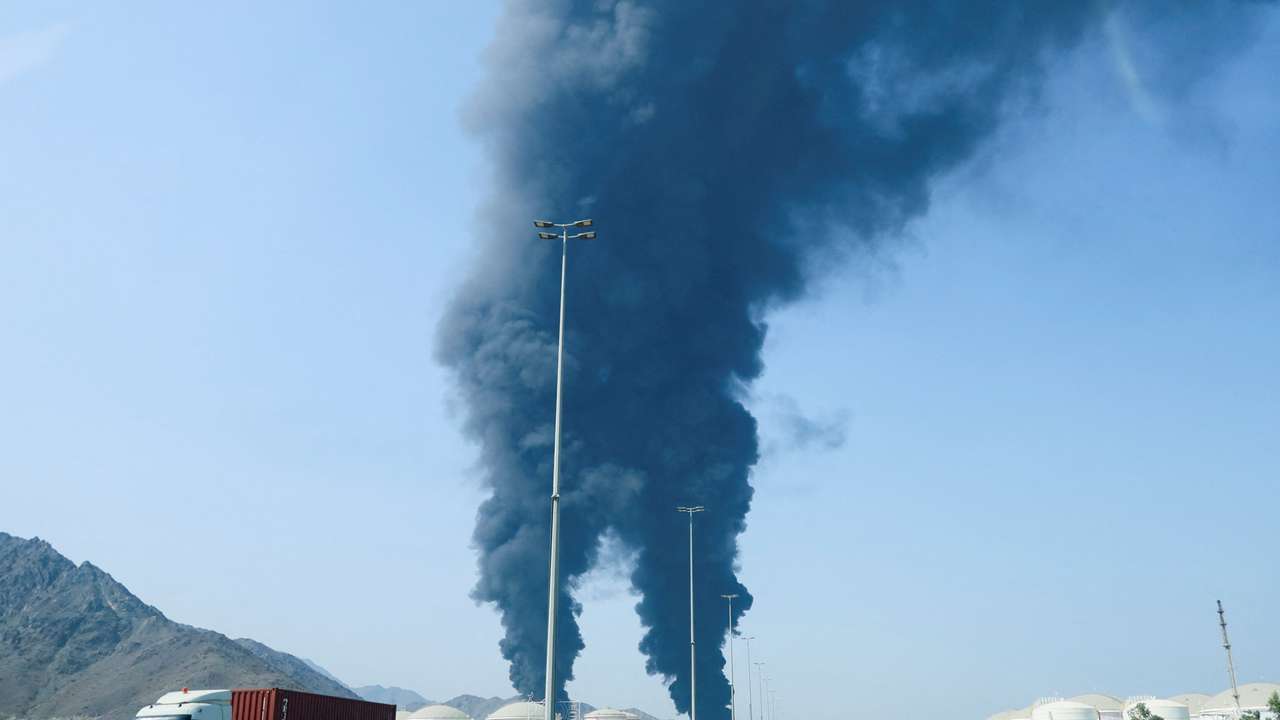
Some oil-loading operations have been suspended in the United Arab Emirates' Fujairah emirate, a major bunkering hub and crude export terminal, after a drone attack and fire on Saturday, industry and trade sources said.
The suspension comes hours after the U.S. attacked military targets on Iran's Kharg Island oil export terminal and Iran's Revolutionary Guards (IRGC) responded by saying that U.S. interests in the UAE - including ports, docks and military locations - were legitimate targets.
Fujairah, outside the Strait of Hormuz, is the outlet for about 1 million barrels per day of the UAE's Murban crude oil - a volume equal to about 1% of world demand.
RECOMMENDED FOR YOU

Can Indonesia be Asia’s next EV powerhouse?
A witness in Fujairah saw two separate columns of smoke rising from the terminal. Reuters could not immediately establish the impact on loadings.
Just after midnight, Fujairah's Media Office said the emirate was still trying to put out the fire, which it said had lightly injured a Jordanian citizen.
"The IRGC is sending a message that there is no safe harbor in this rapidly expanding conflict," said Helima Croft, analyst at RBC Capital. "The fact this comes hours after the U.S. strike on Kharg Island also signals that Tehran will not let Washington control the terms of escalation and impose dominance."
The International Energy Agency said earlier this week that the world was facing its biggest ever oil supply crisis due to the effective closing of the Strait of Hormuz, a channel along the Iranian coast, since the U.S. and Israel began airstrikes on Iran on February 28, with the UAE among producers forced to cut oil output.
Iran threatened more UAE ports on Saturday, warning residents to leave areas near Jebel Ali port in Dubai and Khalifa port in Abu Dhabi as well as Fujairah, Iranian news agencies reported.
The UAE Foreign Ministry did not immediately respond to a request for comment on Iran's accusation that the attack on Kharg Island had come through the UAE.
REGIONAL ENERGY INFRASTRUCTURE UNDER PRESSURE
The fire in Fujairah occurred after debris fell during the interception of a drone, the emirate's media office said.
RECOMMENDED FOR YOU

‘Who will take responsibility?’ - October 7 families confront Netanyahu on Israel election day
Civil defence forces are handling the incident to contain the fire, it added. Authorities did not provide any information about the suspension of operations.
Abu Dhabi state oil giant ADNOC, which operates in the emirate, did not immediately respond to a request for comment.
On Tuesday, ADNOC shut its Ruwais refinery in response to a fire at a facility within the complex following a drone strike, a source with knowledge of the situation said, in further disruption of energy infrastructure due to the U.S.-Israeli war on Iran.
This article was produced by Reuters news agency. It has not been edited by Global South World.