From Suomi to Zhongguo, why some countries have completely different names at home
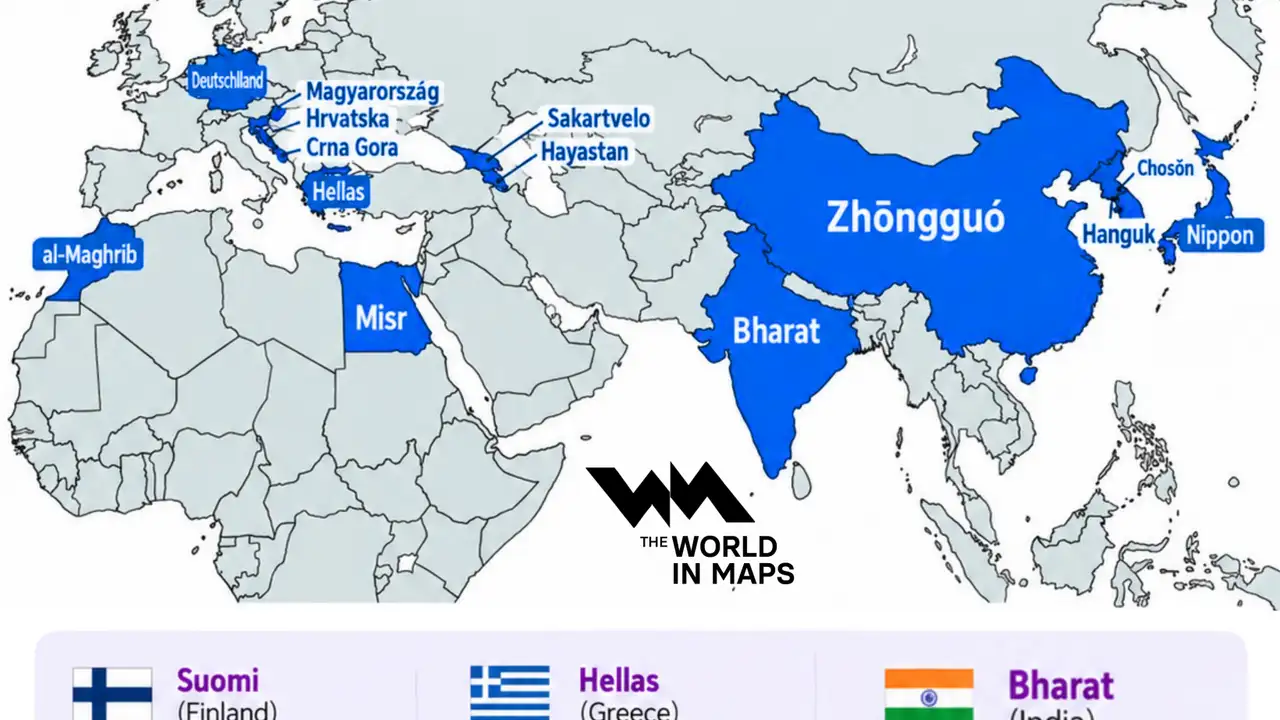
Finland becomes Suomi, Germany is Deutschland, and China is Zhōngguó when their names are expressed in their own languages, showing how the familiar English names of countries can differ sharply from what people living there call them.
Key points
- Many countries use local names, unlike their English names
- History and language explain most of the differences
- Some names on the map need extra context
Finland becomes Suomi, Germany is Deutschland, and China is Zhōngguó when their names are expressed in their own languages, showing how the familiar English names of countries can differ sharply from what people living there call them.
These differences are examples of exonyms and endonyms. An endonym is a name used locally for a place, while an exonym is a name used for it in another language. English “Germany”, for example, is an exonym, while German speakers call the country Deutschland.
The same pattern appears across Europe. Finland is Suomi in Finnish, Hungary is Magyarország in Hungarian, Croatia is Hrvatska, Montenegro is Crna Gora, Greece is Elláda or Hellas, and Georgia is Sakartvelo in Georgian.
The differences often reflect centuries of languages borrowing place names from different sources. As a result, the English version does not necessarily derive from the name currently used by the country's own population.
RECOMMENDED FOR YOU
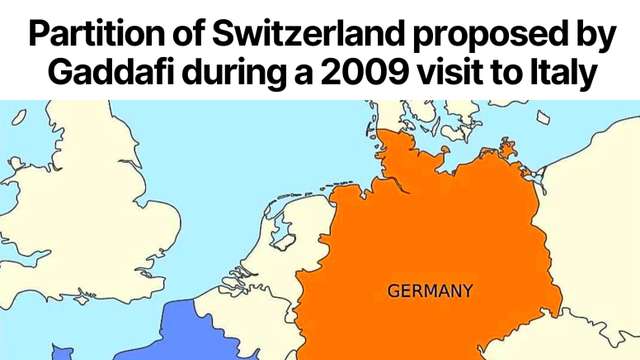
Why Gaddafi once wanted Switzerland split between three countries
Asia has some of the clearest examples
China is Zhōngguó (中国) in Mandarin, a name commonly translated as “Middle Kingdom” or “Central State”. Japan is Nihon or Nippon (日本) in Japanese, while the English word “Japan” reached European languages through other Asian languages rather than directly from modern Japanese.
India requires more context than the graphic suggests. India and Bharat are both constitutionally recognised names. Article 1 of the country's constitution begins, “India, that is Bharat,” meaning Bharat is not simply an informal local alternative to an otherwise official English name.
Korea is another case where a simple English-to-local translation can hide important differences. South Korea's official Korean name is Daehan Minguk, while Hanguk is commonly used as a shorter name. North Korea uses Chosŏn in its official Korean name.
This story is written and edited by the Global South World team, you can contact us here.