Gazans say they fear a fate worse than bombs: permanent exile
Gazans say they fear a fate worse than bombs: permanent exile
By Nidal al-Mughrabi
With Israeli bombs pounding the length of the Gaza Strip, Gazans have been squeezed up against the border with Egypt's Sinai Peninsula at the town of Rafah and say they have practically nowhere left to flee.
Hundreds of thousands have been displaced from their homes and as the bombardment comes closer again many fear the only option to keep them alive is exile to Sinai.
RECOMMENDED FOR YOU

Six countries account for three-quarters of Europe’s unicorn startups
But they don’t want that. They say if that happened, they might never come back.
“There’s no safe place anymore. Now the Israeli ground offensive might expand to here,” said Umm Osama, a 55-year-old woman from Gaza City in the north who has sought shelter in Rafah.
“Where should we go after Rafah?”
Umm Osama and many other displaced Gazans rejected the idea of fleeing across the border, should it become possible.
“We refuse displacement to Sinai and we want to return to our homes, even if they are in ruins,” she said.
She and other Gazans are haunted by the traumatic exile of their forebears: many of Gaza’s residents are descendents of Palestinians forced to flee their homes after the creation of Israel in 1948.
"If they make me choose between living under bombardment or leaving, I’ll stay. I’ll go back even if tanks are there. I’ll go back to Gaza City and will endure anything," said Umm Imad, a 73-year-old woman also sheltering in Rafah.
Facing weeks of Israeli aerial assault, close-range tank fire and the guns of troops on the ground which Israel said is aimed at hunting down Hamas fighters, some 85 percent of 2.3 million Palestinians living in Gaza have been forced towards the south of the besieged enclave.
RECOMMENDED FOR YOU

Olympic flame arrives on African soil for first time as Senegal begins Dakar 2026 countdown
Israel has told Gaza residents wishing to avoid being caught up in their assault against the Palestinian militant group Hamas that they should head south. Its military bombs southern areas where people have fled.
Northern Gaza was the initial focus of Israel’s assault on the Hamas-controlled territory after the group killed 1,200 Israelis in a brutal Oct. 7 attack and took 240 hostage.
Southern Rafah, strategically important because it holds the only currently functioning crossing into Gaza - one not controlled by Israel, and where aid is being delivered - is the latest area to come under intense bombardment.
'NOWHERE IS SAFE'
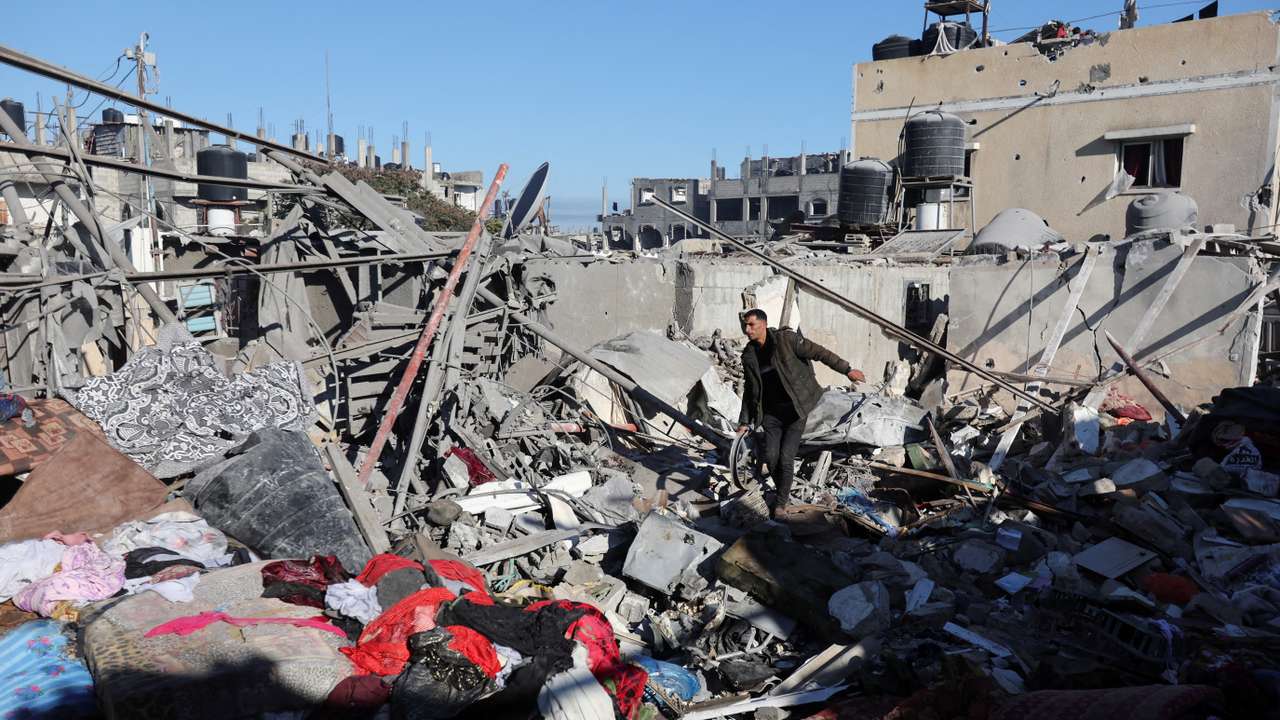
Strikes on the al-Shaboura neighbourhood of Rafah levelled an entire street late on Thursday.
On Friday men and boys picked through the rubble and stared blankly at caved in houses and their ruined possessions that could not be retrieved.
The strikes left a heap of rubble and twisted metal dotted with blankets and bags, gouged mattresses and sofas spilling out tufts of cotton and polyester, children’s bicycles and kitchenware.
“Nowhere in Gaza is safe,” said Jehad al-Eid, a resident of the area.
RECOMMENDED FOR YOU

Sheinbaum rings historic bell as thousands fill Zocalo for Mexican Independence Day
The war between Israel and Hamas, an Iran-backed group, is the deadliest ever fighting in Gaza. Israeli assaults have killed some 19,000 people, most of them women and children, Palestinian officials say.
Palestinians and officials in neighbouring Arab countries alike are nervous at the prospect of a mass, long-term displacement of Gazans.
A mass influx into Egypt is currently unlikely.
The exit of Gaza residents has been slow with the choked border crossing struggling to cope with the entry even of aid trucks, which the United Nations says are not nearly enough to cope with a population that has lacked enough medical supplies for weeks and is beginning to go hungry.
Violence continues to kill people in the south of the strip.
In Nasser Hospital in Khan Younis, a father mourned his two sons, aged 17 and 18, whom he said were killed in Israeli shelling yesterday. The tearful father followed their bodies until they were wrapped in shrouds and sent to the morgue.
"They were standing outside the door of the house when a shell hit the neighbours' house, they went to help and a second shell hit them," the father, Majdi Shurrab, said.
Shurrab said the bodies were left on the ground because it was difficult for ambulances to reach them to take them to the hospital. The destruction from air strikes has made travel along roads difficult and there are severe fuel shortages across Gaza.
RECOMMENDED FOR YOU

Russia signs BRICS Pay and technology deals in New Delhi
Rescue workers had to carry Shurrab's sons to hospital by donkey-drawn cart.
This article was produced by Reuters news agency. It has not been edited by Global South World.