Germanic languages in Europe: How history and modern politics are shaping linguistic identity in 2025
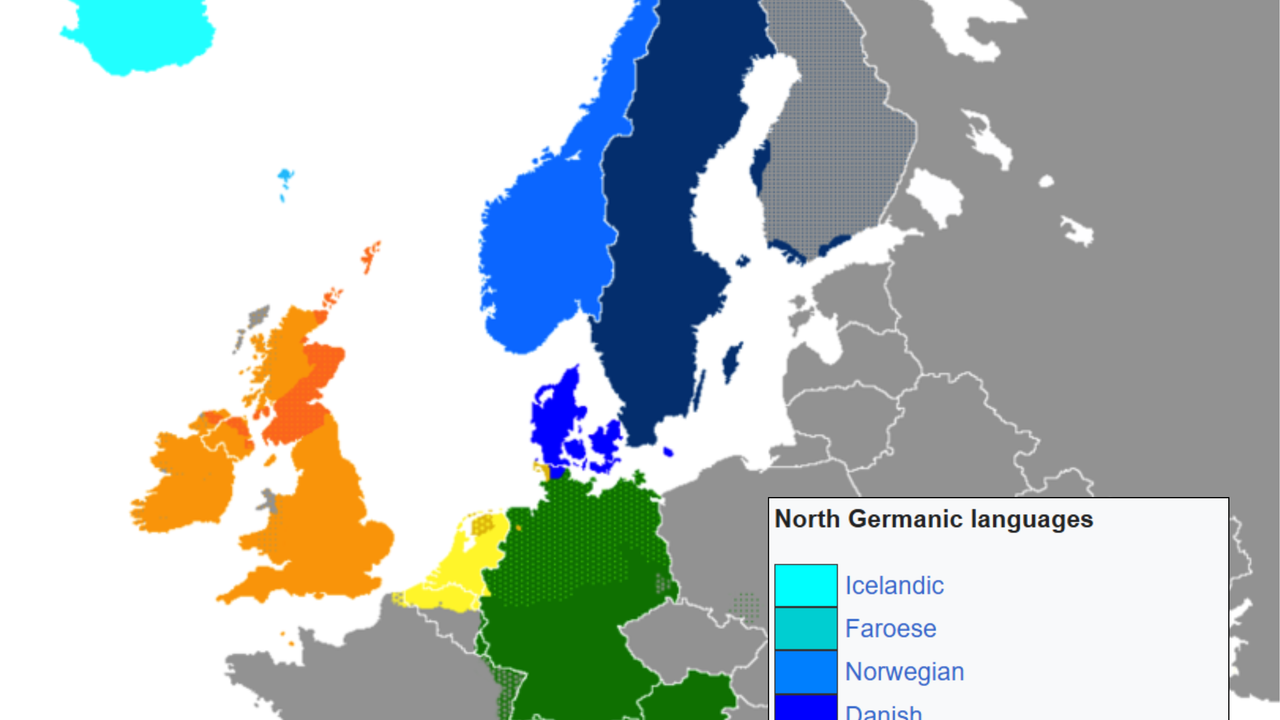
Europe’s linguistic landscape is shifting once again, and at the heart of this evolution are the Germanic languages, one of the continent’s most influential language families.
Europe’s linguistic landscape is shifting once again, and at the heart of this evolution are the Germanic languages, one of the continent’s most influential language families.
From the North Atlantic’s isolation to Central Europe’s dense multilingual corridors, the Germanic languages continue to evolve in ways that mirror Europe’s ongoing transformations.
The languages are traditionally divided into two major branches: North Germanic, which is spoken largely in Scandinavia, and West Germanic, which includes English, German, Dutch, Frisian, and Scots.
On the map above, Icelandic and Faroese dominate the North Atlantic fringes, Norwegian, Danish, and Swedish sweep across Scandinavia, and German, Dutch, Frisian, Scots, and English cover much of Western and Central Europe.
RECOMMENDED FOR YOU

More than 6 billion people are now online as global internet access reaches new high
According to Encyclopaedia Britannica, the Germanic language family is descended from a common Proto-Germanic ancestor emerging around the mid–1st millennium BCE.
Additionally, the world’s most widely spoken Germanic language, English, owes its global dominance to centuries of colonisation and international trade. There are over 1.4 billion English learners and speakers globally, making it a defining linguistic force in diplomacy, science, and technology.
Meanwhile, German remains the most widely spoken native language within the European Union, a fact with cultural and political implications amid ongoing debates over EU unity and economic leadership.
The North Germanic languages, though spoken by smaller populations, have some of the highest literacy rates and strongest preservation efforts in the world. Icelandic, for instance, deliberately resists borrowing from other languages, implementing unique Icelandic terms for modern concepts.