Global party systems and what they mean for today’s politics
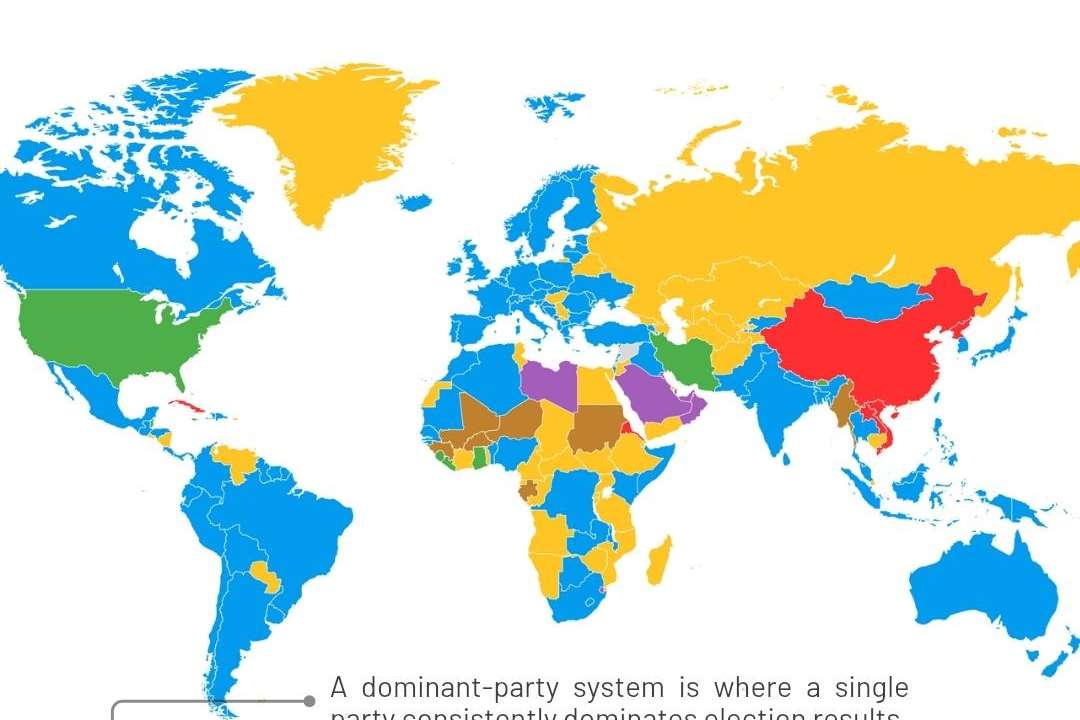
While many countries embrace multiparty competition, others remain under dominant or single-party systems that shape governance and democracy in distinct ways.
While many countries embrace multiparty competition, others remain under dominant or single-party systems that shape governance and democracy in distinct ways.
According to Britannica, party systems are broadly categorised as two-party, multiparty, or single-party, depending not only on the number of parties but also on how effectively they compete for control and share power.
In a two-party system, such as in the United States, two main political parties dominate elections and governance, often marginalising smaller players.
In contrast, multi-party systems, like those in much of Europe, allow for several influential parties to form coalition governments, creating a more flexible yet sometimes unstable political environment.
RECOMMENDED FOR YOU

Sanchez pledges to restore normality in Ceuta after mass migrant arrivals
Meanwhile, dominant-party systems, seen in places such as Singapore and South Africa, feature competitive elections where one party nonetheless maintains long-term control, often blurring the line between democracy and monopoly.
A 2025 Pew Research Centre survey across 24 countries revealed that in 15 of them, no political party received a positive rating from a majority of citizens, a stark indicator of widespread political fatigue and disillusionment with established systems.
Analysts suggest that 2025 may mark a new wave of political disruption as voter frustration, digital activism, and populist movements challenge long-standing institutions.
These shifts are already visible in real-world events. In Portugal, the rise of the right-wing populist party Chega broke the country’s half-century pattern of two-party politics, a dramatic realignment that many view as symbolic of a broader European trend.
Across the world, Singapore continues to embody the stability and control of a dominant-party system as the People’s Action Party (PAP) has extended its unbroken rule since 1959.