Trump official says ICE deportation effort in Minneapolis will be more focused
By Brad Brooks and Ted Hesson
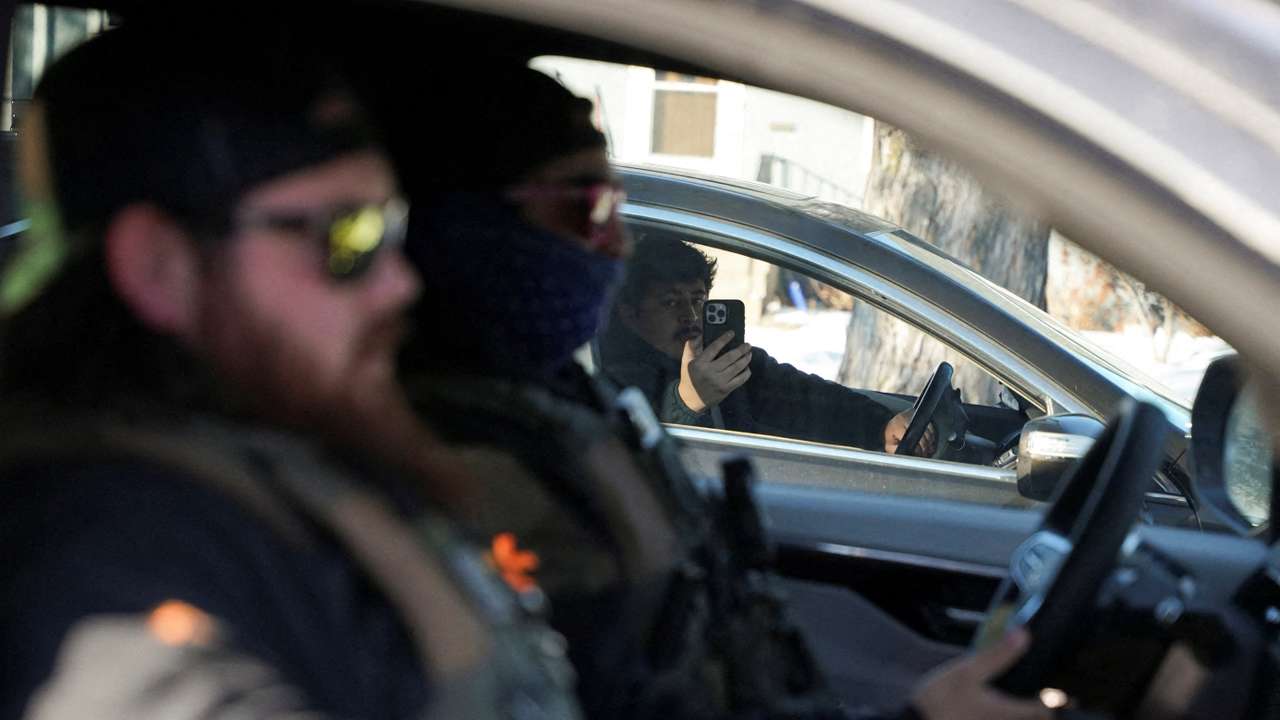
U.S. border czar Tom Homan, newly installed as commander of President Donald Trump's immigration enforcement surge in Minneapolis, said on Thursday that federal agents would focus on targeted operations, shifting away from the broad street sweeps that have drawn widespread outrage.
Homan also said he would reduce the 3,000-strong force of agents deployed to the city if he received "cooperation" from state and local leaders, noting he has had productive meetings with Minnesota Governor Tim Walz and Minneapolis Mayor Jacob Frey, both vocal critics of the surge.
"We can do better," he said at a press conference, in a rare acknowledgment from a Trump official that the operation has not been perfect. "We made some significant gains, significant coordination and cooperation, and you're going to see some massive changes occurring here in this city."
RECOMMENDED FOR YOU

Kuwait Roundup: New arbitration law advances, Canada investment ties deepen and Hormuz security dominates talks
In his first public remarks since Trump dispatched him to the city on Monday in response to the national outcry, Homan suggested a continued effort to de-escalate from the administration, which has been under intensifying political pressure after two U.S. citizens were shot dead by federal agents.
FEDERAL OFFICERS TOLD NOT TO ENGAGE 'AGITATORS'
Newly issued internal guidance from a high-ranking Immigration and Customs Enforcement official directs federal officers to refrain from unnecessary communication and engagement with "agitators" to avoid "inflaming the situation."
The directive, reviewed by Reuters, also orders ICE officers to only target immigrants who have records of criminal charges or convictions, a departure from earlier tactics that included randomly stopping people on the street to demand documented proof of legal U.S. residence or citizenship.
Echoing that, Homan said agents would prioritize those who pose a threat to public safety or national security, although he emphasized the Trump administration remains committed to deporting all immigrants it says are living in the country illegally.
"We're not surrendering our mission at all, we're just doing it smarter," he said.
He also pushed for more access to Minnesota jails for ICE agents so they can pick up targeted immigrants when they are released from local custody, which he said would lessen the need for more disruptive and dangerous street sweeps.
Separately, the Justice Department charged a man who squirted a liquid on Democratic U.S. Representative Ilhan Omar during a Tuesday evening town hall in Minneapolis, which is in her district, with assaulting or intimidating a U.S. official. The incident underscored the charged politics at play in Minneapolis.
RECOMMENDED FOR YOU

Mali Roundup: Soldiers freed in prisoner swap, army intensifies strikes and Mali moves to reset ties with Algeria
The liquid, which Anthony Kazmierczak is accused of spraying on Omar using a syringe, was apple cider vinegar, according to a criminal complaint. He has also been charged under Minnesota law with making terroristic threats, a felony, and fifth-degree assault by the Hennepin County attorney's office in Minneapolis.
Omar, a frequent target of Trump's, blamed the president's "hateful rhetoric" for the attack. Kazmierczak, who has expressed support for Trump on social media, has three prior criminal convictions - two for drunk driving and one for felony theft of a motor vehicle, records show. It was unclear whether he had an attorney.
Trump, who has called Omar "garbage," dismissed the attack and suggested without evidence that the congresswoman had staged it.
'SEASONED AGENT' INVOLVED IN PRETTI SHOOTING
Minneapolis has been gripped by widespread protests since Renee Good, a 37-year-old mother of three, was shot dead behind the wheel of her car by an ICE agent on January 7.
Public outrage deepened after federal agents shot dead Alex Pretti, a 37-year-old intensive care nurse, on Saturday morning.
In both cases, Trump administration officials immediately defended the federal agents involved in the shootings and denounced both Good and Pretti as "domestic terrorists" who they claimed were threatening law enforcement.
Multiple video recordings of the two incidents contradict the notion that either Good or Pretti intended to harm anyone.
RECOMMENDED FOR YOU
Sheinbaum pushes back at Trump and rejects any interference in Mexico
Little is known about the two agents who fired 10 times at Pretti: a Border Patrol agent and an officer with U.S. Customs and Border Protection's Office of Field Operations, which handles customs screenings.
The government has not named the agents, who were masked, or offered details about their backgrounds. During Trump's nationwide crackdown, federal immigration agents often have worn masks to conceal their identities or clothing with no clear name identification or agency.
Paul Perez, president of the National Border Patrol Council, a union representing Border Patrol agents, said the border agent involved in Pretti's shooting had about eight years of experience, extensive use-of-force and firearms training and crowd-control training in a border context.
"This wasn't a rookie agent that was out there, this was a seasoned agent," said Perez, who declined to name the agent for his safety.
The U.S. Department of Homeland Security did not immediately respond to a request for comment.
PRETTI, AGENTS HAD EARLIER CONFRONTATION
Newly unearthed videos verified by Reuters show Pretti had a physical confrontation with federal agents 11 days before he was shot. In the videos, Pretti, wearing some of the same outerwear he had on when he was killed, can be seen cursing, shouting and spitting at a vehicle before kicking and shattering a taillight as it begins to leave the scene.
Several agents stop the SUV, get out and push Pretti to the ground, as others fire gas into a crowd of protesters. Eventually, the agents let Pretti walk away, and what appears to be a gun can be seen tucked into his waistband.
RECOMMENDED FOR YOU

Turkmenistan Roundup: Halk Maslahaty preparations, smart energy, and Caspian diplomacy
Videos of the killing on Saturday show an agent pulling a gun from Pretti's waistband after he has been restrained on the ground, seconds before another officer fires the first shot into the back of Pretti, now unarmed.
Pretti had a legal license to carry a concealed weapon.
This article was produced by Reuters news agency. It has not been edited by Global South World.