India Roundup: India’s economic rise, Telangana political feud, Assam election polarisation
India increasingly central to global growth story
India’s Finance Minister Nirmala Sitharaman highlighted the country’s growing economic influence after presenting the Union Budget 2026–27, noting India contributes about 17 % of global GDP growth, second only to China and ahead of the United States, based on IMF-projected data shared by Elon Musk. She said this reflects India’s resilience and structural strength amid global headwinds, including trade uncertainty and geopolitical risk, urging critics to acknowledge this shift. Sitharaman argued that continued reforms, infrastructure investment and productivity expansion will help close the gap with China. The remarks also served a domestic political message to the opposition, underscoring growth as a point of national pride.
Telangana’s KTR slams Congress after SIT questioning of former CM
In Telangana, Bharat Rashtra Samithi (BRS) working president K.T. Rama Rao (KTR) accused the Congress-led state government of political vendetta and diversionary tactics after his father and former chief minister K. Chandrashekar Rao (KCR) was questioned for hours by a Special Investigation Team (SIT) in an alleged phone-tapping case. KTR described the government’s actions as an attempt to distract from administrative failures ahead of the upcoming local elections. He claimed the SIT did not follow legal norms and urged the media not to rely on unofficial leaks, emphasising that KCR cooperated out of respect for the law. BRS leaders framed the probe as politically motivated rather than a genuine investigation, heightening tensions in state politics.
Assam poll battle takes shape amid polarisation and fractured opposition
In the poll-bound state of Assam, political analysts say Chief Minister Himanta Biswa Sarma is leveraging polarisation, especially around fears about “Miya” Muslims of Bengali origin, to strengthen the ruling BJP’s electoral base. The Congress and other opposition parties remain divided and struggle to present a cohesive alternative, even as welfare schemes and infrastructure development play in Sarma’s favour. Critics argue this early polarising tone might entrench social divisions around ethnicity and religion rather than focus solely on policy. Allegations of manipulation of electoral rolls have also surfaced, adding to the contested political context.
Rare BJP–Congress local front reshapes Malegaon civic politics
Ahead of the mayoral and deputy mayoral election in Malegaon Municipal Corporation (Maharashtra), corporators from traditional rivals the BJP and Congress formed an independent group called Bharatiya Vikas Aghadi to influence the civic body where no party has a clear majority. The largest party in the corporation, the ISLAM (Indian Secular Largest Assembly of Maharashtra) Party, holds 35 seats but needs allies to secure power. The unexpected cooperation between BJP and Congress councillors could tilt the power dynamics in the 84-member body and affect who becomes mayor. This unusual alliance highlights evolving local political strategies.
RECOMMENDED FOR YOU

Mauritania Roundup: Green hydrogen deal advances, schools prepare for new term and 100,000 livestock targeted
Sunetra Pawar faces party leadership challenge after Ajit Pawar’s death
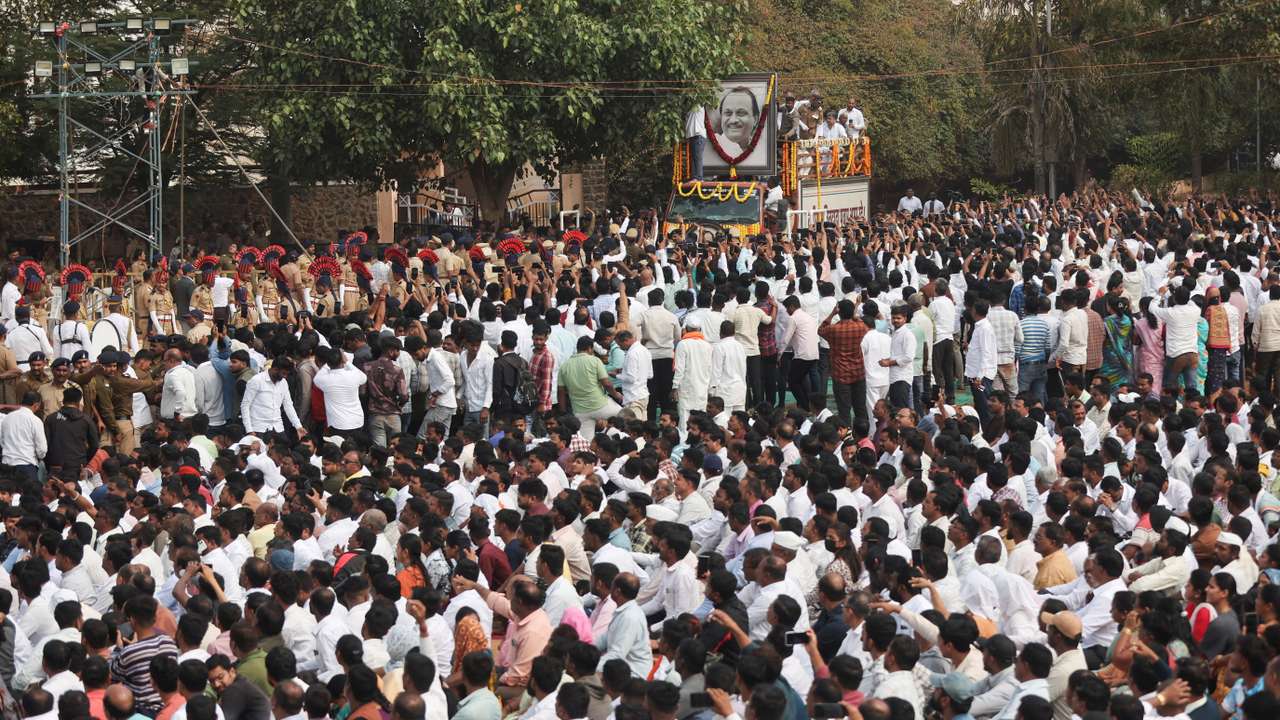
In Maharashtra national politics, opinion columnists note that Sunetra Pawar, following the sudden death of her husband Ajit Pawar (a senior leader in the Nationalist Congress Party), faces significant tests in holding the party together amid a competitive political environment. Analysts argue that beyond the symbolic moment of her elevation, the real challenge lies in how male party figures and rival alliances respond within the state’s complex power landscape. These dynamics come as regional parties adjust strategies ahead of future elections.
This story is written and edited by the Global South World team, you can contact us here.