Indonesia, Thailand lead the global belief that religion benefits society
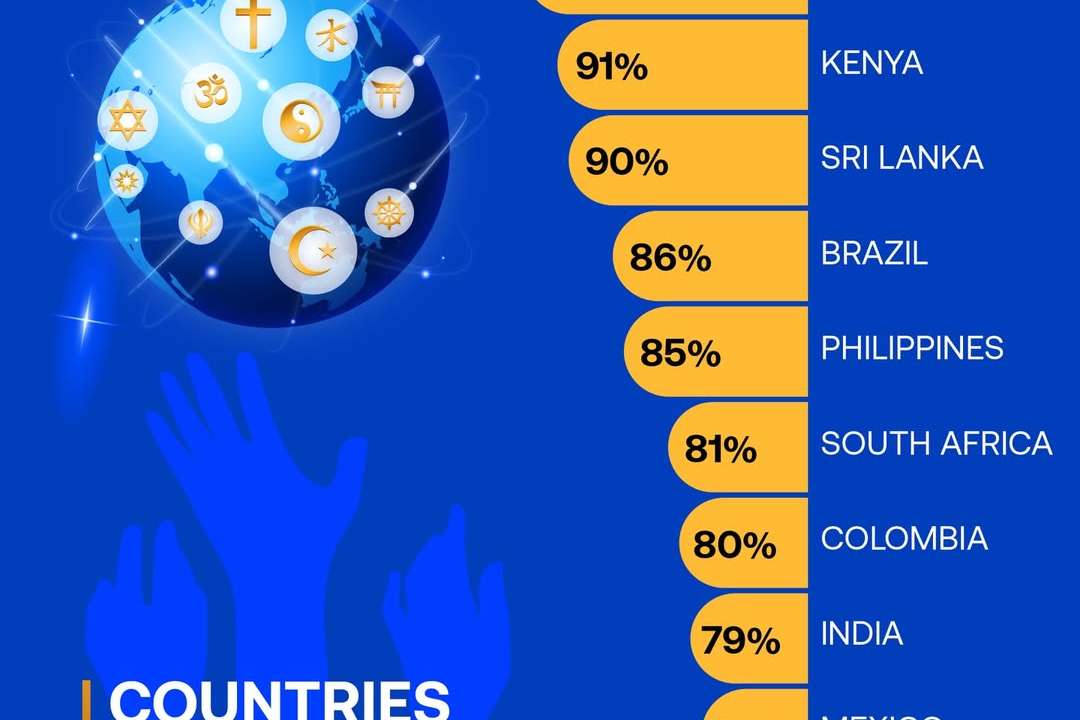
Public belief that religion plays a positive role in society remains strongest in emerging economies, with Indonesia, Thailand and Kenya topping global rankings, according to findings from the Pew Research Centre’s 2025 global attitudes survey.
Public belief that religion plays a positive role in society remains strongest in emerging economies, with Indonesia, Thailand and Kenya topping global rankings, according to findings from the Pew Research Centre’s 2025 global attitudes survey.
The survey highlights stark regional differences in how societies perceive religion’s social value, with countries across Asia, Africa and Latin America reporting significantly higher levels of support than more secular Western nations.
Indonesia recorded the highest level of agreement, with 100% of respondents saying religion helps society. The Southeast Asian nation, home to the world’s largest Muslim population, has long maintained strong links between religion, public life and national identity.
Close behind, Thailand registered 94%, while Kenya followed at 91%, reflecting similarly high levels of religious engagement in both countries.
RECOMMENDED FOR YOU

More than 6 billion people are now online as global internet access reaches new high
The data shows consistently firm belief in religion’s societal role across several regions:
- Sri Lanka – 90%
- Brazil – 86%
- Philippines – 85%
- South Africa – 81%
- Colombia – 80%
- India – 79%
- Mexico – 78%
These findings suggest that in many developing economies, religion continues to serve as a key source of social cohesion, moral guidance and community support systems.
According to Pew’s broader analysis, respondents in these countries often associate religion with:
- Strengthening family and community bonds
- Promoting ethical behaviour
- Providing social services and support networks
- Offering stability in times of economic or political uncertainty