Iran threatens ‘forbidden zone’ near Strait of Hormuz
Key Takeaways
- Iran plans a new "forbidden zone" near the Strait of Hormuz.
- Rezaei claimed daily ship traffic through the waterway has fallen sharply.
- He also claimed Iran tested an anti-ship missile against a US carrier.
Mohsen Rezaei said Tehran plans new restrictions near the US Navy's blockade line as tensions over the critical shipping route escalate again.
Iran is planning to declare a new "forbidden zone" extending from what it calls the US Navy's "blockade line" to the Strait of Hormuz, according to Mohsen Rezaei, Secretary of the Supreme National Security Commission.
Rezaei said on Sunday that ships entering the proposed restricted area with the intention of passing through the Strait of Hormuz would face sanctions.
"We will declare this area a forbidden zone, meaning that any ship that enters this zone with the intention of passing through the Strait of Hormuz and is identified, we will be placed on the sanctions list," Rezaei explained.
He also rejected claims that the Strait of Hormuz remains open to routine maritime traffic, describing them as a "big lie".
RECOMMENDED FOR YOU
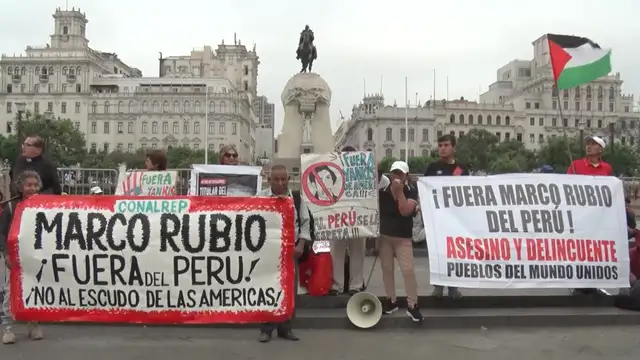
'US is not a friend of Peru' - Protesters rally in Lima against Rubio's visit
Rezaei claimed the number of ships passing through the waterway had fallen from more than 100 per day to seven or eight. He said most of those vessels were carrying food and basic commodities imported by Iran.
He also claimed Iran had conducted its first test of an anti-ship missile against a US carrier.
"For the first time, from the 12-day war until now, we were able to test our first anti-ship missile over a US carrier 48 hours ago; a real hell was created," he said.
Rezaei also claimed Iranian forces had struck US bases in Jordan and Erbil during recent attacks. He said Tehran had identified the targets in advance and that one strike hit a site in Jordan without air defence.
Turning to Lebanon, Rezaei said he was confident the country would "rise again", warning that if the wrath of the Lebanese people were unleashed, "it will leave nothing of Israel."
His comments followed another escalation at sea. US Central Command said it struck three Iranian crude oil tankers on Saturday after Iran's Revolutionary Guard launched ballistic missiles at two US Navy warships.
The attacks ended a period of relative calm and renewed tensions around the Strait of Hormuz, a major global oil shipping route.
Tehran and Washington previously signed a Pakistan and Qatar-mediated memorandum of understanding on June 18, opening the way for negotiations after an earlier halt in hostilities.
RECOMMENDED FOR YOU

Israel says nearly 70% of Gaza is destroyed and under its control
The talks have since stalled, with maritime security and passage through the Strait of Hormuz becoming major points of dispute. Both sides have accused the other of violating the agreement.
This story is written and edited by the Global South World team, you can contact us here.