Is society really equal for women today?
Women have made significant gains in education, employment and political representation over recent decades. Yet the World Economic Forum (WEF) estimates that, at the current pace, full global gender equality remains more than a century away.
Across many countries, women continue to earn less than men, remain underrepresented in leadership positions and shoulder a larger share of unpaid care work.
Despite women now surpassing men in higher education, they hold only 28.8% of senior leadership positions worldwide, highlighting a persistent gap that experts say limits economic resilience and long-term growth.
In Brazil, many people say those global challenges remain part of everyday life.
When Global South World asked Brazilians whether society is more gender equal today, most agreed that progress has been made, but said true equality has not yet been achieved.
RECOMMENDED FOR YOU
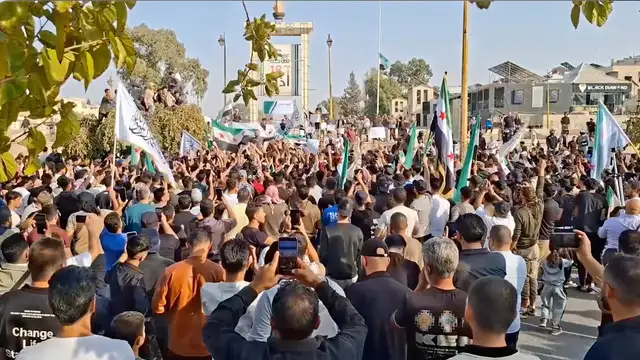
Thousands protest Israeli military incursions in southern Syria
"It's very unequal. The woman works much harder and earns much less," one respondent said.
Another added: "I don't think they are equal. It is deeply rooted in society. Women have fewer opportunities. There is still a lot of inequality."
One woman working in Brazil's construction industry said she had to "fight hard" to earn respect in a male-dominated workplace. She recalled an incident early in her career when a plumber became aggressive after she pointed out an installation error.
"He grabbed the mixer tap and threw it at me, shouted at me and said I knew nothing," she said.
Another woman also said one of the first questions during a recent job interview was whether she had children.
One respondent working in the metalworking industry said women remain rare in management positions and are still judged differently from men.
"Despite all the progress, women are still discriminated against in the job market. While doing the exact same job, in certain places, she still gets paid less than a man," she said.
Official figures reflect many of these concerns. According to the Brazilian Institute of Geography and Statistics (IBGE), women in Brazil earn, on average, about 20% less than men and remain underrepresented in senior leadership despite having higher levels of education. In 2023, Brazil also introduced an Equal Pay Law that requires greater salary transparency and reinforces equal pay for equal work.
RECOMMENDED FOR YOU
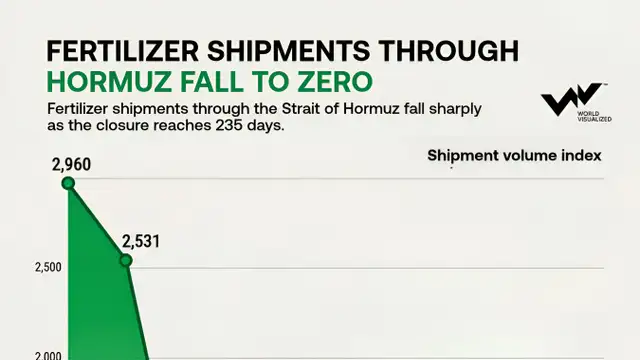
Fertilizer shipments through Strait of Hormuz fall to zero as food security fears grow
Some interviewees, however, said attitudes are gradually changing.
"We know there are many situations that confirm they aren't equal. But I think these discussions are necessary for society to evolve," one respondent said.
"A lot of people are being included today. Equal rights for everyone is normal. We have to learn to live in society," another added.
This story is written and edited by the Global South World team, you can contact us here.
