LIVE: Colombia election goes to runoff with de la Espriella and Cepeda
Key Takeaways
- Colombians will vote in the first round of the 2026 presidential election on Sunday, May 31.
- The election uses a two-round system. If no candidate wins more than 50% of the vote, the top two candidates will advance to a runoff.
- Polling stations will open from 8:00 a.m. to 4:00 p.m., local time, with results usually becoming clear on the same day.
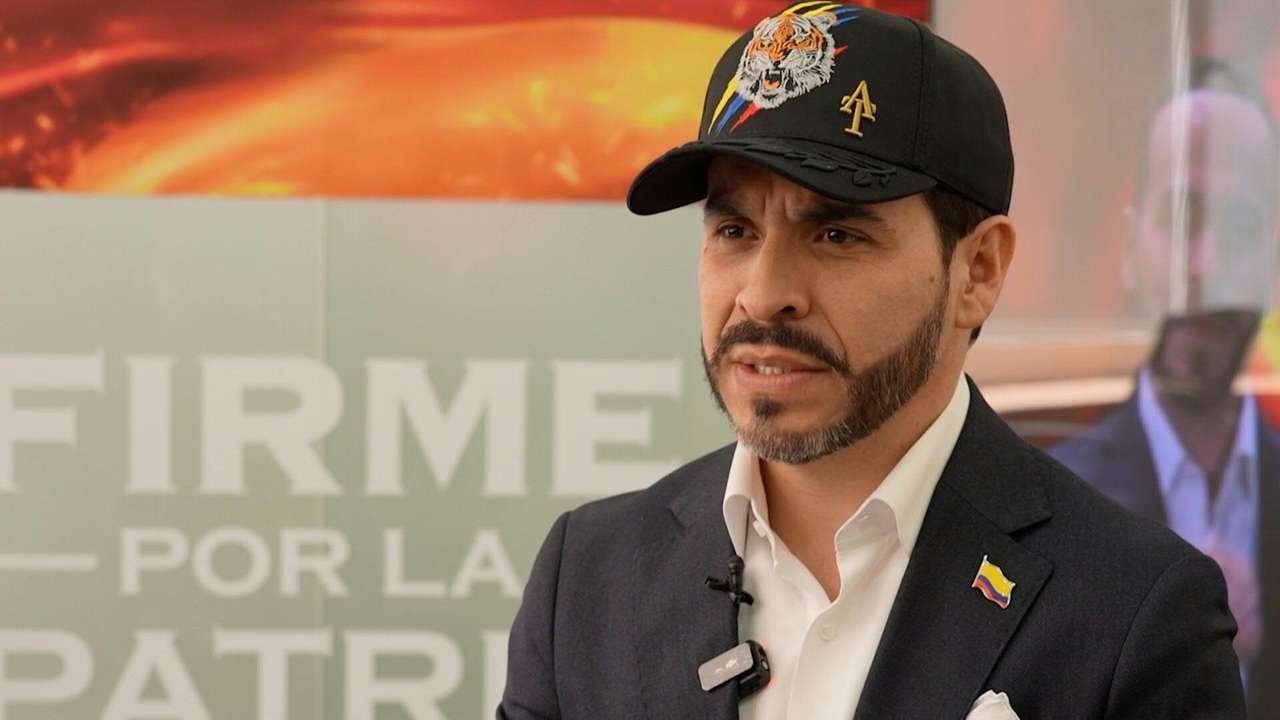
Colombia enters election day with more than 41 million eligible voters heading to the polls in a deeply polarised race, as concerns over security, political tensions and economic uncertainty shape a pivotal vote for the country’s future.
LIVES UPDATES
This concludes our live coverage of Colombia’s 2026 general election. Stay with Global South World for more updates and information on Colombia’s presidential runoff.
23:30 GMT: Paloma Valencia officially announces her support for presidential candidate Abelardo de la Espriella ahead of Colombia’s runoff election.
22:30 GMT: With nearly 100% of votes counted in Colombia’s presidential election, Abelardo de la Espriella leads with over 43%, followed by Iván Cepeda with close to 41%, sending both candidates to a runoff to decide the country’s next president.
21:00 GMT: Polls close in Colombia’s 2026 presidential election.
RECOMMENDED FOR YOU
Flávio Bolsonaro rejects Brazil election results, seeks annulment of Lula's victory
20:05 GMT: After accompanying former president Álvaro Uribe during his voting in Rionegro, presidential candidate Paloma Valencia arrives at her polling station in Bogotá, where she casts her vote in Colombia’s presidential election.
18:05 GMT: Esteban González Pons, head of the European Union’s election observation mission, highlights the international monitoring effort in Colombia’s presidential vote, with more than 140 observers from Norway, Switzerland and Canada deployed across all regions to assess the process under democratic standards.
17:10 GMT: Interior Minister Armando Benedetti oversees the national monitoring centre as authorities track the presidential vote in real time, coordinating with regional governments and overseeing security, mobility and emergency response. More than 122,000 polling stations have been set up to serve over 41 million registered voters nationwide.
16:55 GMT: Presidential candidate Claudia López votes in Bogotá, urging Colombians to turn out in large numbers. Accompanied by her dog “Dulce”, she says she voted “with hope and optimism” for a country with more opportunities for young people and women, adding that the ballot remains the strongest tool to protect democracy and shape the future.
16:45 GMT: Senator Iván Cepeda, from the ruling Pacto Histórico party, casts his vote at Colegio San Lucas in Bogotá’s Kennedy district, where he is joined by dozens of supporters.
16:35 GMT: Journalist and former presidential pre-candidate Vicky Dávila casts her vote in Colombia’s presidential election.
15:00 GMT: Colombia’s Interior Ministry reports 443 complaints of electoral offences registered so far during Sunday’s vote.
14:30 GMT: Vice President Francia Márquez calls on Colombians to head to the polls and exercise their right to vote.
RECOMMENDED FOR YOU

Women’s vote takes centre stage ahead of Brazil’s presidential run-off
14:25 GMT: Presidential candidate Paloma Valencia calls on Colombian women to make history by electing the country’s first female president, saying “it is our time,” as she appears alongside former president Álvaro Uribe.
14:20 GMT: Presidential candidate Iván Cepeda, in a message to the nation, urged voters to back a future focused on reducing poverty and inequality, protecting natural resources and building a modern, diversified economy. He also emphasised hope over fear and unity over division, calling on Colombians to turn out and vote.
14:10 GMT: Presidential candidate Abelardo de la Espriella votes in Barranquilla, saying “we will defeat tyranny”.
13:45 GMT: Gustavo Petro casts his vote in Colombia’s presidential election, which will determine his successor for the 2026–2030 term.
13:30 GMT: President Gustavo Petro casts his vote in Bogotá’s Plaza de Bolívar, highlighting the ballot as a popular mandate to choose the leader who will guide Colombia for the next four years. He also reaffirmed electoral guarantees and dismissed past claims about seeking to remain in power or establish a dictatorship.
13:20 GMT: Córdoba Governor Erasmo Zuleta officially opens the electoral day, urging citizens to participate massively, freely and democratically in the presidential vote.
13:00 GMT: Voting gets underway in Colombia, with early lines reported at some of the country’s largest polling stations.
12:30 GMT: Colombia prepares to head to the polls as Bogotá readies key voting sites.
RECOMMENDED FOR YOU

Brazilians vote in Beijing amid concerns over China ties and social policies
Polls are expected to open in Colombia’s presidential election at 8:00 am local time (13:00 GMT) and close at 4:00 pm local time (21:00 GMT).
What to know
Colombia is heading to the polls this Sunday, May 31, for its presidential election, where voters will choose a new president and vice president. More than 41 million citizens are eligible to vote. If no candidate secures over 50% of the valid vote, a runoff between the top two contenders will take place in the following weeks. Voting is not compulsory, but turnout remains a key factor in determining the outcome.
The election unfolds in a highly polarised political climate, with voters choosing between sharply different visions for the country. Issues such as security, education, economic stability and national sovereignty are at the centre of public debate, reflecting broader concerns about the country’s direction.
Colombian authorities have introduced several restrictions and security measures ahead of the election weekend, including a “ley seca” that bans alcohol sales in many areas, temporary border closures for Colombian nationals on election day, and increased deployments of police and military forces nationwide.
More than 13,000 voting sites have been established across the country, with approximately 800,000 citizens assigned as election jurors and vote counters.
Current polling indicates that three candidates are leading the race: Iván Cepeda from the left, Abelardo de la Espriella representing an anti-establishment right platform, and centre-right candidate Paloma Valencia. Analysts expect Cepeda to qualify for the second round, while competition for the second runoff position remains close between De la Espriella and Valencia.
RECOMMENDED FOR YOU

Can Indonesia be Asia’s next EV powerhouse?
The campaign period has included allegations of electoral fraud from President Gustavo Petro, alongside criticism of the election management system. However, Colombia’s electoral authorities, including the National Electoral Council (CNE), the Registraduría, and election observer groups, have rejected claims that the voting process lacks transparency.
Authorities have identified more than 200 municipalities as facing elevated risks of electoral violence or fraud, with concerns particularly focused on rural areas. Security concerns remain heightened following the assassination attempt on presidential pre-candidate Miguel Uribe last year.
Voters will also have the option to cast a “voto en blanco”, which is recognised as a formal protest vote rather than a spoiled ballot.
Key candidates & support
Iván Cepeda (Historic Pact)
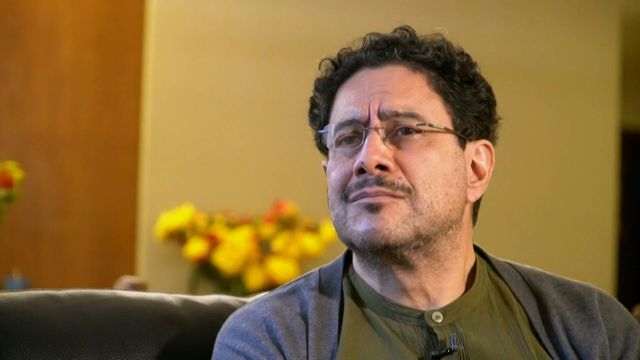
A prominent left-wing figure, Cepeda has built his campaign around social justice, human rights and structural reform. His candidacy draws on the broader political movement associated with progressive forces in Colombia, appealing particularly to younger voters, urban sectors and those who support a stronger role for the state in addressing inequality. His supporters often frame his campaign within a long history of social struggles, positioning him as part of a project aimed at deepening democratic inclusion. Cepeda is considered one of the leading contenders, with a solid base but facing challenges in expanding his appeal among more conservative and undecided voters.
Abelardo de la Espriella (Defenders of the Homeland)
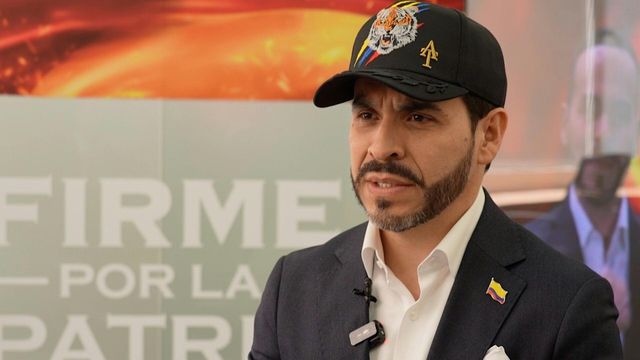
A right-leaning candidate and well-known lawyer, de la Espriella has centred his campaign on security, institutional order and a tougher stance on crime. He appeals to voters concerned about rising insecurity and those who favour stronger enforcement policies and a more conservative political direction. His message also resonates with sectors calling for balance in governance and sceptical of left-wing reforms. He has gained visibility and support among conservative voters, positioning himself as a competitive candidate in a fragmented field.
RECOMMENDED FOR YOU
‘Who will take responsibility?’ - October 7 families confront Netanyahu on Israel election day
Paloma Valencia (Conservative Party)
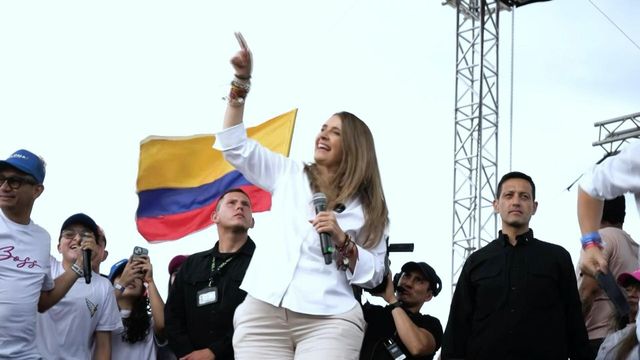
She gained momentum after securing around 3.2 million votes in a March primary. Positioned as a more “moderate” conservative, she appeals to centre-right voters with a focus on security, institutional order and economic stability. A vocal critic of President Gustavo Petro and supporter of the “No” vote in the 2016 peace deal, she has a solid conservative base, though her polarising profile may limit broader appeal.
Debates and campaign dynamics
The absence of major televised debates in Colombia’s presidential race reflects both strategic decisions by candidates and the highly polarised political environment. Leading contenders have largely prioritised direct campaigning and controlled media appearances over open confrontation, seeking to avoid risks in a fragmented race with no clear frontrunner. At the same time, deep ideological divisions and mutual distrust between political camps have made consensus around debate formats more difficult, limiting opportunities for head-to-head exchanges ahead of the vote.
Political climate and stakes
This election is seen as a crucial moment for Colombia’s democracy, as it navigates deep divisions and competing narratives about its future. Campaign rhetoric has reflected these tensions, with candidates mobilising support around themes of change, stability and national identity.
Security remains a central concern for many voters, alongside economic challenges and questions about governance. The outcome will likely shape Colombia’s domestic and foreign policy direction, particularly in relation to international partnerships and internal reforms.
With no clear consensus among voters and a divided electorate, analysts expect a competitive race that could extend to a second round. The next administration will face the challenge of governing in a fragmented political environment while addressing key issues such as security, inequality and institutional trust.
Ultimately, the election will serve as a test of Colombia’s democratic resilience and its ability to navigate political polarisation while maintaining stability.
RECOMMENDED FOR YOU
Netanyahu warns Israel’s enemies of harsher strikes ahead of election
This story is written and edited by the Global South World team, you can contact us here.