Nigeria and Benin plan joint military operation as jihadist attacks spread across West Africa
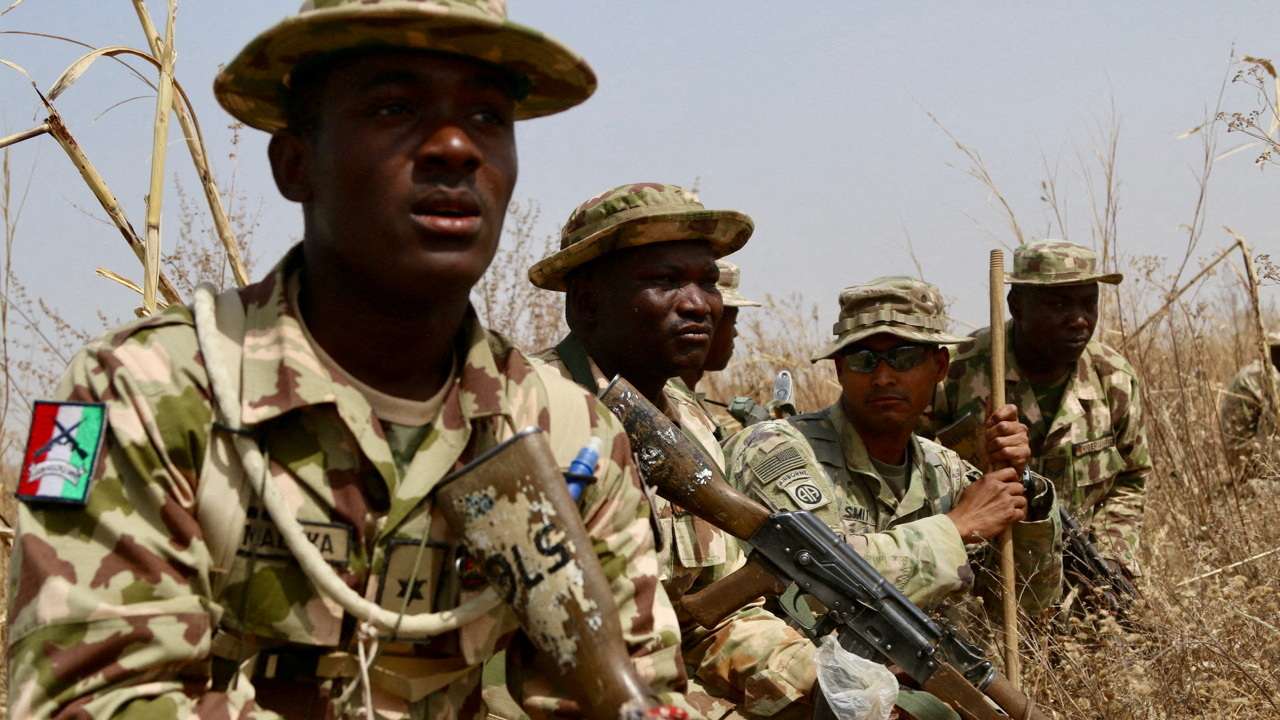
Benin and Nigeria have announced plans for a joint security operation to address the growing presence of terrorist groups along their shared border.
The move comes as jihadist attacks expand beyond the Sahel and into coastal West African states such as Benin, Togo and Côte d'Ivoire, prompting increased cross-border security cooperation.
High-ranking military officials responsible for counterterrorism operations from both countries met in Cotonou on 27 February to discuss future collaboration.
The proposed plan includes coordinated border patrols, joint military operations, intelligence sharing and increased monitoring of cross-border movement. Further discussions on the measures are expected later in March.
According to Héni Nsaibia, senior West Africa analyst at the Armed Conflict Location and Event Data group (ACLED), the border area linking Benin, Niger and Nigeria has emerged as a new focus of jihadist activity since 2025.
RECOMMENDED FOR YOU
Houthis claim missile and drone attacks on Riyadh and Yanbu in Saudi Arabia
“Due to very weak border security and coordination between concerned states, seeing Benin and Nigeria reinforcing their cooperation is particularly relevant,” he told RFI.
According to his research for ACLED, incidents involving jihadist groups in Benin’s Alibori and Borgou departments, Dosso in Niger, and Nigeria’s Sokoto, Kebbi, Niger and Kwara states increased by 86% between 2024 and 2025. Deaths linked to these incidents rose by 262% during the same period.
Jihadist groups Jama’at Nusrat al-Islam wal-Muslimin (JNIM) and the Islamic State in the Sahel have historically operated mainly in Mali, Burkina Faso and Niger. However, their activities are increasingly spreading into West Africa’s coastal states.
Founded in Mali in 2017, JNIM has become the main jihadist group in the central Sahel. Since 2019, the al-Qaeda affiliate has also carried out attacks in countries along the Gulf of Guinea, including Côte d’Ivoire, Benin and Togo.
Nsaibia noted that last year, JNIM also claimed responsibility for an attack on Nigerian territory for the first time.
He said the increase in violence can be attributed to “limited state presence” and weakened regional cooperation after Mali, Burkina Faso and Niger withdrew from the Economic Community of West African States (ECOWAS) following military coups in the three countries.
Security officials say cross-border cooperation will be essential to address the threat.
Senior advisor to Nigeria's President Bola Ahmed Tinubu, Sunday Dare, said, because of "the porosity of the borders, we've had armed trafficking, we've had criminal gangs, we've had Boko Haram, we've had ISIS and other groups."
RECOMMENDED FOR YOU

Central African Republic mine collapse leaves dozens dead as rescuers search for survivors
Dare said the Nigerian president is committed to strengthening relations with Benin and other neighbouring countries to support both security and economic cooperation.
“Just last month, he opened the borders to not just Benin, but also Niger, and that has improved relations,” Dare said.
Another meeting is scheduled to take place in Benin before the end of March to advance the draft military memorandum.
Nsaibia added that other countries in the region are also strengthening security cooperation.
“We have also seen in the past weeks that Ghana and Burkina Faso have taken similar steps. From a regional perspective, these borders are most exposed to jihadist violence, and I think it makes sense for these countries to have these types of rapprochement between each other.”
This story is written and edited by the Global South World team, you can contact us here.
