Nigeria's phantom agency exposes cracks in government oversight
For nearly two years, a government agency that did not officially exist appeared to operate as though it did.
It had office space inside Nigeria's Federal Secretariat Complex in Abuja, where government ministries are based. It held meetings with foreign diplomats, visited senior lawmakers and was publicly welcomed by the country's anti-corruption agency. On paper, it even secured a place in Nigeria's 2026 national budget.
At the centre of the case is Prince Adeniyi Adeyemi Matthew, who presented himself as the head of the Presidential Foreign Intervention Promotion Council (PFIPC), also known as the Presidential Economic Advisory Council. The body claimed it would attract foreign investment and strengthen Nigeria's international partnerships.
The operation extended well beyond appearances. Documents obtained by TheCable show that in August 2025, the Office of the Head of the Civil Service approved a waiver allowing the recruitment of 300 staff for the council despite an existing hiring freeze across the civil service. Weeks later, the council announced plans to establish offices across Nigeria's 36 states and more than 100 overseas locations.
The controversy deepened when it emerged that PFIPC had been allocated ₦1.3 billion (around US$1 million) in Nigeria's approved 2026 budget for salaries, operating costs and capital projects. It marked the first time the organisation had appeared in the federal budget, despite there being no legal record of its establishment.
RECOMMENDED FOR YOU
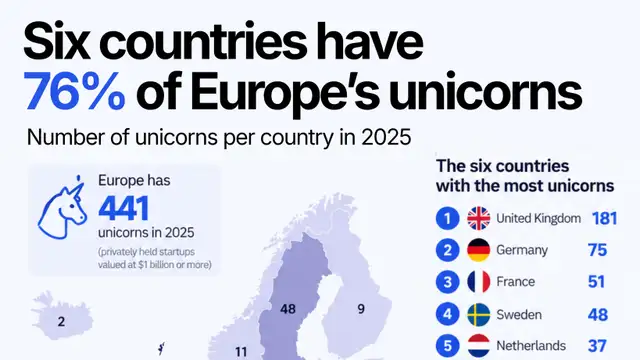
Six countries account for three-quarters of Europe’s unicorn startups
The arrangement began to unravel after officials at the Nigerian Investment Promotion Commission questioned why another body appeared to be performing similar functions. Concerns intensified when Adeyemi reportedly hosted foreign ambassadors without notifying the Ministry of Foreign Affairs, prompting Chief of Staff Femi Gbajabiamila to alert security agencies.
Adeyemi was arrested in October 2025 inside his office at the Federal Secretariat. Investigators said they uncovered 34 bank accounts, including several opened under fictitious government agencies, as well as a Central Bank account allegedly created using forged documents. He has been charged with forgery, impersonation and conspiracy, and is due back in court on 27 July.
The Presidency maintains that Adeyemi acted alone, describing him as a serial fraudster who deceived government institutions. Yet critics argue the affair raises broader questions than the actions of a single individual.
Former Vice-President Atiku Abubakar has questioned how a non-existent agency could obtain office space, recruitment approval and a budget allocation without passing through multiple layers of official scrutiny. Human rights lawyer Femi Falana has also called for an independent investigation, arguing that accountability should extend beyond the accused to the institutions that enabled — or failed to detect — the operation.
Whether the case ultimately proves to be an elaborate deception or evidence of deeper institutional weaknesses, it has already exposed uncomfortable questions about how power, legitimacy and oversight function inside one of Africa's largest governments.
World Reframed episode 44
Click here to watch our previous episodes
World Reframed is produced in London by Global South World, part of the Impactum Group. Its editors are Duncan Hooper and Ismail Akwei.
RECOMMENDED FOR YOU

Olympic flame arrives on African soil for first time as Senegal begins Dakar 2026 countdown
ISSN 2978-4891
This story is written and edited by the Global South World team, you can contact us here.
