'No more exploitation' becomes a defining refrain as AU summit spotlights Africa’s drive to process more at home
Key Takeaways
- African leaders used the 39th African Union (AU) Assembly in Addis Ababa, which ended on February 15, to push for greater economic sovereignty.
- The summit focused on reducing the export of raw materials and expanding value-added manufacturing within Africa.
- Ghana announced that by 2030, it will end the export of unprocessed manganese, bauxite, and iron ore.
- South Africa and the United Nations also called for fairer mineral value chains and an end to resource exploitation.
- Ghana also unveiled reforms to its cocoa financing system, moving away from syndicated international loans backed by cocoa beans as collateral.
- The policy shifts were presented under the “Accra Reset” initiative, aimed at strengthening resource sovereignty and reducing aid dependency.

African leaders and international officials used the 39th African Union (AU) Assembly in Addis Ababa to outline a shift toward economic sovereignty.
The two-day summit, which ended on February 15, focused on reducing the export of raw materials and expanding value-added manufacturing within the continent.
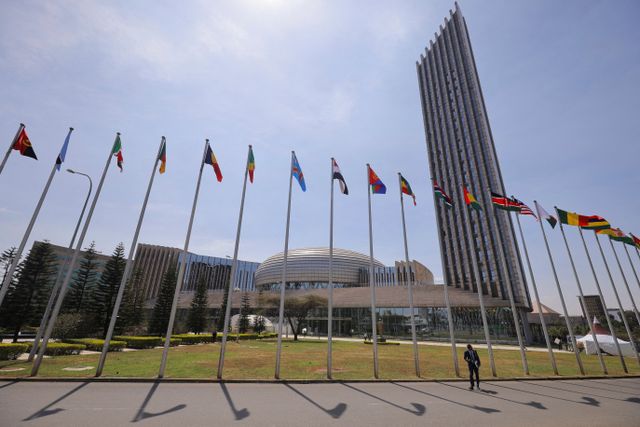
A central theme was the need for African countries to process their natural resources locally instead of exporting them in raw form. Leaders argued that local beneficiation would increase economic returns and strengthen industrial development.
Ghana announced a specific policy measure during the summit. President John Dramani Mahama declared that by 2030, the country will end the export of unprocessed mineral ores. The directive applies to manganese, bauxite, and iron ore.
"By 2030, there will not be any raw mineral ores leaving Ghana," Mahama said at his "Accra Reset" side event. The policy aims to promote local industrialisation and increase the value Ghana gains from its natural resources.
RECOMMENDED FOR YOU
Senegal’s Sonko slams government over G20 debt restructuring plan
South African President Cyril Ramaphosa also warned against what he described as a "new form of colonialism", where foreign economies target Africa’s natural resources. He said minerals should be processed locally. "It should no longer be a case where rock, soil and dust is exported out of Africa without being beneficiated," Ramaphosa told delegates. He urged African nations to work together to ensure their resources benefit their citizens.
United Nations Secretary-General Antonio Guterres condemned the historical exploitation of Africa’s resources. "No more exploitation, no more plundering," he said, stressing that "the people of Africa must benefit from the resources of Africa". He called for fair and sustainable value chains to ensure African countries benefit "first and fully" from their critical minerals.
President Mahama also announced changes to Ghana’s cocoa financing system. For nearly 30 years, Ghana has relied on syndicated loans from international banks to purchase cocoa, using cocoa beans as collateral.
According to Mahama, this system has limited domestic processing because collateralised beans must be exported to international financiers. Ghana has the capacity to process 400,000 tons of cocoa locally, but local processors have not had sufficient access to raw beans.
Under the new approach, Ghana will raise domestic bonds in cedis to finance cocoa purchases. "Ghana has enough cedis to pay for its cocoa," Mahama said, adding that the change will "immediately" release 400,000 tons of beans for local processing. Beginning with the 2026–27 season, at least 50% of all cocoa beans must be processed within the country.
The policy announcements were presented under the "Accra Reset" initiative. The framework focuses on strengthening resource sovereignty and shifting from aid dependency to investment-led growth.
Mahama criticised delays in implementing AU decisions. "African leaders come with decisions, agree and develop frameworks, but what is missing is urgency and implementation," he said. He urged leaders to "stop talking and start implementing" to create opportunities for young people and reduce irregular migration.
The summit also marked leadership changes within the AU. Burundi’s President Évariste Ndayishimiye will assume the AU chairmanship for 2026. Outgoing chairperson President João Lourenço of Angola said Africa’s development is not possible "if we leave anyone behind," and called for continued investment in infrastructure and human capital.
RECOMMENDED FOR YOU
Fertilizer shipments through Strait of Hormuz fall to zero as food security fears grow
This story is written and edited by the Global South World team, you can contact us here.
