Of migration and the bane of unemployment: Facing South Africa’s proxy crisis — Opinion
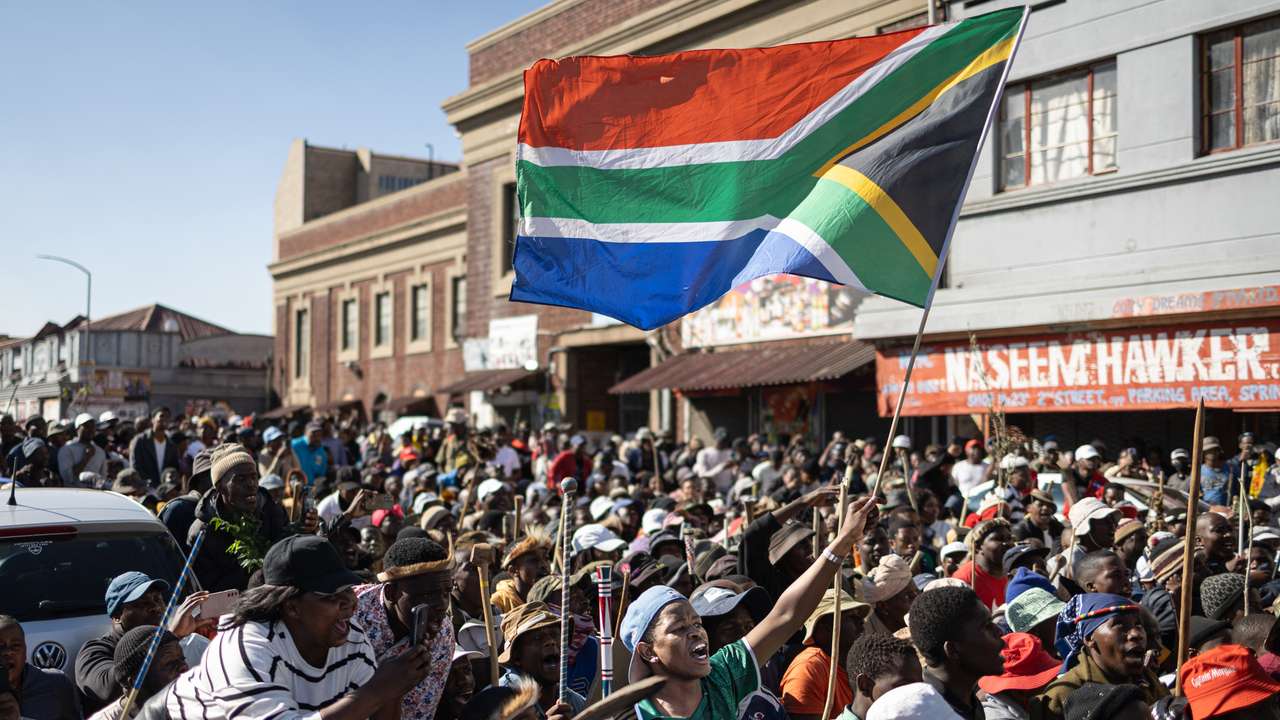
Imagine being blamed for something someone else did or failed to do. Would you be willing to take on the blame? Over the past few months, African nationals living in South Africa have been made to shoulder the blame for certain things they bear little to no responsibility for.
Social media has been awash these past couple of months with some unsettling videos from South Africa where anti-immigration sentiment is growing. While some leaders of the anti-immigration movement claim they are fighting illegal immigration, the videos online make it hard to believe their actions are solely limited to illegal immigrants.
The videos include images of shops said to belong to people from other African countries being vandalised and/or looted. There have also been videos of people said to be of other African nationalities being chased or beaten, school children demanding the removal of their foreign-born classmates, and the video of a Ghanaian national being questioned about his immigration status by a group of more than ten South Africans, including anti-immigration activist Victoria Africa.
These xenophobic attacks, as they’re being called on digital and mainstream media, are not new to South Africa. As Africa’s most industrialised nation since the late 19th century, South Africa has always attracted people from different parts of the continent and beyond. It has, since the 1980s, been a refuge for Mozambicans fleeing the civil war in their country. And since the 1990s, it has attracted thousands of economic migrants from Zimbabwe seeking a better life.
Years of deprivation and unemployment, especially among Black South Africans, have, however, left many of them feeling less secure about their economic prospects today as migrants land jobs or start their own businesses in South Africa.
RECOMMENDED FOR YOU

‘Not made of plastic’ - Spain's opposition leader demands ‘real’ Ceuta border
The earliest reported cases of xenophobic attacks in South Africa, according to South African History Online, date back at least to 1994. According to the website, “In December 1994 and January 1995, armed youth gangs in the Alexandra Township outside of Johannesburg, Gauteng Province, destroyed the homes and property of suspected undocumented migrants and marched the individuals down to the local police station where they demanded that the foreigners be forcibly and immediately removed.”
Three decades on, not much has changed when it comes to how some Black South Africans feel about their fellow Africans living and working in their country. Perhaps, the main difference today is the brazen manner in which some of them carry out their attacks or acts of intimidation against other African nationals as smartphone cameras capture the encounter.
Census data from Statistics South Africa indicates that there were 2.4 million international migrants in the country as of 2022. They represented a little over three percent of the country’s total population at the time of 62 million. Of the international migrant numbers, over 80 percent were from the Southern African Development Community (SADC). Out of that number, nearly 50 percent were from Zimbabwe followed by Mozambique with 18.7 percent.
Though international migrants make up a sliver of the populace, some of them have reportedly been involved in criminal activities, as South African journalist Kenneth Mokgatlhe told me.
“With the social and economic issues which are obviously facing the country, most of them, especially crime, is being blamed on foreigners. This might be because some of the crimes, such as cash-in-transit, you find that it is committed largely by people from Zimbabwe. Most of the time when people are apprehended, you find that there are always foreign nationals, especially the Zimbabweans, and then you’ve got the drug trafficking, which is a huge issue at the moment,” he said.
A commission of inquiry investigating the infiltration of criminal elements into the government heard allegations of drug cartels operating in South Africa. Kenneth says the drug trafficking ring is largely made up of foreign nationals from around the world. This discovery, he says, has heightened security concerns for many. “So that is why you are seeing this organisation coming forth because they have lost confidence in the political system.”
But as is the case with most protests, the underlying currents for the recent activities by the March and March movement are not only social and economic, but also political.
While ActionSA, founded by former Johannesburg Mayor Herman Mashaba, explicitly calls for an overhaul of the country’s immigration system to “attract skilled migrants while clamping down on the influx of undocumented migrants through our porous borders,” the Patriotic Alliance, the party to which Victoria Africa is aligned, says on its website that it has “zero tolerance for illegal immigration”.
RECOMMENDED FOR YOU
What happened after 70,000 migrants reached Ceuta?
Though the stances of these two parties are clear, Kenneth explains that the upcoming November 4 local government elections have made it difficult for some political parties to take a clear position on the matter.
“You have the ANC, which is defending this protest because they realise that they have got huge political and electoral implications, so they don’t want to denounce the ongoing marches. The only party that is against the ongoing marches is the EFF,” Kenneth says, adding that the ANC’s general secretary, however, “has vowed to support the ongoing protest, but on government platforms, that is where they’re trying to condemn it and to call for law and order.”
The party positions aside, the lack of enforcement of labour regulations is another major contributory factor to the recent wave of anti-migrant protests.
The government’s seeming inaction when it comes to labour laws has made it possible for some companies to employ illegal immigrants desperate to eek out a living and exploit them by paying them less than the minimum wage. It has also given room to enterprising Somalis and Ethiopians, for instance, to operate local convenience stores known as spaza shops, even if they do not have the requisite documentation, a move Kenneth says is putting spaza shops operated by South Africans at a disadvantage. All these, he notes, create tension between South Africans and the migrants.
“I think that it is the government which is causing this conflict,” Kenneth says. “What has happened between 1994 and now is that the ANC has collapsed the state and as such, people in the last election tried to vote the ANC out but they ultimately did not get one winner, so the ANC is still presiding over the government. But people know. They understand that the ANC has run down the government and the state does not have the capacity as it used to under the white rule of the national party which is known as the apartheid system. But because of the frustrations, then they get to blame the wrong person. I think that they should be blaming and pointing their finger at the government.”
In his first address to the nation since the countries started evacuating its citizens following the anti-immigration protests, South African President Cyril Ramaphosa acknowledged the economic and immigration challenges facing his nation.
“South Africa faces persistently high levels of unemployment, especially amongst our young people,” the president said. “Too many families are struggling to make ends meet. The cost of living is very high for many of the people of South Africa. Too many communities are experiencing poverty and inadequate access to opportunities. In such circumstances, frustration can easily be directed to those perceived to be competitors for jobs and resources.”
With a 32.7 percent unemployment rate, 60 percent of which is people between the ages of 15 and 24, it is easy to understand why many aggrieved South Africans would buy into the idea of blaming immigrants for taking their jobs. And they are not the first to think so. With nationalism on the rise globally, immigration has become a flashpoint issue, bringing to the mainstream the belief across the US and Europe that immigrants compete with locals for jobs.
RECOMMENDED FOR YOU

‘Fighting to the death’ - Migrants scramble for space in Ceuta
While that may not always be the case, a recent video posted to X might explain why the South African case may not be based solely on perception but on reality.
In the video, Victoria Africa appeals to a business owner to employ “locals”. The businessman tells her that he employs locals but, “You know the struggle. Monday is a problem.” He is alluding to a widespread belief that the average South African worker would not show up for work for days once they’re paid. Victoria Africa does not dispute the fact.
Instead, she tells the business owner that, “We will take full accountability. We’ll give you the people. We’ll ensure that they comply. We’ll ensure that they come to work on time and we’re not going to interfere especially if a person comes and disrespects your business or does not follow protocol or does not want to comply. You’ve got every right to take action. And we cannot protect people that don’t want to come to work.”
This begs the question, if the locals’ attitude to work is unsatisfactory to employers, is it fair to then blame or accuse immigrants of taking jobs meant for South Africans? The illegal immigrant’s fault in this case might be their willingness to take a job that would pay them something far less than what the average South African might be willing to take. And that is simply because they want to survive in a foreign land miles away from home. Also, businesses do not like to run at a loss. They all hope to make profits, no matter how small they are and as a result, they’ll only be interested in workers who will show up for work when they have to.
As President Ramaphosa said in his Sunday evening address, “illegal immigration is not the cause of all our economic challenges. There are other causes.”
Unfortunately, that pronouncement has come a little too late, as the March and March movement and their supporters have already succeeded in turning the hearts of many South Africans against their fellow Africans.
Since Ghana airlifted some 300 of its citizens home, other African countries have followed suit. Malawi on Saturday, June 6, bused home 150 of its citizens from the Western Cape province. Mozambique has also shuttled over 500 of its nationals home from South Africa. Nigeria is expected to airlift between 2000 and 4000 of its citizens out of South Africa this week. Are there more countries planning to evacuate their citizens?
For now, South Africa is back in the spotlight for a practice it has engaged in time and again for over three decades, which is anchored on the premise that immigrants, rather than the government’s failure to deliver on its promises, are responsible for the poverty and high unemployment rates they face. But immigration is a global phenomenon. Who’s to say citizens of another African country would not rise up in the days ahead against South Africans in their country or against other African nationals?
RECOMMENDED FOR YOU
Families search for missing migrants as deaths rise near Ceuta crossing
As the push for a “borderless Africa” gains momentum, this latest episode from South Africa should serve as a teaching moment for leaders across the continent. Rwanda, Kenya, Ghana, and Benin, among others, have in recent years rolled out e-visa programs for Africans to encourage intra-continental travel. A laudable idea in principle, but when the number of visitors starts to soar, and immigration policies are tested, how many of them would survive because of their robust immigration policies and how many would have to hit the pause button?
President Ramaphosa on Sunday listed five action points he hopes would address the issue of illegal migration: cracking down on violations of South Africa’s immigration, labour and other laws, preventing illegal entry, stamping out corruption in the immigration system, strengthening immigration policies, and engaging other African countries to “forge a broader response to migration challenges across our continent and regions”.
It would be great if the fifth point in particular is tabled at the next meeting of African leaders or their foreign ministers so that the dream of making travel across Africa easier and faster with e-visas can become true for every single country on the continent without citizens having to worry that their brothers and sisters from across the continent are coming for their jobs.
But even as President Ramaphosa has promised to address the issue of the economy and immigration, there are still a few questions that still bug me. What happens later this month when the June 30 ultimatum issued by the protesters is up? How exactly will the South African government ensure the pressure group does not carry out whatever plans it has for that day? What security measures are in place or will be in place for legal migrants from other African nations living in South Africa? And will the South African government seek out and start deporting illegal immigrants before June 30?
The opinions and thoughts expressed in this article reflect only the author's views.
Nii Akrofi Smart-Abbey is an award-winning international journalist, writer, and host of the A55 Podcast. Nii Akrofi has worked with local and international media in Ghana, Congo and the United States. He has contributed to news platforms like Zenger News, Africanews, W42ndST, and foreignpresscorrespondents.com.
