Saint Lucia bets on diplomacy and partnerships in a changing world
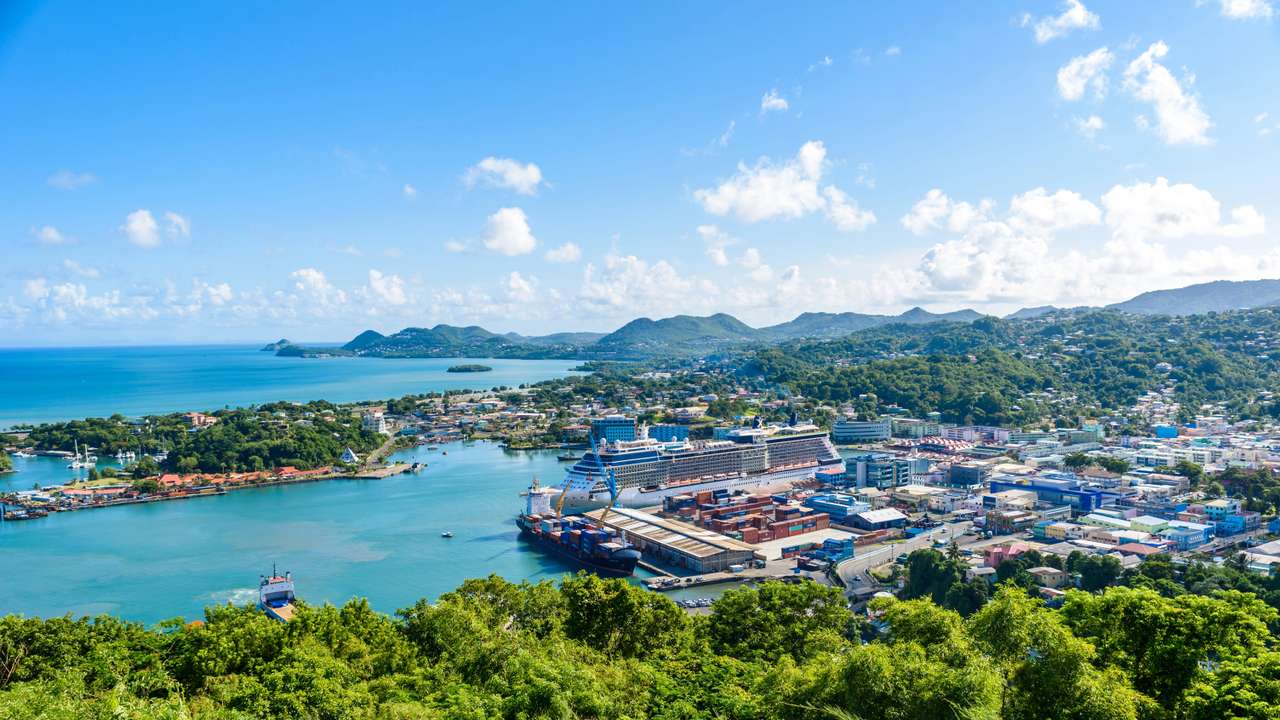
Saint Lucia is finding itself at the centre of several global and regional pressures, but its response is not one of confrontation. Instead, the Caribbean nation is relying on diplomacy, resilience and strategic partnerships as it looks to protect its sovereignty and strengthen its economic future.
That approach comes as the government begins a new term following the Saint Lucia Labour Party’s historic electoral victory in December 2025. While the win provided a strong mandate at home, it also coincided with growing challenges abroad.
Speaking to Atlantico, Deputy Prime Minister Ernest Hilaire said:
- His country would act as an 'honest broker' in the new multipolar world
- He planned to build on relations with neighbouring French islands to forge closer ties with Europe
- He would capitalise on the agility of a small nation to ensure St Lucia remains attractive to investors and partners.
Hilaire is confident of retaining his island's precious visa-free access to Europe, as a result of upgrades to its Citizenship by Investment Programme (CIP). The European Union has taken a tougher stance on citizenship-by-investment schemes, with its latest Visa Suspension Mechanism report arguing that the operation of such programmes could itself become grounds for suspending visa-free access to the Schengen Area. The report specifically highlighted Caribbean countries operating citizenship programmes, including Saint Lucia.
Hilaire says he is working to convince the EU of the importance and justification for retaining their in-depth partnership.
RECOMMENDED FOR YOU

Ugandan queen mother claims house arrest amid Tooro succession dispute
"The dialogue we maintain with Brussels is real, continuous and conducted in good faith," he said in an interview.
The debate is about more than passports. For Saint Lucia, it is also about preserving one of the benefits that have made Caribbean citizenship programmes attractive: visa-free access to Europe. The issue has become even more sensitive after the European Union pointed to Vanuatu as an example of a country that lost its visa-free status over concerns related to investor citizenship schemes.
However, Hilaire argues that Saint Lucia's programme has changed significantly in recent years.
"Following the Caribbean memorandum of understanding signed in early 2024, we have raised the minimum thresholds, strengthened due diligence, harmonised our standards with our four regional partners and introduced, from 2026, a five-year initial passport, a mandatory orientation programme, a thirty-day stay in the country and full biometric registration."
Hilaire, the Deputy Prime Minister responsible for Tourism, Investment and Commerce, among others, says the debate goes beyond technical requirements.
"Saint Lucia is a sovereign democracy of 180,000 people, facing climate vulnerability, debt constraints and limited fiscal space. We are not asking Europe for charity: we are asking for a partnership grounded in facts. The conversation must be about evidence, not only about fears."
Zone of peace
Beyond the debate over investment migration, Saint Lucia is also responding to a changing geopolitical landscape. Increased military activity, diverging positions within CARICOM and competition among global powers have brought renewed attention to the Caribbean.
Hilaire believes the region's traditional approach remains relevant.
RECOMMENDED FOR YOU
Iran rejects US claim of control over Strait of Hormuz
"Saint Lucia's position is one of quiet diplomacy. We have always regarded the Caribbean as a zone of peace, and we continue to do so," he said.
He argues that small states can play an important role in an increasingly multipolar world, serving as what he calls "honest brokers" in international affairs.
The government is also looking to strengthen ties with France through Martinique and Guadeloupe. Hilaire describes the relationship as "one of the most underestimated in the Atlantic" and sees opportunities for deeper cooperation on climate resilience, security and culture.
Tourism remains central to Saint Lucia's economy, but the government is seeking new markets. While North America remains the island's largest source of visitors, Hilaire believes France offers untapped potential, particularly through Saint Lucia's shared Creole heritage and creative industries. The key challenge, he says, is improving air connectivity with Europe.
Despite concerns about climate change, debt pressures and shifting global alliances, Hilaire remains optimistic.
"Small states have one underestimated asset: agility," he said. "We can move faster than the major powers on regulation, on partnerships, on positioning."
Image from Depositphotos.com
RECOMMENDED FOR YOU

Russia signs BRICS Pay and technology deals in New Delhi
This story is written and edited by the Global South World team, you can contact us here.
