Syria, Morocco lead as EU citizenship grants surge
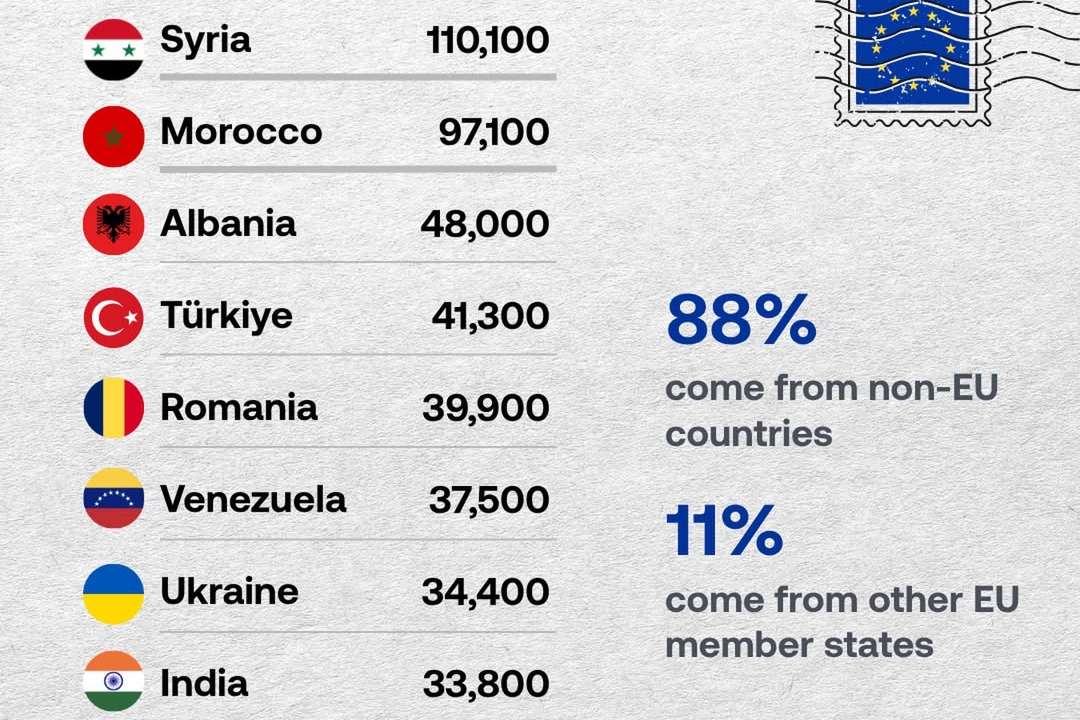
Syrians and Moroccans accounted for the largest shares of new European Union citizenship recipients in 2024, according to newly compiled figures based on Eurostat data, highlighting persistent migration patterns driven by conflict, economic mobility, and regional ties.
More than 110,000 Syrians acquired EU citizenship last year, making them the largest group by country of origin. Moroccans followed with just over 97,000 new citizens, reinforcing their long-standing position among the top nationalities obtaining EU passports.
The data highlights how geopolitical instability and economic migration continue to shape citizenship trends across the bloc. Syrians, many of whom arrived during the peak of the refugee crisis beginning in 2015, are now transitioning from asylum status to full citizenship in host countries such as Germany, Sweden, and the Netherlands.
Moroccan nationals, by contrast, reflect more established migration corridors, particularly into France, Spain, Belgium, and Italy, driven by historical ties and labour demand.
RECOMMENDED FOR YOU

Sanchez pledges to restore normality in Ceuta after mass migrant arrivals
Albania ranked third, with around 48,000 new EU citizens, followed by Türkiye (41,300) and Romania (39,900). While Romania is itself an EU member state, the figures reflect intra-EU mobility and naturalisation processes across member countries.
Citizenship grants were not limited to Europe’s immediate neighbourhood. Venezuela (37,500), Ukraine (34,400), India (33,800), Russia (31,000), and Brazil (30,100) also featured among the top ten origin countries.
The presence of Venezuelans reflects ongoing economic and political instability in Latin America, while Ukrainians continue to move across the EU amid the ongoing war with Russia. Indian and Brazilian nationals highlight skilled migration flows, particularly into countries with labour shortages in technology, healthcare, and engineering sectors.
Eurostat data shows that 88% of new EU citizenship recipients in 2024 came from non-EU countries, underscoring the bloc’s role as a destination for global migration. Only 11% were previously citizens of other EU member states, reflecting comparatively lower rates of intra-EU naturalisation.
This distribution signals that citizenship acquisition remains closely tied to long-term settlement of third-country nationals rather than mobility within the union.