Tax bills, tomatoes, and lost love - an outsider's view of the UK's Brexit decade: Opinion
In September 2025, as I boarded my flight to Beijing at London Heathrow Airport, I looked back on my more than six years as a foreign correspondent in the UK, from 2019 to 2025. In that time, the UK experienced four Prime Ministers, two monarchs, and one pandemic. Outside the black door of 10 Downing Street, Rishi Sunak resigned in the rain—a scene full of tragedy; at that very same door, successive Chancellors of the Exchequer held up their Red Boxes, smiling confidently at the cameras, full of high spirits; yet, no matter how the masters of Downing Street came and went, none stayed longer than a cat named Larry.
In the summer of 2026, the UK changed its Prime Minister once again. Keir Starmer stepped down in dismay, becoming the sixth Prime Minister to fall in the ten years since the Brexit referendum. At this very moment, the highly popular "King of the North," former Mayor of Manchester Andy Burnham, is confidently eyeing the Prime Minister's seat.
In Westminster, politicians and political commentators are accustomed to blaming the frequent turnover of Prime Ministers on PR disasters, party infighting, or terrible election strategies. I witnessed, experienced, and reported on what happened in this country for most of the decade following Brexit. As a foreigner who once lived in London, when I tried to understand why this country, once renowned for its political stability, had become seemingly "ungovernable," I found the answers not in parliamentary debates, but in a few everyday trivialities I personally experienced. Behind the endlessly spinning "revolving door" of 10 Downing Street, the structural decline of the macroeconomy and the throes of geopolitics have quietly rewritten the fates of ordinary people.
The tax bill problem
When I finished my term and was preparing to leave the UK, I logged onto the HM Revenue and Customs (HMRC) website to see exactly where the taxes I had paid over the years had gone. In the system-generated bar chart showing the allocation of my personal tax contributions, the fourth largest government expense—ranking right after welfare, healthcare, and pensions—was shockingly "National Debt Interest."
I always knew that the most important indicator of a nation's rise and fall is "money," but I never expected to touch the economic pulse of this country in such a manner.
When the interest a country has to pay annually on its national debt approaches the total amount spent on nationwide pensions, it inevitably surprises those of us from a culture that "loves saving and hates owing." That glaring number instantly made me realize the greatest illusion in British politics in recent years: whether it was Liz Truss's disastrous "mini-budget" or Keir Starmer's attempt to plug the fiscal black hole with tax hikes, every new government was merely dancing in heavy shackles. When massive portions of the budget are forced into paying debt interest, the funds available for the government to invest, stimulate growth, or repair public services are severely squeezed. Brexit itself has imposed a heavy structural headwind on this fragile economic foundation.
According to authoritative joint research conducted by the Stanford Institute for Economic Policy Research (SIEPR), the National Bureau of Economic Research (NBER), and the Bank of England, the Brexit process has caused a long-term shrinkage of the UK's GDP by 6% to 8%. According to the latest figures from the Office for National Statistics, by May 2026, the UK's public sector net debt had reached 95.10% of its Gross Domestic Product (GDP), requiring £111 billion in interest payments alone each year. In 2025, the yield on 30-year UK government bonds briefly hit 5.5%, marking a 25-year high.
The fiscal policies tucked inside the Chancellor's Red Box must be meticulously calculated: how to bring in more money, how to achieve more while spending less, and how to borrow more money at lower interest rates. This explains why anyone—from Starmer to any future Prime Minister—cannot easily flex their muscles. The UK is no longer ruled solely by the House of Commons, but also by the cold, hard "bond market." Any stimulus plan lacking financial backing will be met with ruthless market sell-offs. The national debt interest on that HMRC bill is the fiscal noose tightening around the neck of every British Prime Minister.
The "Tomato Crisis"
What the British economy lost was not just fiscal space, but also its once-unimpeded supply chains. Another visceral pain of Brexit is hidden right inside the everyday salad bowl. In late February 2023, I personally witnessed an absurd "Tomato Crisis" in London.
During that time, you couldn't find a single decent tomato on the shelves of major UK supermarkets. Even canned tomatoes and ketchup were swept clean. The official explanation given to the public by the government and supermarkets was surprisingly uniform: "Due to climate issues, Spain has suffered a severe tomato harvest failure."
Hearing this "force majeure" excuse, my colleagues and I were skeptical. We immediately made a WeChat call to our colleague stationed in Spain. The answer from the other end of the line felt like a resounding slap in the face: "That's complete nonsense. The Spanish markets are piled high with tomatoes; the supply is perfectly normal!"
Peeling back the disguise of "bad weather," the truth was nothing more than the non-tariff barriers brought about by Brexit. I have reported on many similar stories: British white asparagus used to rely heavily on seasonal agricultural workers from Eastern European countries like Romania and Bulgaria. After Brexit, the visa processes for Eastern European workers coming to the UK became overly convoluted, leading to severe labor shortages in UK agriculture and leaving many farmers worried their crops would rot in the ground. Furthermore, the customs clearance time for truck drivers crossing between Dover, UK, and Calais, France, has been drastically prolonged, with border delays frequently exceeding 36 hours during peak times. During extreme weather or system failures, queues of trucks stretching over 20 miles have trapped drivers for more than a dozen hours.
After leaving the EU single market and the customs union, tedious customs procedures and phytosanitary certificates turned EU exports to the UK into a logistical nightmare. Faced with endless red tape, European agricultural suppliers made the most economically rational choice: prioritize supplying the friction-free internal EU market and directly abandon or reduce exports to the UK. The UK's Office for Budget Responsibility (OBR) once stated that its long-term forecast shows post-Brexit UK trade will drop by 15% compared to remaining in the EU. Caught in the dual crossfire of low growth and high inflation, voters are angry about the cost-of-living crisis, and the most direct outlet for this frustration is demanding a change of Prime Minister time and time again.
Splitting up
Brexit severed not only logistics but also human connections. When I lived in London, my neighbors were an extremely "European" couple: the woman worked at the London branch of an Italian bank, the man was an engineer for a Portuguese construction company, and together they had a lovely French bulldog. On weekend mornings, the rich aroma of Italian espresso always drifted from their terrace.
Before Brexit, having an operating license in the City of London was like holding an "EU Passport" for financial firms; foreign institutions could provide financial services smoothly across the entire European Economic Area. But after Brexit, London lost the advantage of the EU financial passport, and the Italian bank where the woman worked withdrew its operations and most of its jobs from London. After struggling for a while, she moved back to Italy; for the sake of love, the man also had to quit his job and return to Portugal. Initially, we still liked each other's social media updates, but a few years later, when I accidentally scrolled past the man's photo on Facebook, the girl in his arms was someone else. Their love survived the test of the COVID-19 pandemic, but post-Brexit life made them miss out on each other.
This macro-level political experiment not only forced the UK to endure a net GDP loss of 6% to 8%, but it also cruelly severed the intersecting destinies of countless individuals on a micro-level. Brexit took away not just capital, but also a piece of the cosmopolitan vitality that this city once took immense pride in.
Compared to the departure of this young couple, some of the Europeans who stayed behind plunged into a different kind of panic. A French friend of mine has spent most of his life in London and speaks with a fluent London accent. Recently, however, he has been frantically preparing for the "Life in the UK" citizenship test. Previously, despite having lived in London for decades, this proud Frenchman was always reluctant to apply for British citizenship. But now, he fears that if the populist wave continues to sweep across the country and the Reform Party comes to power, he could face visa complications or even the risk of deportation at any moment, even though he already considers London his primary home.
Instead of taking back control of the borders as politicians promised, Brexit saw immigration numbers hit a historic high of over 900,000, the vast majority of whom were non-EU migrants. This sense of disillusionment catalyzed the rise of far-right forces. Another long-time friend in the UK noted that, in the past, the confrontation between the UK's two major political parties unfolded roughly along a classic left-right economic axis: Labour championed redistribution, while the Conservatives advocated for low taxes. The middle class, the working class, and the City of London all had their respective places, coexisting peacefully. But Brexit acted like a wedge, forcefully prying this axis apart and replacing it with a new one: the identity/culture axis. From then on, British voters were reclassified—are you for an open society or a closed one? Are you a metropolitan elite or a small-town nostalgic?
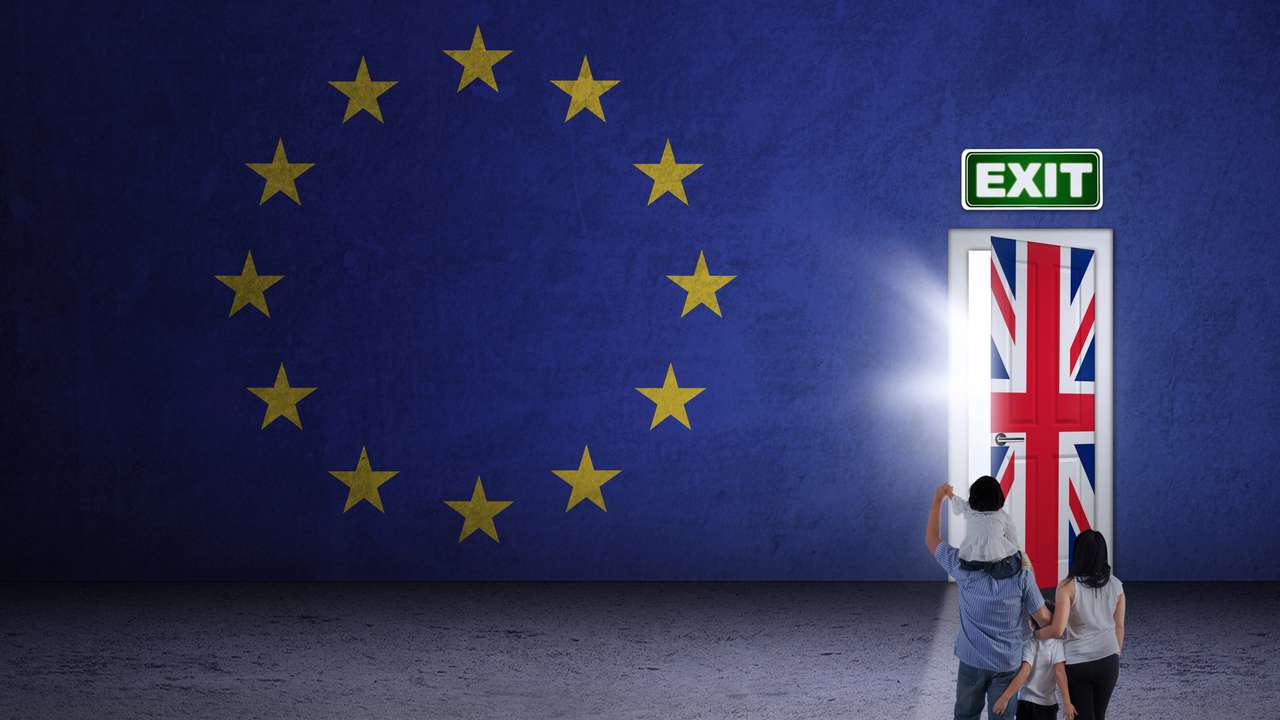
The 2016 referendum was viewed by many pro-Brexit supporters as an opportunity to "take back control." But ten years later, whether it is UK-EU relations, economic development, or immigration debates, many Britons feel that although the UK has left the EU, the pervasive "loss of control" over their own lives remains as strong as ever.
The afterglow of empire
Finally, there is that staggering bill. In the autumn of 2022, I recorded a video in my London apartment specifically breaking down my monthly energy bill. I calculated my electricity, hot water, and heating costs at the time, and the monthly energy expense had already reached £160.50. At a rough exchange rate of 8, that was 1,284 RMB for a single month! By 2025, statistics showed that the annual household energy expenditure in the UK reached £1,720. Based on the median disposable income of a UK household in the 2024 fiscal year (£36,700), energy expenses accounted for roughly 4.7%. Beyond energy, there are supermarket bills, housing bills, and transport bills; the numbers representing the cost of living are only growing larger. Behind those alarming figures reflects the suffocating cost-of-living crisis facing ordinary Londoners, as well as the UK's extreme vulnerability in the global energy supply chain.
The Russia-Ukraine conflict and the turmoil in the Middle East have ruthlessly exposed the soft underbelly of the UK's energy structure. Yet, a perplexing paradox exists: in a low-growth economy where ordinary citizens must pinch pennies for heating, where the government's fiscal space is severely squeezed by national debt interest, and where not even the stable supply of tomatoes can be guaranteed, the politicians in Westminster are still immersed in the illusion of the bygone "British Empire." They stubbornly insist on increasing defense spending, attempting to maintain a "Great Power posture" on the stage of international aid and global geopolitics that has long been disproportionate to their actual national strength.
A deeper malaise
Ten years of the Brexit dream. When Andy Burnham attempts to return to the centre of power with his successful experiences from Manchester, he will be facing a nation far more shattered than Greater Manchester. Politicians always assume that swapping out a dry, rigid Starmer for a more grounded new leader will pacify angry voters. But as long as the UK refuses to drop the baggage of its imperial afterglow, refuses to confront the structural barriers caused by Brexit, and fails to resolve the massive interest ledger written on my tax bill alongside the cost-of-living crisis on ordinary citizens' bills, the black door of 10 Downing Street will forever remain a revolving door that only spins faster and faster.
Yubin Du is a journalist, producer, and chief editor for CGTN. He was stationed as a foreign correspondent in Washington, D.C., USA, and London, UK, for six years respectively, focusing on China-US and China-Europe relations. He has worked in China's international broadcasting and new media sectors for over 16 years. This article reflects only the author's personal views.Image: Deposit Photos
This story is written and edited by the Global South World team, you can contact us here.
