The Commonwealth at a glance: A global alliance of 56 nations and 2.5 billion people
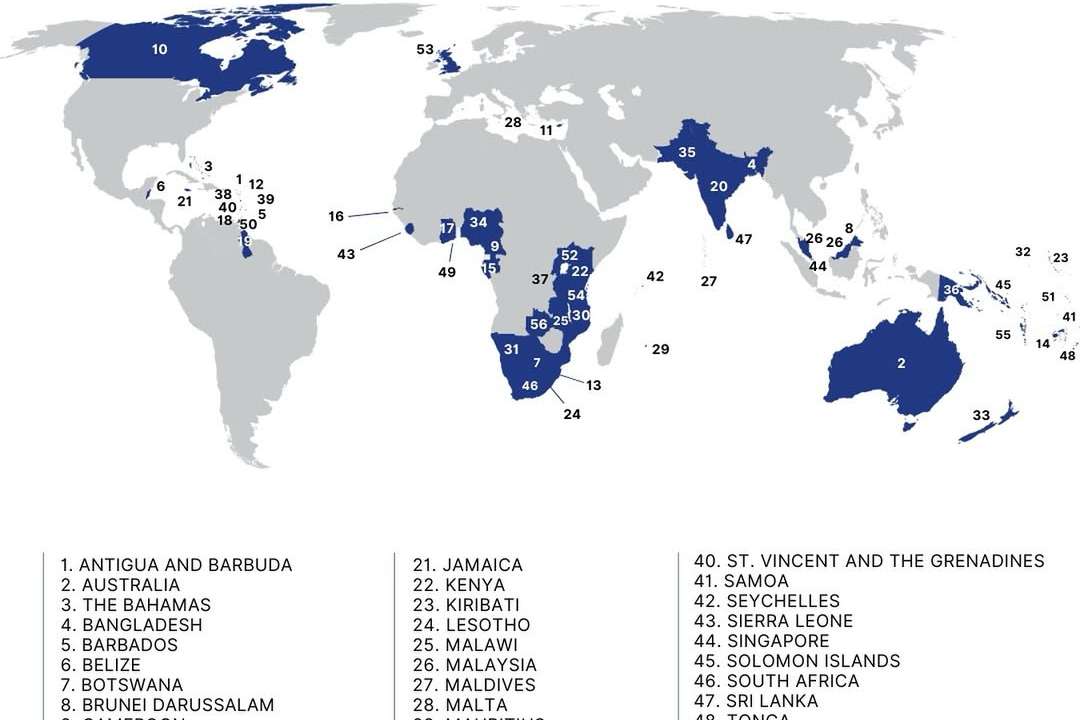
With a footprint that spans every inhabited continent, the Commonwealth of Nations is one of the most expansive and culturally diverse political associations in the world. Comprising 56 countries and representing over 2.5 billion people, or nearly one-third of the global population, the Commonwealth remains a powerful force in shaping 21st-century multilateral diplomacy and development.
From small island states like Tuvalu and Dominica to major economies such as India, Canada, and Australia, the Commonwealth includes countries of vastly different sizes, geographies, and histories.
While its historical roots lie in the former British Empire, today's Commonwealth is defined less by colonial legacy and more by shared values: democracy, human rights, sustainable development, and the rule of law.
The Commonwealth stretches across five key regions:
- Africa: Home to 21 member countries, including Nigeria, South Africa, and Kenya.
- Asia: Includes populous nations like India, Pakistan, and Bangladesh.
- Caribbean & Americas: Features island nations such as Jamaica, the Bahamas, and Trinidad and Tobago.
- Europe: Represented by the United Kingdom, Malta, and Cyprus.
- Pacific: Spanning Australia, New Zealand, and island nations like Fiji, Samoa, and Papua New Guinea.
This geographical diversity fosters unique cross-regional cooperation in education, health, environmental sustainability, and trade.
The association’s strength lies in its shared language (predominantly English), cultural ties, and commitment to democratic governance. Yet, it also embraces cultural pluralism—members practice different religions, speak hundreds of local languages, and follow varied legal systems.
The Commonwealth Charter, signed in 2013, formalised the collective commitment to values such as gender equality, environmental protection, and inclusive governance. This ethical framework underpins its flagship programs, such as the Commonwealth Youth Programme, Commonwealth Climate Finance Access Hub, and initiatives supporting free and fair elections.
Despite lacking formal political authority, the Commonwealth wields significant soft power. It includes major global players like India and the UK, as well as fast-growing economies like Rwanda and Bangladesh. Collectively, Commonwealth nations conduct more intra-trade than average, aided by shared legal and administrative systems that reduce transaction costs and enhance business confidence.
According to the Commonwealth Secretariat, trade among member states is projected to surpass $2 trillion by 2030, facilitated by initiatives like the Commonwealth Connectivity Agenda, which supports digital transformation, transport infrastructure, and supply chain resilience.