The global social protection gap: Why 2 billion people remain uncovered
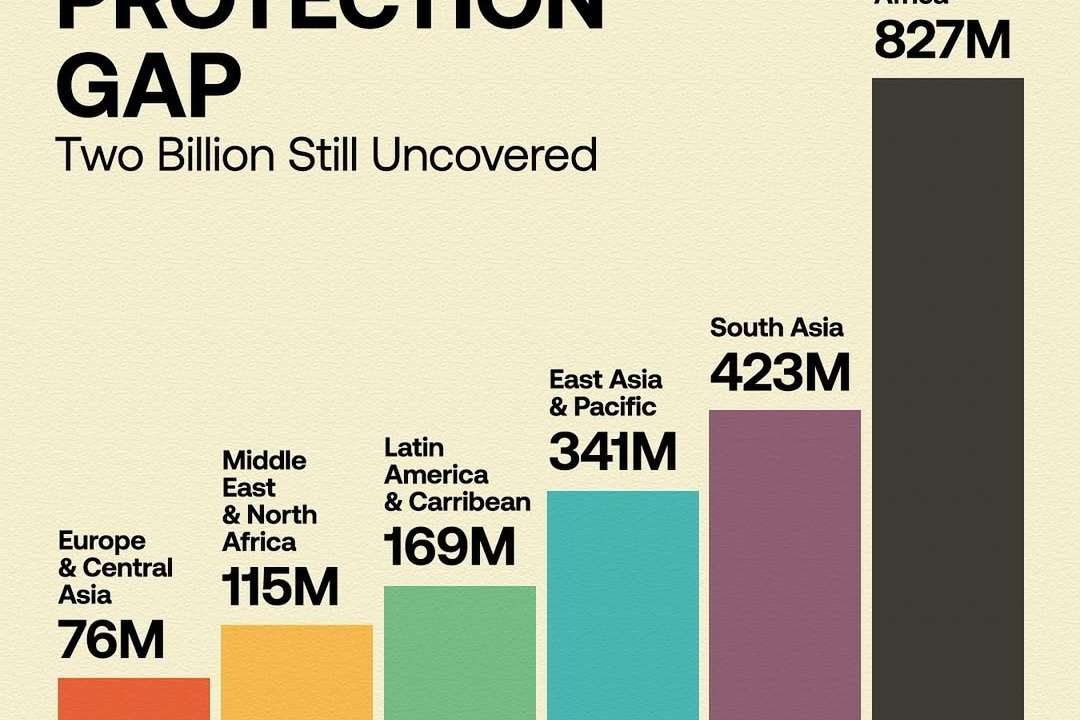
According to the State of Social Protection Report 2025, a staggering 2 billion people across the globe remain uncovered or inadequately covered by any form of social protection—a stark reminder of the deep inequalities that still persist in the 21st century.
Here’s a breakdown of the number of people without social protection by region:
- Sub-Saharan Africa – 827 million
- South Asia – 423 million
- East Asia & Pacific – 341 million
- Latin America & Caribbean – 169 million
- Middle East & North Africa – 115 million
- Europe & Central Asia – 76 million
Sub-Saharan Africa alone accounts for over 40% of the global population lacking protection, underscoring the urgent need for reform and investment in these areas.
Why are so many still uncovered?
Several key factors contribute to the growing global social protection gap:
- Low Government Spending in Fragile States: Many low-income and conflict-affected countries, like Sudan and Somalia, lack the fiscal capacity to implement robust safety nets. In Sub-Saharan Africa, for example, the average public expenditure on social protection is significantly below global benchmarks.
- Informal Economies: In regions like South Asia and Africa, a large percentage of the population works in informal sectors where social insurance is typically unavailable. Without employer contributions or formal employment contracts, millions are left vulnerable.
- Lack of Policy Infrastructure: Countries with weak institutions or poor governance often fail to administer social protection programs effectively, resulting in limited coverage or inefficiencies in delivery.
- Demographic Pressures: Rapid population growth, especially in Africa and parts of Asia, increases the strain on limited resources, making it harder to expand social protection coverage proportionately.
- Global Crises and Climate Shocks: Displacement from war, climate change, and pandemics exacerbate existing vulnerabilities and disrupt already fragile support systems.
Why it matters
Social protection systems—including health coverage, unemployment benefits, pensions, and child support—are fundamental human rights and key to reducing poverty and inequality. Without them, communities are more susceptible to hunger, illness, and economic shocks.
Investing in social protection is not just a moral imperative; it’s an economic one. According to the ILO and World Bank, every dollar spent on inclusive protection yields long-term benefits such as improved health, education, productivity, and social cohesion.