The misogyny board: How screens are teaching hate speech — Opinion
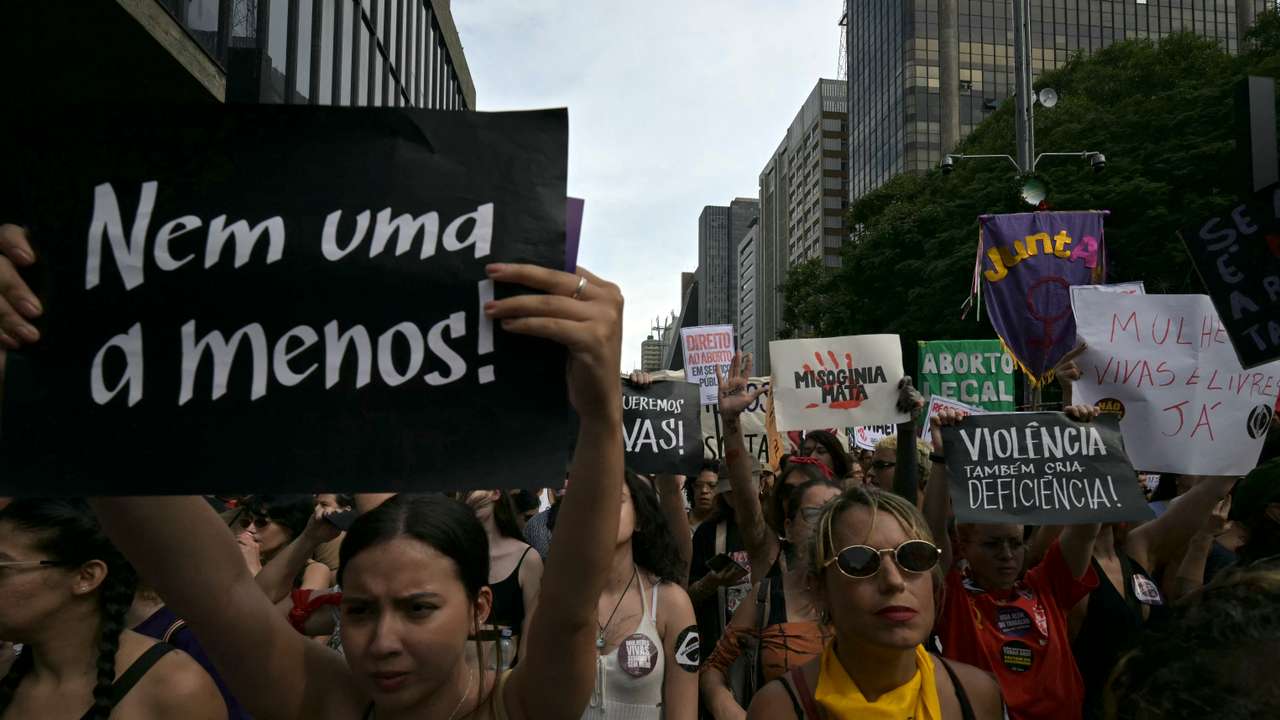
Brazil has tightened its laws on femicide, yet every single day, a new, brutal death pops up on our feeds. Make no mistake: this is merely the tip of the iceberg.
Hate speech is spreading at breakneck speed. It gets thousands of views, it generates profit, and it always precedes physical violence. It is normalised long before the tragedy strikes.
This violence has broken into the very walls meant to represent knowledge and safety, as schools are not apart from society; on the contrary.
Classrooms now echo with open hate speech, spewed without hesitation. Children and teenagers repeat, without filter, the misogyny they learn from their screens. They voice profanities that not even our grandparents would have had the audacity to say, yet today, it is treated as just another social media trend. In this age of out-of-control misinformation, the virtual world feels more "real" to them than the school.
RECOMMENDED FOR YOU

Nepal flood death toll rises to 389 as hundreds remain missing
As Hannah Arendt taught us about the banality of evil, we are not dealing with comic-book monsters—a pedagogy of degradation is educating this generation.
Brazilian schools now find themselves locked in a losing battle with the screens and their own precarious conditions, their credibility under constant assault by extremist groups and politicians who are the ones who are the real responsible parties to come up with solutions.
While teens drift toward online environments where they feel validated, these entire generations are being shaped systematically under radical and extremist values that focus on female submission and male validation. This is far from innocent, and it has nothing to do with free speech.
While school violence escalates, marked by horrifying lists targeting girls for sexual violence, Brazilian women are fighting to be heard by the Brazilian Congress; they propose a law against misogyny, as racism and transphobia are already crimes. Though approved by the Senate with government backing, this is a desperate attempt to protect basic civil rights against a social media machine that profits directly from our degradation.
Flooded with fake pseudo-intellectual "coaches" dictating how women should behave and how men can prove their masculinity, the banalization of crimes has created a
toxic environment threatening the future of democracy, as well as the fundamental standing of women as citizens and human beings. They excuse it all as "just advice," but their true intent is fracturing our future. And let us be clear: this dangerous agenda is surging globally.
So what has become of our basic rights? Why does the mere existence of an independent woman provoke such intense disgust? This is not about how you look or how you act; it is about the right to exist as a full citizen. In a society fractured by algorithms feeding entirely on confirmation bias, deep-seated frustrations are calmed down by simplistic, hateful solutions.
Today, a simple "no" can be a life-threatening choice because, in a traditionalist mindset, women are forbidden to refuse; they are meant to please. That single, powerful word is reshaping our society—and men are exacting a bitter revenge for it.
RECOMMENDED FOR YOU
Rwanda Roundup: Kagame begins Oman visit, 7,188 pupils ordered to resit exams and youth leadership takes centre stage
The opinions and thoughts expressed in this article reflect only the author's views.
Vera Cambiatti is an educator and translator with over 15 years of experience in basic and higher education, in both the public and private sectors. She holds degrees in Translation/Interpretation, Literature, and Pedagogy, an MBA in School Management from USP (University of São Paulo), and a specialisation in English Language Teaching. She is also currently pursuing a postgraduate degree in Politics and International Relations at FAAP (Fundação Armando Alvares Penteado). Certified by Cambridge and Bridge, she teaches English (general, business, and proficiency), Portuguese, literature, and manages projects in Languages and Humanities.
