The rise of BRICS+: Can it really rival the G7?
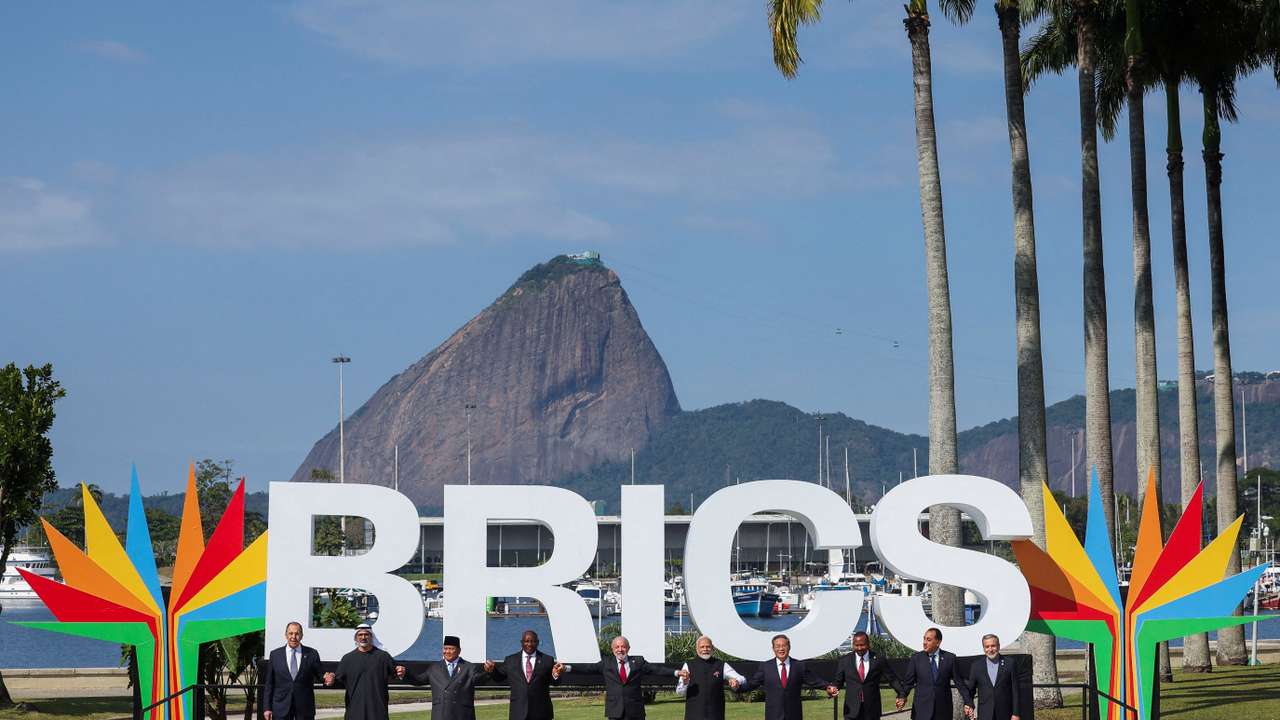
For years, BRICS, originally comprising Brazil, Russia, India, China, and South Africa, has positioned itself as an alternative bloc to the established G7 order.
Now, with the significant expansion to what’s broadly being called BRICS+, the group is seeking to amplify its economic and geopolitical clout on the world stage.
The expansion of BRICS into BRICS+ signals a stark shift in global alignments. With the leadership of emerging economies, the bloc now includes new members such as Egypt, Ethiopia, Iran, Saudi Arabia, and the UAE, while also courting partner countries like Nigeria and Vietnam. BRICS+ countries represent half the planet's population and around 40% of global trade, a volume approaching parity with the G7’s economic heft.
When the G7 was formed in the 1970s, it dominated the global economy, controlling over 60% of world GDP. Today, that share has dropped to around 30%. By contrast, BRICS+, with its expanded membership, now accounts for 36% of global GDP (in nominal terms) and more than 40% of global trade. Measured by purchasing power parity (PPP), BRICS+ already surpasses the G7, representing nearly one-third of the world economy compared to the G7’s 30%.
Population size is another key differentiator. The G7’s seven advanced economies, Canada, France, Germany, Italy, Japan, the UK, and the U.S., represent about 770 million people. BRICS+, by contrast, now represents over 4.5 billion people, or more than half of humanity.
RECOMMENDED FOR YOU
Six countries account for three-quarters of Europe’s unicorn startups
With the inclusion of Saudi Arabia, Iran, and the UAE, the bloc now controls a substantial share of OPEC oil output, which it can wield as a bargaining tool in global markets. The G7, in contrast, is heavily dependent on energy imports, especially after cutting ties with Russian oil and gas.
Despite its growing reach, BRICS+ faces significant obstacles. Its members span diverse regions, political systems, and economic structures, making consensus-building difficult. Countries such as India and Brazil have expressed caution about turning the bloc into an overt rival to the West, preferring instead to balance BRICS engagement with existing international institutions.
Differing geopolitical interests, such as India’s rivalry with China or Brazil’s economic ties to the U.S. also complicate cooperation.
With expanded membership, control of key energy resources, and a growing share of global trade and GDP, BRICS+ has become a formidable force in international politics. Yet whether it can transform from a loose coalition into a coherent alternative to the G7 remains uncertain.
This story is written and edited by the Global South World team, you can contact us here.