Trump defends contact with FIFA over Folarin Balogun red card
US President Donald Trump has defended his decision to contact FIFA President Gianni Infantino after USA forward Folarin Balogun was sent off during the team's FIFA World Cup victory over Bosnia and Herzegovina.
Speaking on Monday, Trump said he requested a review of the decision after learning Balogun had received a straight red card.
“I didn't know what the hell a red card was. When I found out, I said, you got to be kidding,” Trump said.
Balogun was dismissed in the second half of the United States' 2-0 win on July 1 after the Video Assistant Referee (VAR) alerted the referee to a high challenge on a Bosnia and Herzegovina defender.
Trump argued that the challenge did not warrant a sending-off.
RECOMMENDED FOR YOU
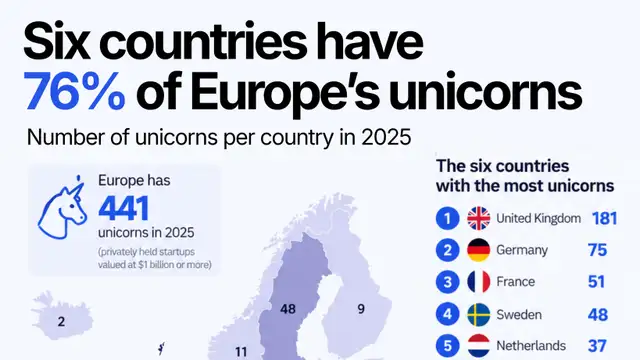
Six countries account for three-quarters of Europe’s unicorn startups
“I understand sports really well, really well. And that wasn't a foul. That wasn't even an infraction,” he said.
The US president also criticised the referee, describing him as “very suspect” while making indirect references to his “past.”
“I don't like to create controversy,” Trump added.
Explaining why he contacted FIFA, Trump questioned the automatic suspension that accompanies a straight red card.
“It's one thing to penalise somebody for the game but how do you penalise them for a game that hasn't been played yet. It's very unfair you can't do that so yes I asked for a review by FIFA. I spoke to a man who's highly respected and by the way whose level of respect has gone up tenfold and he was good before this started.”
Trump insisted he did not pressure FIFA to overturn the decision.
“I'm very glad all I did was ask for a review. I didn't say, you have to do this,” he said.
FIFA later suspended the automatic one-match ban, allowing Balogun to play in the United States' Round of 16 match against Belgium. The governing body said the suspension would be held in abeyance for one year under a disciplinary probation provision.
RECOMMENDED FOR YOU
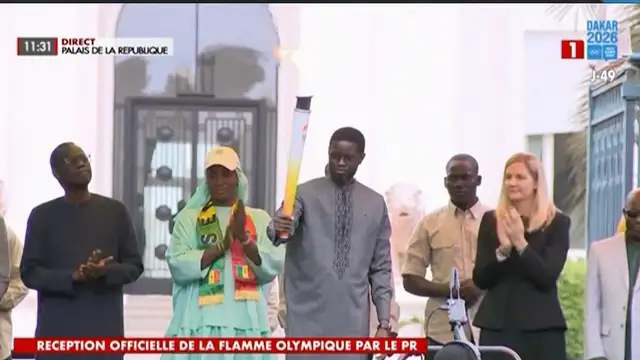
Olympic flame arrives on African soil for first time as Senegal begins Dakar 2026 countdown
The decision prompted criticism from some fans and commentators, who questioned the consistency of FIFA's disciplinary process and the influence of political intervention in football.
The 2026 FIFA World Cup, hosted by the United States, Mexico and Canada, has also faced scrutiny over issues including travel restrictions affecting some participating teams and officials, as well as debate over ticket prices, travel costs and the use of hydration breaks during matches.
This story is written and edited by the Global South World team, you can contact us here.
