U.S., Gulf states dominate global migration trends as immigrant populations reshape economies
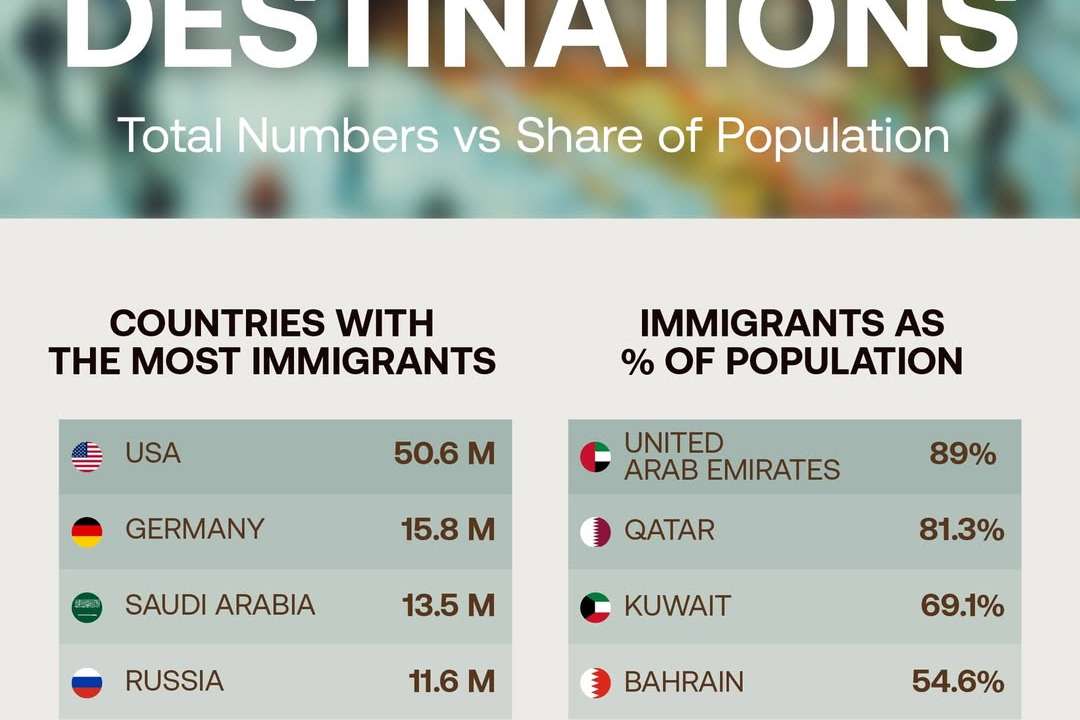
The United States remains the world’s largest destination for migrants in absolute terms, while Gulf nations continue to lead by far in immigrant share of population, underscoring starkly different migration models shaping global labour markets and demographics.
Recent data compiled from international migration estimates and policy analyses shows that more than 50 million immigrants live in the United States, far exceeding any other country, according to figures cited by immigration platform CitizenPath and global data aggregators.
Germany follows with 15.8 million immigrants, while Saudi Arabia (13.5 million), Russia (11.6 million) and the United Kingdom (9.4 million) round out the top five.
Analysts at Intelpoint note that advanced economies continue to attract the largest absolute migrant populations due to stronger labour markets and institutional stability, particularly in sectors such as healthcare, construction and technology.
RECOMMENDED FOR YOU

More than 6 billion people are now online as global internet access reaches new high
CitizenPath data also highlights that immigration remains central to U.S. population growth, with migrants accounting for a significant share of workforce expansion in recent years.
While Western nations dominate in total numbers, Gulf countries lead when measured by proportion of immigrants within their populations.
- United Arab Emirates: 89%
- Qatar: 81.3%
- Kuwait: 69.1%
- Bahrain: 54.6%
- Saudi Arabia: 37.4%
These figures reflect a fundamentally different migration structure, where foreign workers make up the majority of the labour force under temporary or sponsorship-based systems.
According to regional analyses cited by Intelpoint, Gulf economies rely heavily on migrant labour across construction, domestic work and service industries, with limited pathways to permanent residency or citizenship.