Who will answer for the suffering in Sudan – and when? — Opinion
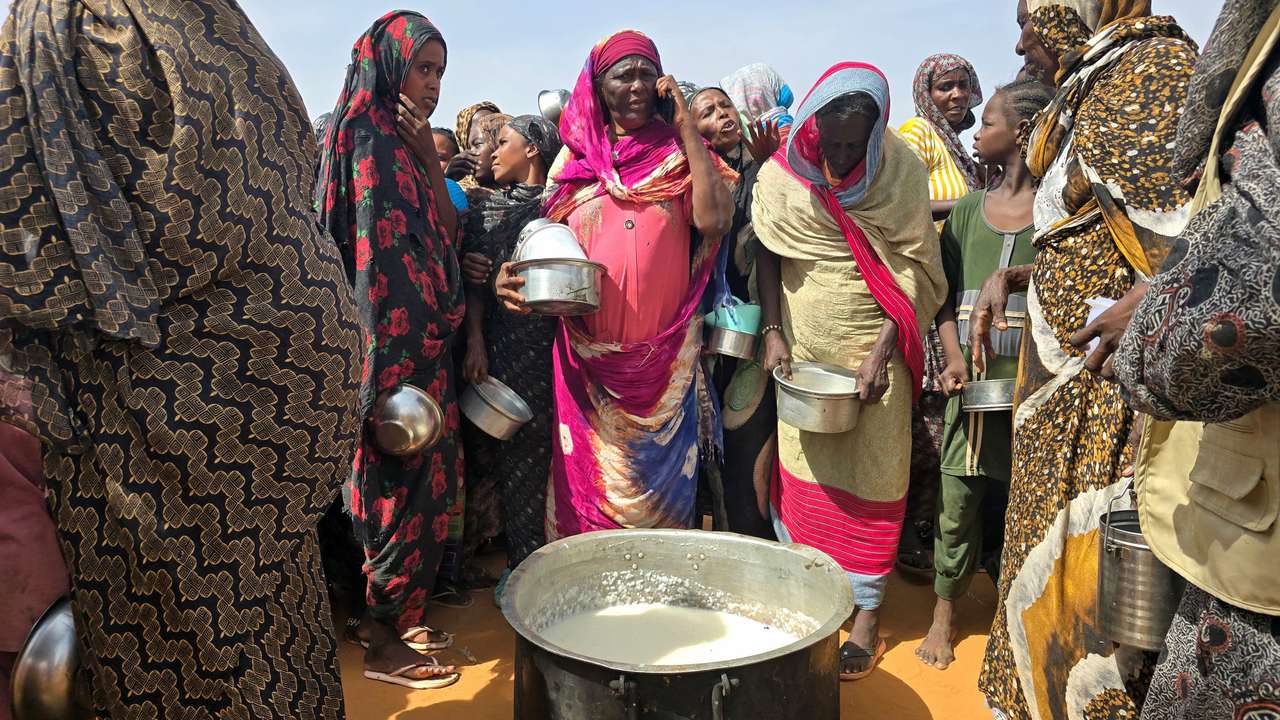
Yes, in war, loss is inevitable. But should this be an excuse to violate human rights and international law? Shouldn’t we worry when thousands of civilians perish in the crossfire, with zero restraint, as we are seeing in Sudan?
The Protocol Additional to the Geneva Conventions of August 12, 1949, relating to the Protection of Victims of Non-International Armed Conflicts, states:
“All persons who do not take a direct part or who have ceased to take part in hostilities, whether or not their liberty has been restricted, are entitled to respect for their person, honour, convictions, and religious practices. They shall in all circumstances be treated humanely, without any adverse distinction. It is prohibited to order that there shall be no survivors.”
So why, then, are civilians in Sudan continuing to endure dehumanising conditions? These range from severe hunger and displacement to sexual violence and summary executions.
As a result of the war – recently described by the UN High Commissioner for Human Rights as an “unfolding catastrophe” – suffering is being normalised, necessitating urgent international action.
RECOMMENDED FOR YOU
Six countries account for three-quarters of Europe’s unicorn startups
“Civilians have been subjected to siege-like conditions for 18 months, battered by relentless drone strikes, as the Sudanese armed forces and the Rapid Support Forces (RSF) battle for control,” says Volker Turk, the UN High Commissioner for Human Rights.
He highlights the series of grave atrocities reported in al-Obeid, the North Kordofan state capital, where about 15 drone strikes killed 45 civilians and injured 41 in the month of June alone, noting that the actual number of casualties is likely higher.
The conflict, which began in 2023, is a vicious power struggle between the Sudanese Armed Forces (SAF) and the paramilitary RSF. It broke out after the fall of the country’s former leader, Omar al-Bashir. It has displaced over 9 million people from their homes, setting up the world’s worst humanitarian crisis – driven by two extreme sides, both unwilling to heed calls for accountability.
In 2025, nearly 250,000 civilians, half of them children, were subjected to prolonged starvation in Sudan’s North Darfur city of al-Fashir during an RSF siege. Thousands of grave human rights violations were documented.
“RSF and allied Arab militia carried out widespread attacks, including mass killings and summary executions, sexual violence, abductions for ransom, torture and ill-treatment, detention, disappearances, pillage and the use of children in hostilities. In many cases, attacks were directed against civilians and persons hors de combat based on their ethnicity or perceived affiliation,” a UN report concluded.
These events reveal a deeply saddening pattern of profound human suffering, but what’s more concerning is its reckless continuity, with no end in sight.
In a world where the law is becoming increasingly sidelined by the interests and egos of individuals, there is a need for deeper reflection. The international community must unite to defend the principles of justice for the victims, relentlessly seek accountability and advocate for peaceful resolution to the Sudan conflict.
The African Union and other continental players should be supported to lead mediation and humanitarian efforts. African solutions must be prioritised because they best understand the conflict’s many dimensions.
RECOMMENDED FOR YOU
Olympic flame arrives on African soil for first time as Senegal begins Dakar 2026 countdown
“External actors often simplify complex crises by supporting one side without fully acknowledging the diversity of political forces at play. This approach tends to overlook the nuanced, multifaceted nature of the situation, which involves various stakeholders with different interests, ideologies and goals. As a result, the complexity of the conflict is ignored, and a one-dimensional perspective can lead to ineffective or misguided interventions,” analysts argue.
In the same vein, and to counter the simplification, the Sudan situation must receive the media attention it deserves. This could help draw more global support. All conflicts deserve equal urgency, regardless of where they occur or whose interests they serve.
The article solely represents the views of Simpson Muhwezi, a Ugandan freelance writer and development practitioner.
