Why do African leaders want to join BRICS?
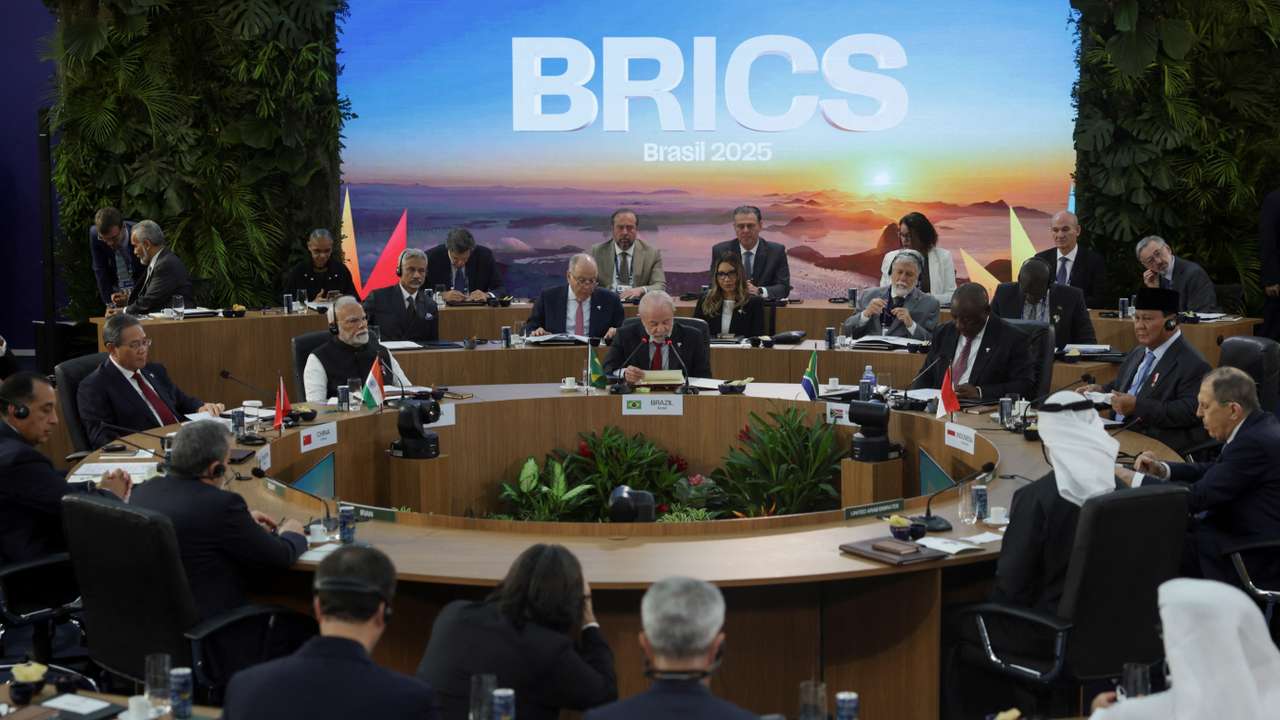
Over the past two decades, BRICS, originally composed of Brazil, Russia, India, and China, has emerged as a powerful alternative to the traditional G7-dominated global economic order.
With South Africa joining in 2010, the bloc expanded its global reach, and the more recent additions of Egypt and Ethiopia (as of January 1, 2024), along with others like Iran, the UAE, and Indonesia, have amplified its influence.
This expanded coalition, now often called BRICS+, represents roughly 46% of the world’s population, controls about 28% of global trade, and is projected to command over 38% of global GDP by 2029, surpassing the G7’s declining share.
African leaders increasingly view BRICS as a strategic platform to counterbalance Western-dominated institutions like the IMF and World Bank, organisations often criticised for imposing stringent conditionalities.
In contrast, the BRICS-established New Development Bank (NDB) aims to offer more flexible financing, including a goal of lending 30% in local currencies by 2026 AfripoliReddit. While progress has been slow, only around 21% of approved financing was in local currency as of 2023. This shift remains a powerful symbol of financial autonomy Afripoli. As members of the NDB, countries like Egypt and Algeria now have a firmer footing outside the traditional dollar-centric system.
RECOMMENDED FOR YOU
Six countries account for three-quarters of Europe’s unicorn startups
Intra-African trade under BRICS is also growing. South Africa, for example, relies on BRICS for nearly 21% of its external trade, with GDP contributions and trade volume consistently rising BRICS+ Consulting Group. Region-wide, trade between Africa and BRICS partners reached an estimated $580 billion in 2023, with $83 billion in FDI, largely funnelled into infrastructure, energy, and tech sectors.
South Africa, for instance, has benefited 100 billion rand, approximately US $5.3 billion, from the BRICS bank, which it used to fund its infrastructure projects. Egypt also joined the bank in February to help ease its greenback shortages.
Africa - BRICS trade
With the BRICS de-dollarisation concept aimed at increasing the use of local currencies in trade, it is no surprise that African leaders request an alignment with the bloc. What could go wrong with this concept is an increased use of the Chinese renminbi, and already, African nations, including Mauritius, Nigeria, and Zambia, use the renminbi as a reserve currency.
The BRICS are now Africa’s largest trading partners, and in 2012, trade rose to as much as US$340 billion. The BRICS are also growing in their foreign direct investments in Africa, especially in the manufacturing and service sectors, compared to the US and Europe. It is reported that the BRICS trade more with Africa than they do among themselves.
With Africa’s untapped agricultural sector, the opportunity for investments and the transfer of technology, BRICS is a strategic alternative for Africa to break free from Western influence.
This story is written and edited by the Global South World team, you can contact us here.