YouTube slowdown in Russia darkens freedom of speech outlook
YouTube slowdown in Russia darkens freedom of speech outlook
By Alexander Marrow and Gleb Stolyarov
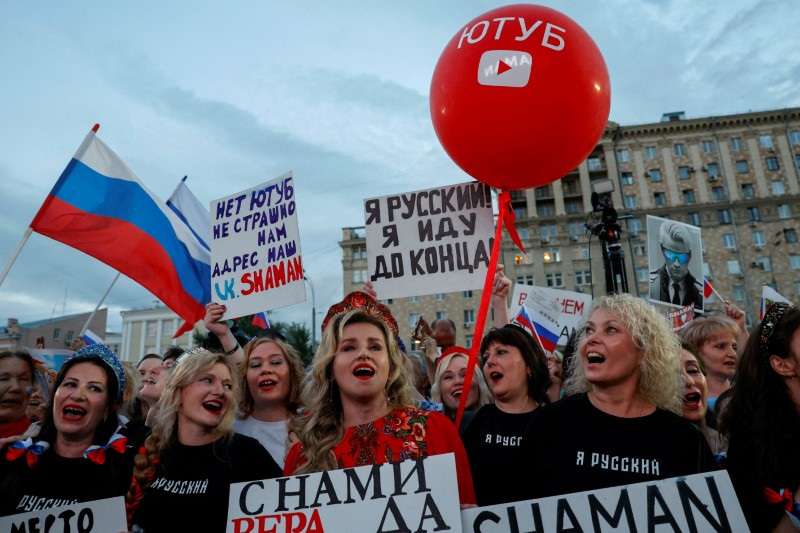
As Moscow has suppressed independent, Russian-language media, YouTube has remained a bastion of online freedom of expression, giving opposition figures a platform to air their views. Now, YouTube in Russia is living on borrowed time.
Russian internet monitoring services reported mass outages on Thursday of the online video service, which is owned by Alphabet's Google, the latest slowdown in recent weeks.
RECOMMENDED FOR YOU
Reform UK leader Farage eyes El Salvador deal to house foreign offenders
Russian lawmakers have blamed Google's failure to upgrade its equipment in Russia since the 2022 invasion of Ukraine for a slowdown that started in mid-July.
The company and technology experts dispute this is the case.
Russia's state communications regulator Roskomnadzor did not immediately reply to a request for comment.
With independent Russian-language media banned, YouTube is a key source of opposition views. One video by late opposition leader Alexei Navalny, alleging that President Vladimir Putin is the ultimate owner of an opulent palace, something Putin denies, has been viewed more than 132 million times.
Blocking YouTube, used by more than 50 million Russians every day, according to Mediascope, could have damaging implications for online freedom of speech, threaten Russia's general internet connectivity and the livelihoods of thousands of content creators, four experts, researchers and bloggers told Reuters.
"We've seen that particular regions lose Youtube connectivity overall or slow down by 90% for a few days, which is not really explainable by servers being old," said Boris Pastukhov, a political scientist and solicitor with 93,000 YouTube subscribers.
Pastukhov said this suggested Russia was regularly tweaking its blocking approach and argued that YouTube server failure could only be blamed for a small portion of outages, if at all.
TECHNICAL ISSUES
RECOMMENDED FOR YOU
Ukraine won't be an EU member! - Poland's opposition urges parliament to block bid
Russia wants Google to unblock Russian state media channels from YouTube and has also fined the U.S. company many times for not removing content Moscow considers illegal, such as what it calls "fakes" about the war in Ukraine.
Alexander Khinshtein, head of a parliamentary committee on information policy, said on July 25 that YouTube speeds would drop by as much as 70% in coming weeks, part of a drive to persuade the video hosting site to reinstate blocked Russian channels.
The degradation was "a necessary step, directed not against Russian users, but against the administration of a foreign resource that still believes it can violate and ignore our legislation without punishment", he said on Telegram.
A day later, Khinshtein explicitly blamed the slowdown on Google's failure to invest in Russian infrastructure, such as its local cache servers.
Responding to this, a YouTube spokesperson told Reuters last week that it was aware of reports that some people were unable to access YouTube in Russia. This was not because of any actions or technical issues on its part, the spokesperson said.
YouTube repeated that statement on Thursday.
ONLINE CENSORSHIP
Russian authorities swiftly blocked Russian-language media outlets to quash dissenting voices as Russia invaded Ukraine in February 2022.
RECOMMENDED FOR YOU
China has become cool around the world. This is how: Opinion
Curbs on Twitter, now X and Meta Platforms' Facebook and Instagram soon followed. But most non-Russian media and YouTube, the most popular foreign video platform in Russia, remained available.
Russia used to close websites by throttling traffic to certain domains. While the government may still use that practice, Moscow now has a decentralised censorship system, known as TSPU, consisting of homegrown traffic management tools that are developed, distributed and controlled by Roskomnadzor, according to researchers at Censored Planet.
"Russia now has the TSPU, which is absolutely not transparent to anyone," said Mikhail Klimarev, director of the Internet Protection Society, a Russian digital rights group.
"Everything there is closed. They don't let anyone or anything in there."
Given YouTube's popularity, the potential social outcry over any ban has likely held the Russian authorities back from pursuing a slowdown before now, but they could also be worried about unwelcome knock-on effects, experts say.
Anything from 20-40% of Russia's internet traffic is on YouTube, Klimarev said, pointing to possible strain on the country's networks if traffic is throttled.
The proliferation of VPN use by millions of Russians to circumvent online restrictions could also increase pressure on other parts of Russia's internet infrastructure as traffic is redirected away from internal servers to long-distance routes that are less prepared to cope with the surge, Klimarev said.
Philipp Dietrich, a researcher at the German Council on Foreign Relations, agreed.
RECOMMENDED FOR YOU
Mexico seeks to restore ties with Peru after Fujimori election victory
"The potential internet overload is a reason why they may have been reluctant to block Google in the past," he told Reuters. "Blaming it on Google global cache is amazing for them, it's the perfect way out."
DOMESTIC ALTERNATIVES
Moscow wants internet users to switch to domestic players and it is easy to blame Google for issues with YouTube speed.
Of the domestic alternatives, VK Video, run by state-controlled tech firm VK is best placed to pounce. Its algorithmic video recommendations are not as strong as YouTube's, said Dietrich, but if Russian content creators move over, it should succeed.
VK declined to comment.
While non-political channels may move to VK Video, political voices may be deterred.
Pastukhov, the political scientist, said the switch would be an issue for larger Russian opposition channels with millions of views or subscribers.
"Not only will they lose the platform, they will also lose reach," he said.
RECOMMENDED FOR YOU
Nawrocki marks first year in office with 'Poland first' message
This article was produced by Reuters news agency. It has not been edited by Global South World.