2026 disasters kill thousands as quakes, floods and heat take toll
Natural disasters have killed thousands of people around the world in 2026, with major earthquakes, floods, storms and extreme heat causing some of the year's heaviest losses.
Main points
- Venezuela’s earthquakes have killed more than 6,500 people
- Floods and storms have killed hundreds across Africa and Asia
- Europe’s heat death toll remains difficult to measure precisely
Natural disasters have killed thousands of people around the world in 2026, with major earthquakes, floods, storms and extreme heat causing some of the year's heaviest losses.
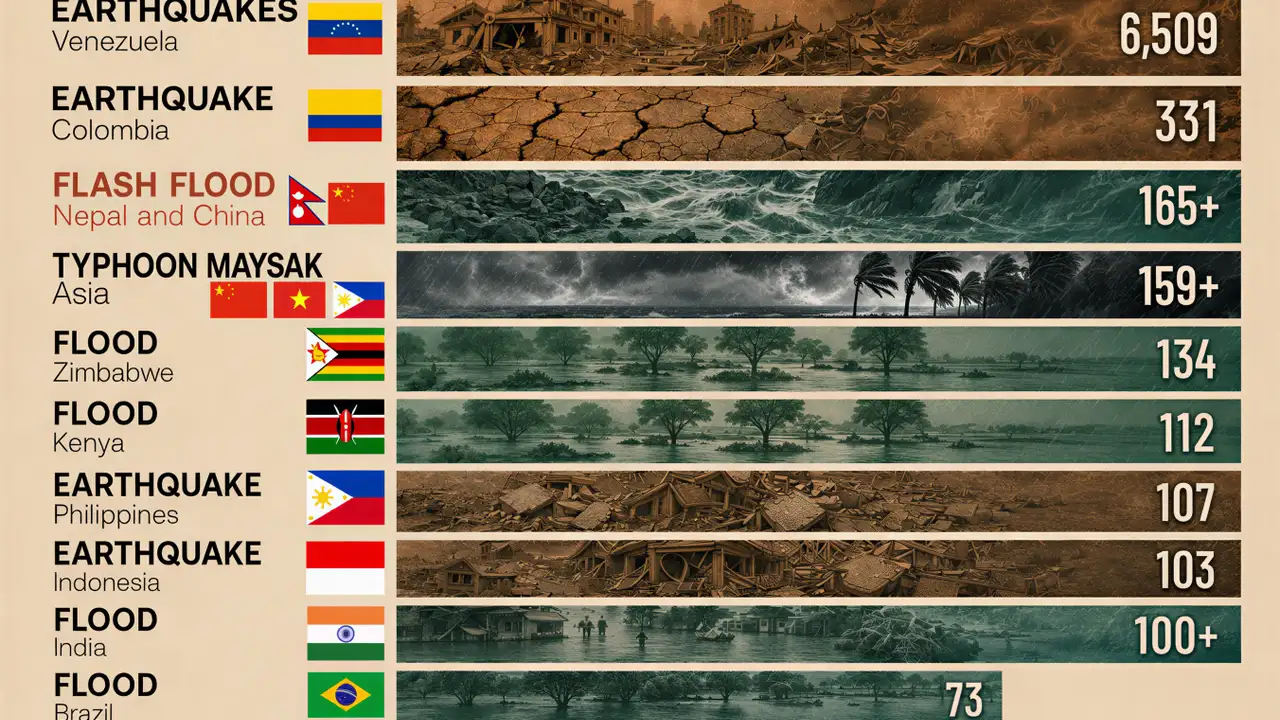
The graphic shows some of the deadliest disasters reported as of August 27, but several figures need correcting or qualifying against the latest available sources.
Venezuela has suffered the year's deadliest sudden-onset disaster listed. Two powerful earthquakes struck the country's northern coast on June 24, measuring magnitude 7.2 and 7.5 according to the U.S. Geological Survey. Official figures released on August 24 put the death toll at 6,509, with more than 226,000 people injured or hospitalised. Earlier reporting showed how the toll rose sharply as bodies were recovered from heavily damaged areas, particularly La Guaira.
India's northeastern state of Assam has also faced severe flooding. By August 10, authorities said 100 people had died, more than 700,000 had been displaced, and tens of thousands remained in relief camps. The Brahmaputra and other rivers overflowed after heavy monsoon rainfall.
RECOMMENDED FOR YOU

GTA V dominates global search interest as Grand Theft Auto VI nears release
In Indonesia, a magnitude 7.7 earthquake struck East Nusa Tenggara on August 15. Indonesia's National Disaster Mitigation Agency, BNPB, raised the death toll to 103 on August 25, with 1,666 people injured.
Typhoon Maysak and associated flooding caused another major disaster in China. Chinese state media reported on August 21 that 159 people had died in Guangxi, with 10 still missing. The storm brought extreme rainfall to parts of southern China, with some areas receiving more than 900 millimetres.
Bangladesh recorded 54 deaths from torrential rain, flooding and landslides by July 13, with more than 150,000 families stranded across seven affected districts.
The Nepal-China figure on the graphic is particularly time-sensitive. Authorities reported at least 165 confirmed deaths following catastrophic flash flooding on August 26, while hundreds remained missing on both sides of the border. With search operations still underway, the toll could change quickly.
Southern and eastern Africa have also suffered deadly flooding.
Zimbabwe recorded 134 deaths during the 2025-26 rainy season by March, according to UN OCHA. At least 1,500 families were affected, and 237 schools were damaged.
In Kenya, however, the graphic's figure of 112 deaths appears outdated or incorrect. UN OCHA reported that flooding since late February had killed 122 people and displaced more than 28,000 by May.
The largest number on the graphic, 35,000-plus deaths from Europe's 2026 heatwaves, should not be presented as a confirmed death toll without identifying the study and methodology behind it.
RECOMMENDED FOR YOU

Nearly all people in Tajikistan hold at least one gender bias against women
WHO's July assessment cited preliminary European mortality surveillance showing about 10,650 excess deaths during June 22-28 and more than 14,000 excess deaths across two weeks of peak temperatures. Excess mortality is also different from a count of individual deaths officially certified as caused by heat.
Extreme heat remains a major public-health threat in Europe, particularly for older people and those with cardiovascular, respiratory and kidney conditions, but the eventual 2026 mortality estimate will require more complete data.
This story is written and edited by the Global South World team, you can contact us here.