The democracy paradox: Why we want freedom but admire unchecked power — Opinion
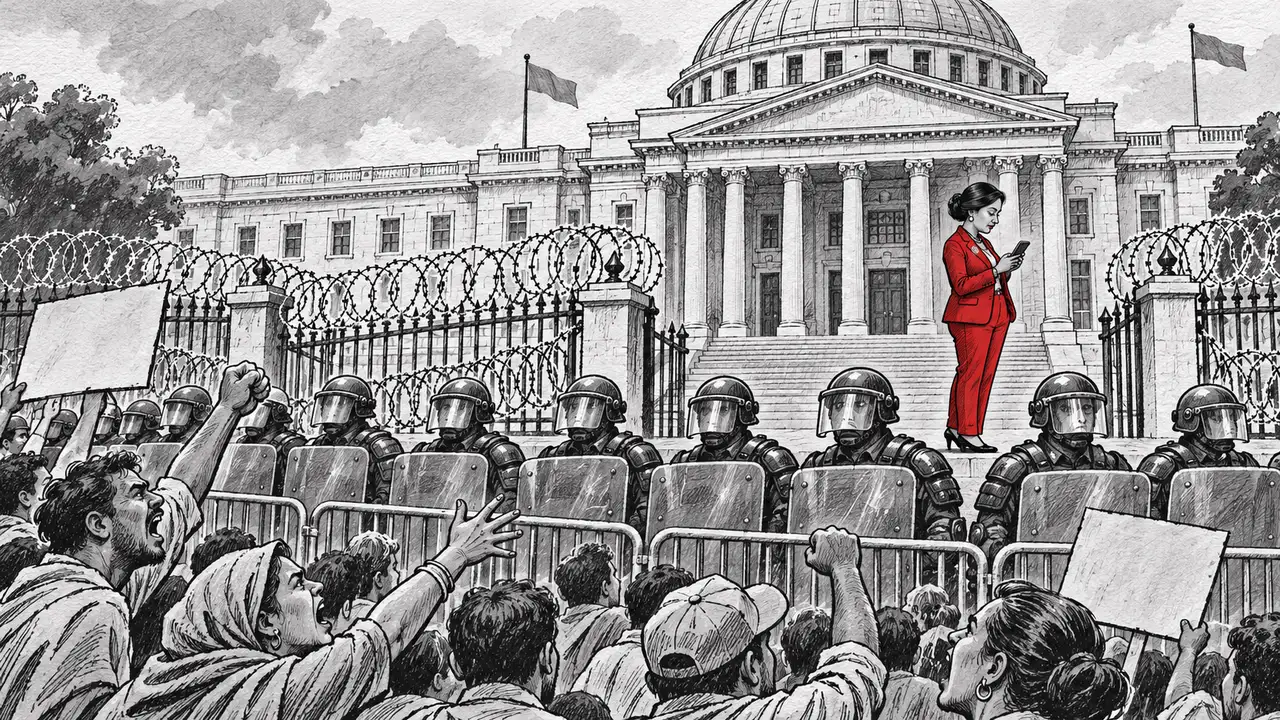
Democracy is being tested both by leaders who invoke higher goals to discount the will of voters or the limits on power, and as well, by citizens who knowingly vote for leaders whose rhetoric and conduct are authoritarian.
Drawing on statements by European leaders and Donald Trump, this article examines a paradox: we demand representation, yet admire power that refuses to be constrained by rules; we want the law upheld, yet tolerate its circumvention when it serves our own convictions.
The contexts and responsibilities differ, but the shared risk is that a democratic mandate becomes an alibi for weakening checks on power. The essential test remains simple: would we accept the same powers and the same exceptions in the hands of our political opponents?
Four voices, the same tune
“No matter what my German voters think,” said Annalena Baerbock, then Germany’s foreign minister, in 2022, speaking about Ukraine. “The crowd has no legitimacy in the face of the people expressing themselves through their elected representatives,” Emmanuel Macron told the French amid the uproar over pension reform. “[…] this is a difficult, sometimes painful process that requires decisive action.
There is no other way,” Donald Tusk firmly insists, referring to the forcible removal of the president and vice-president of the Constitutional Tribunal. “He who saves his Country does not violate any Law,” Donald Trump declares, without qualification. Different contexts, different legal weight, different intentions. The same tune: the goal is too important to let votes, procedures or opposition from those you represent get in the way.
RECOMMENDED FOR YOU

LIVE: Lula stays in power, beats Bolsonaro in stunning comeback
Baerbock’s blank cheque
Baerbock said it in Prague: she would keep her promise to Ukrainians, however her fellow Germans might vote. Support for Ukraine may be both right and rational. But “however they might vote” is not a policy; it is a declaration of independence from one’s own voters. Supporting a cause does not mean signing a blank cheque, at any cost and for however long it takes.
Macron and parliament as a shield
Macron went beyond words. Two-thirds of the French opposed the pension reform, and his government pushed it through using Article 49.3, without a final vote by MPs. The president then countered the protests in the streets by invoking the legitimacy of elected representatives—the very people the mechanism had spared from having to vote. The procedure was legal, but the argument was laughable: you cannot bypass Parliament and invoke it as your shield at the same time.
There is no other way?
Jean-Claude Juncker, then president of the European Commission, said in 2015 what others merely think: there can be no democratic choice against the European treaties. Tusk says that restoring the rule of law leaves no alternative. Perhaps. But “there is no other way” is the favourite phrase of any government that has stopped looking for one. When necessity takes the place of legal justification, questions about procedure become sabotage.
Trump simply takes the conclusion to its logical endpoint: saving the country justifies the means. But who certifies that the country has been saved? The leader taking action? The majority applauding him? If those in power proclaim their own success and break the law in its name, the limit exists only in the mind of the person it is meant to constrain.
We cannot, however, equate all the actors and all the circumstances. Baerbock is not Trump, and lumping them together would be a foolish shortcut. Yet each argument, from international obligation to electoral mandate, serves as a master key. The culprits would seem to be in plain sight. But stopping with them would make the explanation all too convenient.
Voters’ contradictions
There is a deeper paradox: through a free vote, democracy can bring to power people whose principal electoral appeal is the promise that they will not let the rules of democracy stand in their way. Authoritarianism can come with a democratic mandate. And voters are not always being deceived.
Sometimes they see the conduct, hear the threats, recognise the contempt for limits—and vote precisely for those things. What some see as a warning, others take as proof that, at last, someone will get something done. Brutality becomes firmness, refusal to engage in dialogue becomes resolve, and stretching the law becomes the courage to take on the system.
RECOMMENDED FOR YOU

New Asia Forum: Indonesia to set out progress on sustainable AI data centres
We end up demanding things that contradict one another. We want to be consulted, yet admire leaders who waste no time on discussion. We want strong institutions, yet become irritated when they block our preferred leader’s initiatives. We want the law upheld, yet expect that leader to circumvent it when it protects those we detest. We want an incorruptible referee, but only when the whistle goes against our opponents.
Perhaps voters know what outcome they want but no longer care about the price paid in the means used to achieve it. They want order, prosperity, security and punishment for the guilty. These are legitimate demands. The problem arises when impatience turns limits on power into pointless obstacles. The protection those limits provide is abstract and remote. Frustration is concrete and immediate.
The circle of alibis
This is how the circle closes. Leaders demand freedom of action because they have popular support. Voters forgive their excesses because they believe they alone are capable of taking action. Each gives the other an alibi, and electoral victory comes to be read as authorisation to weaken the very mechanisms that keep power in check between elections.
Here, two seemingly opposing tendencies converge. Some leaders insist that they must disregard resistance from citizens in order to defend democracy. Some citizens, meanwhile, demand leaders who have no qualms about breaching limits in order to carry out their will. In the first case, the people are too uneducated to understand the necessity. In the second, their will justifies anything. The loser is the same in both cases: the mechanism for keeping power in check.
The 'opponent test'
Perhaps democracy is changing. We increasingly judge it by how quickly it delivers results and too readily accept the concentration of power in exchange for the promise of efficiency. We retain the right to choose our leader and readily grant that leader the right to ignore everyone else. We forget that, at the next decision or the next election, we may be “everyone else”.
At the very least, the contradiction should be stated openly. If we want a leader with broader powers and fewer constraints, we should say which means of holding power to account we are giving up, and how we can recover them. If, however, we want democracy, we must accept that it comes with limits that get in our way, negotiations that exasperate us, and rights that benefit our opponents too.
The test remains simple—and that is precisely why it demands an answer: would the powers we demand today for our preferred leader seem acceptable in the hands of the person we fear? If not, the problem already exists; our own bias has merely kept us from seeing it.
RECOMMENDED FOR YOU

Lula supporters take to Brazil's streets, warn far-right fight is not over
This article exclusively represents the opinions of its author, Silviu Predoiu, and not those of Global South World.
