Asia produces the largest share of global GDP

Asia accounts for the largest share of the world economy, but the exact percentage depends heavily on how countries are grouped and whether GDP is measured at market exchange rates or purchasing power parity.
Key Points
- Asia has the largest share of global GDP
- North America and Europe remain major economic centres
- Continental shares depend on how GDP and regions are defined
Asia accounts for the largest share of the world economy, but the exact percentage depends heavily on how countries are grouped and whether GDP is measured at market exchange rates or purchasing power parity.
The graphic puts Asia at 37% of global GDP, followed by North America at 30% and Europe at 24%. South America is shown at 4%, Africa at 3%, and Oceania at 2%.
Those figures are broadly plausible for nominal GDP, but they should not be treated as exact without a year and source. The IMF's latest World Economic Outlook database, released in April 2026, provides GDP at current US-dollar prices for individual economies and regional groups, but it does not publish this exact six-continent breakdown.
The broad picture is clear. Asia contains several of the world's largest economies, including China, Japan, India and South Korea, while North America's total is heavily driven by the United States. Europe remains another major economic centre, with Germany, the UK, France and Italy among its biggest economies.
RECOMMENDED FOR YOU
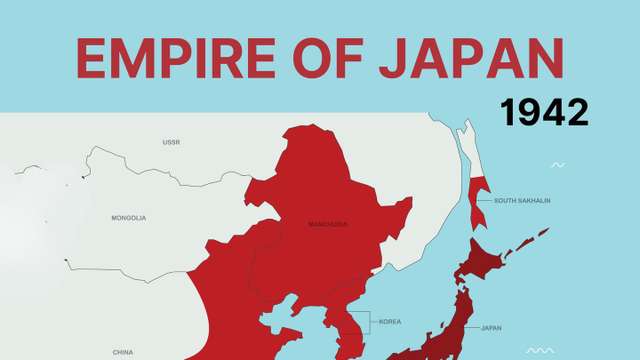
Empire of Japan reached its greatest extent in 1942 before turning point in World War II
World Bank figures also show how concentrated global output remains. The world produced about $111 trillion in nominal GDP in 2024, with East Asia and the Pacific alone accounting for roughly $32 trillion. Europe and Central Asia produced about $29.3 trillion, although these World Bank regions do not correspond exactly with geographical continents.
Africa's share remains much smaller despite being home to about a fifth of the world's population. Sub-Saharan Africa produced around $2 trillion in nominal GDP in 2024, according to World Bank data.
The ranking can change substantially when GDP is adjusted for purchasing power parity, which accounts for differences in local prices. The IMF estimates that emerging and developing economies collectively account for a majority of world GDP under the PPP measure, giving greater economic weight to countries such as China and India.
This story is written and edited by the Global South World team, you can contact us here.