Empire of Japan reached its greatest extent in 1942 before turning point in World War II
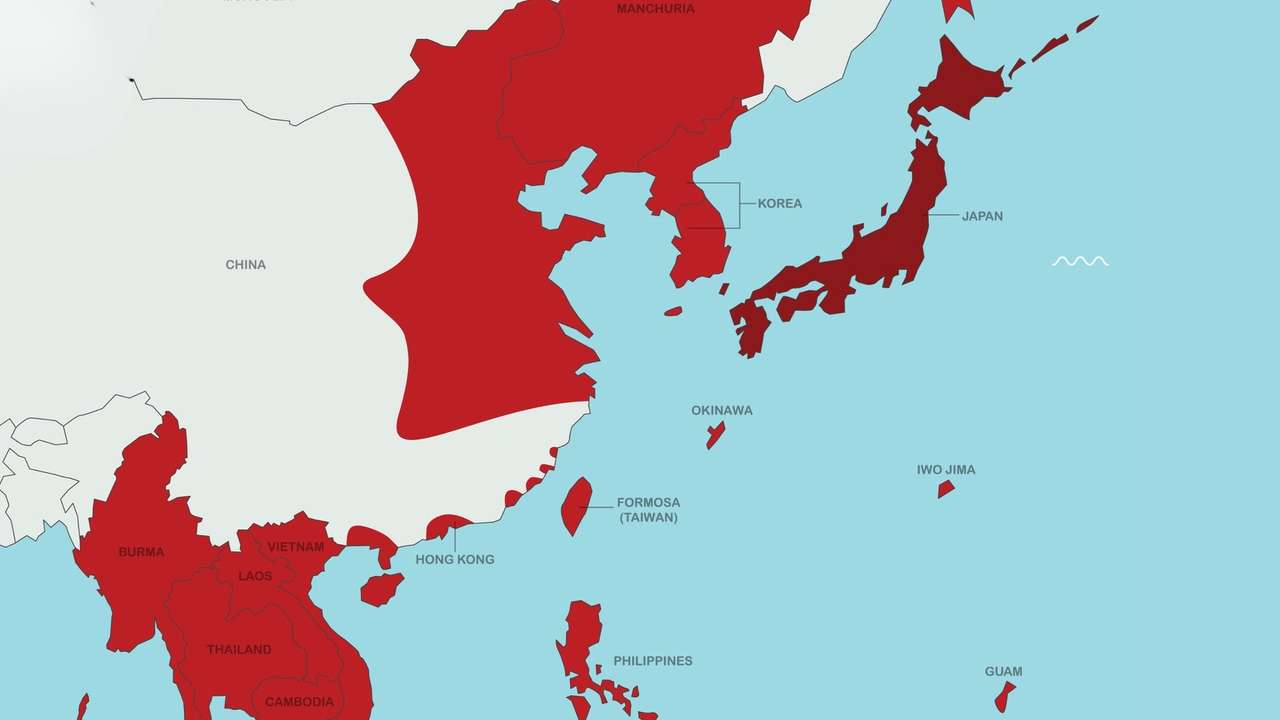
The Empire of Japan reached its largest territorial extent in 1942, controlling vast areas across East and Southeast Asia and the Pacific after a series of rapid military victories during the early stages of World War II.
Key Points
- Japan reached its greatest territorial extent in 1942
- The Battle of Midway ended Japan's rapid expansion
- Japan surrendered in 1945 after Allied victories and atomic bombings
The Empire of Japan reached its largest territorial extent in 1942, controlling vast areas across East and Southeast Asia and the Pacific after a series of rapid military victories during the early stages of World War II.
At its peak, Japan directly ruled or occupied territories stretching from Manchuria and Korea in Northeast Asia to Taiwan, Hong Kong, the Philippines, French Indochina (modern-day Vietnam, Laos and Cambodia), Thailand, Burma (now Myanmar), Malaya, Singapore, the Dutch East Indies (Indonesia) and parts of New Guinea, according to historical records from the Encyclopaedia Britannica, the U.S. Office of the Historian and the National WWII Museum.
Japan's imperial expansion had begun decades earlier. Following victories in the First Sino-Japanese War (1894–95) and the Russo-Japanese War (1904–05), it annexed Taiwan in 1895 and Korea in 1910. In 1931, Japanese forces invaded Manchuria, establishing the puppet state of Manchukuo the following year before launching a full-scale invasion of China in 1937.
The attack on Pearl Harbor on Dec. 7, 1941 (Dec. 8 in Japan) brought the United States into World War II and enabled Japan to rapidly expand across the Pacific. Within months, Japanese forces captured Hong Kong, Singapore, the Philippines, the Dutch East Indies and Burma, securing access to vital resources including oil, rubber and tin.
RECOMMENDED FOR YOU
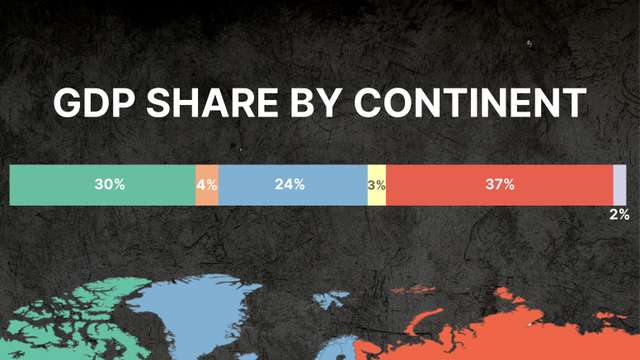
Asia produces the largest share of global GDP
By mid-1942, the empire controlled an area of roughly 7.4 million square kilometres, making it one of the largest empires in Asia's modern history. Japanese leaders promoted the expansion as the Greater East Asia Co-Prosperity Sphere, presenting it as a regional bloc free from Western colonial rule. Historians, however, note that many occupied territories experienced military rule, forced labour, economic exploitation and widespread human rights abuses.
The empire's expansion reached a turning point after the Battle of Midway in June 1942, where Japan lost four aircraft carriers to the United States. Historians widely regard the battle as a decisive shift in the Pacific War, ending Japan's strategic offensive.
From 1943 onward, Allied forces steadily recaptured Japanese-held territory through campaigns across New Guinea, the Philippines, Burma and the Central Pacific. The war ended after the United States dropped atomic bombs on Hiroshima on August 6, 1945, and Nagasaki on August 9, followed by the Soviet Union's declaration of war against Japan and invasion of Manchuria.
Japan announced its surrender on August 15, 1945, with the formal Instrument of Surrender signed aboard the USS Missouri on Sept. 2, 1945.
Following the war, Japan lost all overseas territories acquired since the late 19th century and came under Allied occupation until 1952. The post-war constitution, which came into force in 1947, renounced war as a sovereign right and remains a defining feature of Japan's political system.