Bangladesh protesters torch house of nation's founding leader
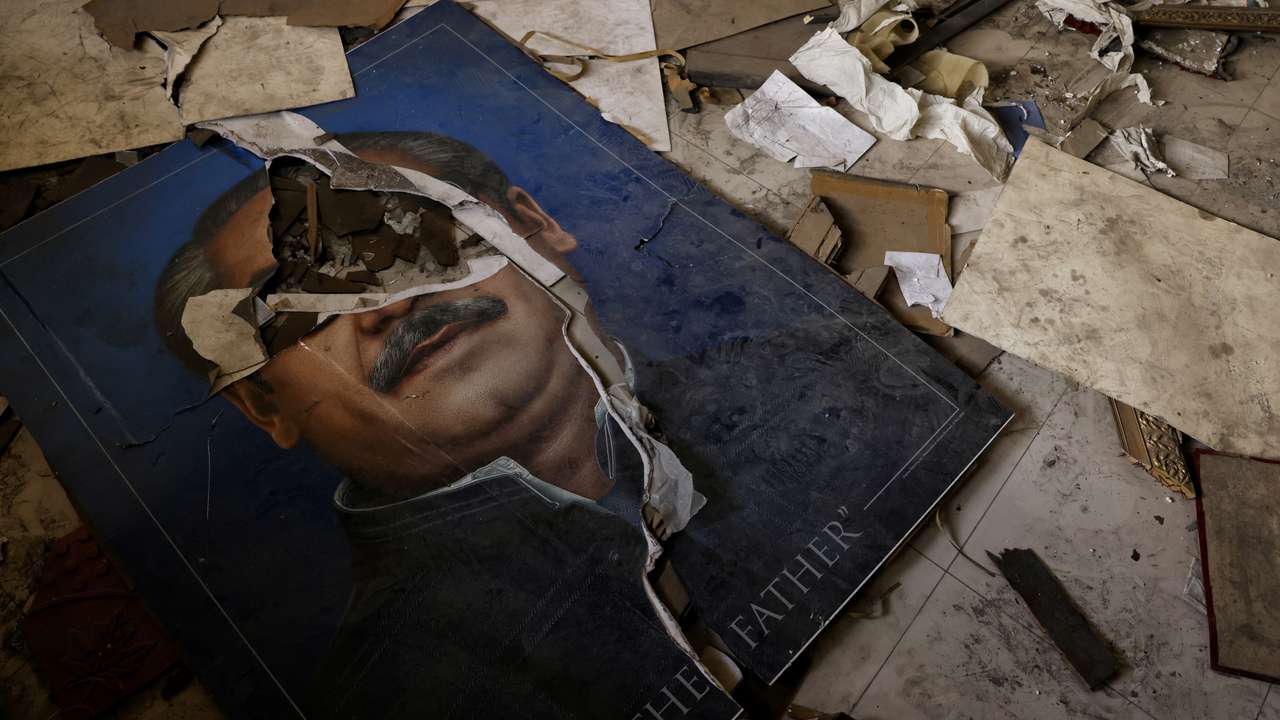
Thousands of protesters set fire to the home of Bangladesh's founding leader as his daughter, ousted former prime minister Sheikh Hasina, called on her supporters to stand against the interim government.
The South Asian nation of 170 million people has struggled with political strife since Hasina was forced to flee to neighbouring India in August following weeks of protests against her rule in which more than 1,000 people were killed.
Witnesses said several thousand protesters, some armed with sticks, hammers and other tools, gathered around the historic house and independence monument while others brought a crane and excavator to demolish the building late on Wednesday.
The demolition continued into Thursday, with much of the front of the house destroyed. Many people were seen breaking into it and taking steel and wooden items and books from inside.
RECOMMENDED FOR YOU

RSF index reveals that press freedom gaps widened globally in 2025
The protest rally was organised alongside a broader call, dubbed "Bulldozer Procession", to disrupt Hasina's scheduled online address on Wednesday evening.
Protesters, many aligned with the "Students Against Discrimination" group, voiced fury over Hasina's speech they saw as a challenge to the newly formed interim government.
Led by Nobel laureate Muhammad Yunus, the government has struggled to maintain law and order as protests and unrest have continued. Demonstrators have attacked symbols of Hasina’s government, including the house of her father, Sheikh Mujibur Rahman, which was first set ablaze in August.
A symbol of the country's establishment, the house is where Mujibur Rahman declared Bangladesh's independence from Pakistan in 1971. He and most of his family were assassinated at the house in 1975. Hasina, who survived the attack, transformed the building into a museum dedicated to her father's legacy.
"They can demolish a building, but not the history. History takes its revenge," Hasina said in her speech on Wednesday.
She urged the people of Bangladesh to defy the interim government, accusing them of seizing power in an unconstitutional manner.
Yunus' press office said the protesters' attack on Mujibur Rahman's residence was "unintended and unwanted", calling it a response to Hasina's "violent behaviour".
"Sheikh Hasina has insulted and humiliated those who sacrificed themselves in the July uprising," it said in a statement. "Sheikh Hasina has threatened to create instability in the country."
RECOMMENDED FOR YOU

G7 and European leaders discuss Ukraine plan on margins of G20, sources say
Analysts said those who rose up against Hasina last year remained worried that their movement could be undermined if she returns and her Awami League party revives.
Little has changed in Bangladesh despite the interim government's promise of reform, said Shakil Ahmed, associate professor of government and politics at Jahangirnagar University.
He said the government was only "managing politics, not the economy and society" even though the recent unrest was rooted in economic and social hardships.
This article was produced by Reuters news agency. It has not been edited by Global South World.