Brazil election 2026 results: Lula defeats Flávio Bolsonaro with 51.8% of vote to secure fourth term
Main points
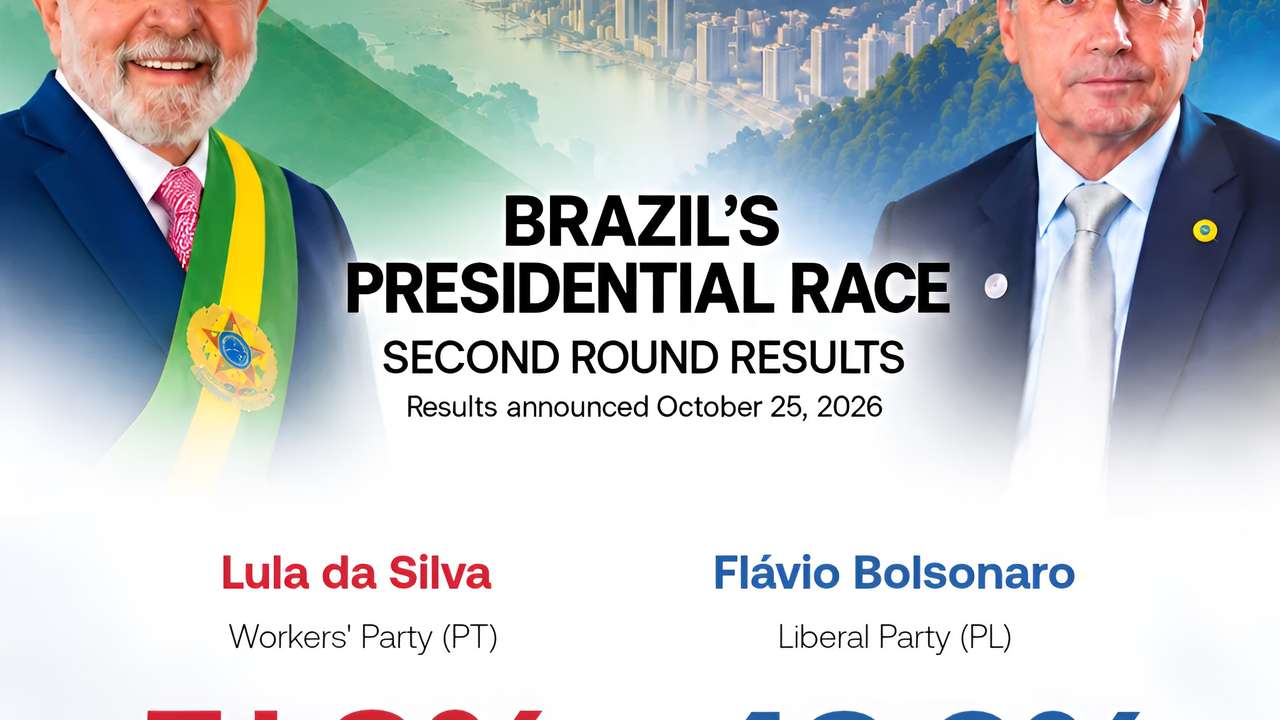
- Lula won Brazil's presidential runoff with 51.79% of valid votes.
- Lula carried 13 states, including all nine in the Northeast.
- Flávio Bolsonaro rejected the result and called for its annulment.
Brazil's President Luiz Inácio Lula da Silva secured 51.79% of valid votes in Sunday's presidential runoff, defeating right-wing Senator Flávio Bolsonaro, who received 48.21%, according to final results from Brazil's Superior Electoral Court (TSE).
Lula, 80, received 64,256,232 votes, while Bolsonaro received 59,826,041, winning by more than 4.4 million votes. The victory gives the Workers' Party leader an unprecedented fourth non-consecutive presidential term.
The result marked a major comeback for Lula, who had finished behind Bolsonaro in the first round on October 4. It was the first time since Brazil restored direct presidential elections in 1989 that a candidate trailing in the opening round went on to win the runoff.
The electoral map showed a sharp regional divide. Lula won 13 of Brazil's 26 states, including all nine in the Northeast, where his political support has traditionally been strongest. He also secured Minas Gerais, a key battleground state that Bolsonaro had won in the first round.
RECOMMENDED FOR YOU
Ecuador Roundup: Six inmates escape prison, power shortages threaten industry and floods hit three provinces
Bolsonaro, the son of former President Jair Bolsonaro, won the remaining 13 states and the Federal District, performing strongly across southern Brazil and much of the Centre-West.
Lula's victory came despite concerns over living costs, public security and economic conditions. His campaign increased voter mobilisation between the two rounds, helping him overcome Bolsonaro's early lead.
However, Bolsonaro refused to concede defeat and called for the election results to be annulled after a last-minute judicial decision extended voting by two hours. The extension followed complaints about public transport problems and heavy rainfall in some areas.
Brazil's electoral authorities maintained that the extension did not change the outcome. More than 128 million voters participated in the runoff, with abstention falling to about 19.2%, down from 21.08% in the first round.
Lula is expected to begin his new term in January 2027, facing the challenge of governing a politically divided country while addressing economic pressures and relations with the United States.
This story is written and edited by the Global South World team, you can contact us here.