Brazil election map shows how voters abroad split between Lula and Bolsonaro
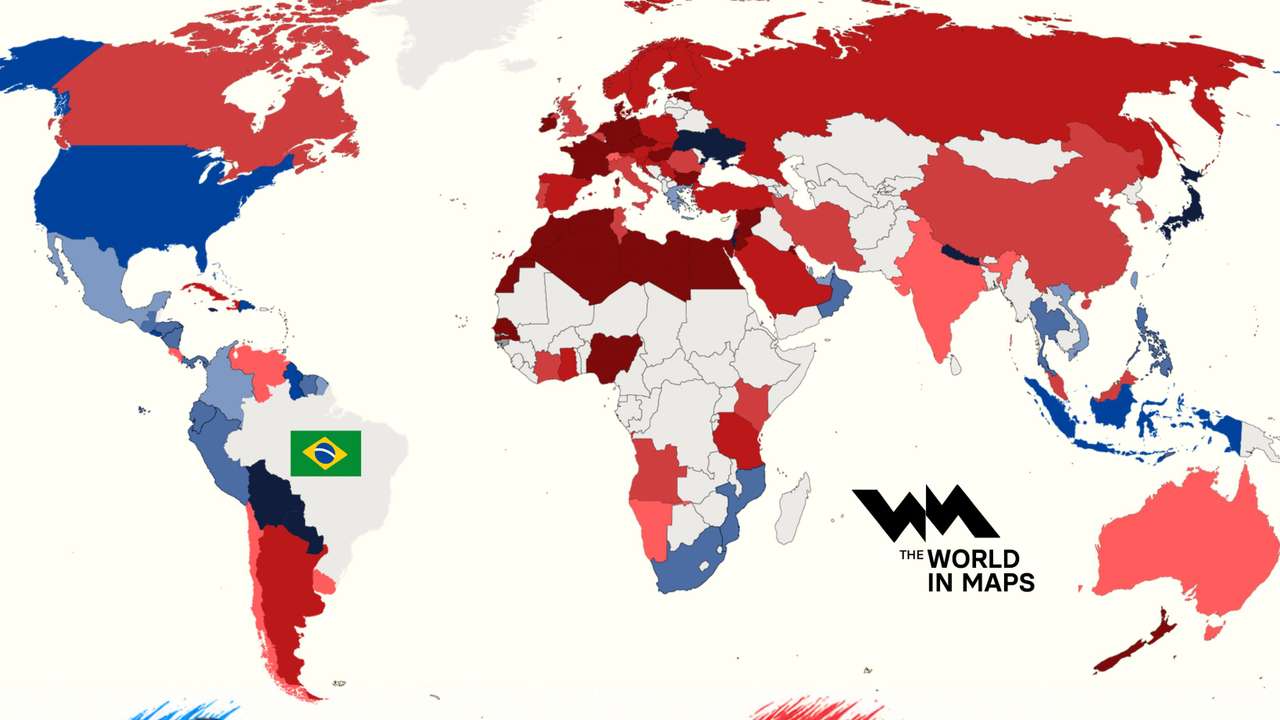
Brazilian voters living overseas showed sharply different political preferences in the first round of the country's presidential election, with support for Luiz Inácio Lula da Silva and the Bolsonaro camp varying across Europe, the Americas, Asia and Africa.
Key points
- Lula received more votes abroad than Bolsonaro.
- Bolsonaro led in the United States.
- Voting patterns differed sharply between countries.
Brazilian voters living overseas showed sharply different political preferences in the first round of the country's presidential election, with support for Luiz Inácio Lula da Silva and the Bolsonaro camp varying across Europe, the Americas, Asia and Africa.
According to Brazil's Superior Electoral Court (TSE), Lula received 157,387 votes, or 47.57%, among overseas voters in the October 4 election. Senator Flávio Bolsonaro, son of former President Jair Bolsonaro, received 143,900 votes, or 43.49%, leaving Lula ahead by 13,487 votes.
Lula led in 64 countries, while Bolsonaro came first in 37, according to a country-by-country compilation of election results.
The biggest differences appeared in countries with large Brazilian communities.
RECOMMENDED FOR YOU

Six countries account for three-quarters of Europe’s unicorn startups
In the United States, Bolsonaro received 45,004 votes against Lula's 23,335. He also won comfortably in Japan, securing 24,601 votes compared with Lula's 5,234.
Portugal delivered Lula's largest overseas vote total, with 26,401 votes against Bolsonaro's 19,412. Lula also led in Germany, France, Spain, Canada and Australia.
South America was more divided. Lula won in Argentina and Uruguay, while Bolsonaro led in Paraguay, Bolivia and Peru.
Most registered overseas voters stayed home
Despite the political divisions shown on the map, turnout was relatively low. Of about 916,500 eligible voters in the overseas polling sections counted, only 341,766 cast ballots, representing a turnout of 37.31%. Abstention stood at 62.69%.
The overseas results also differed from the national outcome. Bolsonaro finished ahead in Brazil's first round with approximately 47% of valid votes, compared with Lula's 45%. Neither secured an outright majority, sending the two candidates into a presidential runoff scheduled for October 25, 2026.
This story is written and edited by the Global South World team, you can contact us here.