Madagascar Roundup: Child food poverty hits 77%, growth rebound forecast for 2027 and northern risk mapping begins

Food poverty affects 77% of children under five
Around 77% of children under five in Madagascar experience food poverty, meaning their diets lack sufficient variety and nutrients. Many consume food from only two food groups a day, often dominated by rice or other staples. The consequences are serious. Between May 2026 and April 2027, about 502,000 children under five in the Grand South and Grand South-East are expected to suffer acute malnutrition, including roughly 78,000 severe cases. The figures highlight a wider problem in Madagascar: many families struggle to consistently provide young children with the range of nutritious foods needed for healthy growth.
AfDB forecasts 4.5% growth in 2027, but financing remains a major challenge
Madagascar’s economy is forecast to rebound to 4.5% growth in 2027, according to the African Development Bank, after growth slowed from 4.3% in 2024 to 3.2% in 2025 and was projected at 3% in 2026. However, the AfDB estimates Madagascar needs about $7.27 billion annually until 2030 to finance its development ambitions. AfDB Country Manager Adam Amoumoun said: “To achieve its development ambitions, Madagascar will need to mobilise resources at scale, both domestic and external.” The challenge is compounded by a tax-to-GDP ratio of about 10.5% in 2025 and an informal economy representing roughly 47% of GDP. The AfDB recommends stronger tax administration, greater economic formalisation and financing tools including green, blue and diaspora bonds.
Northern Madagascar begins displacement and disaster-risk mapping
The International Organisation for Migration and Madagascar’s National Office for Risk and Disaster Management (BNGRC) began collecting displacement and vulnerability data in the northern SAVA and DIANA regions on September 10. The first phase covers Sambava, Vohémar, Ambilobe and Ambanja and uses IOM’s Displacement Tracking Matrix (DTM). Teams are gathering information from local authorities, health workers, teachers and community representatives about population movements, exposure to cyclones and floods, vulnerabilities and emergency needs. The objective is to identify high-risk communities before disasters occur, giving authorities and humanitarian organisations better information for evacuations, emergency assistance and recovery planning.
Rehabilitated 47-km road connects five rural communes in Fandriana
A 47-kilometre road between Ambinanitelo and Milamaina in Fandriana district has been rehabilitated to improve transport and agricultural market access. The route connects Ambinanitelo, Fiadanana, Sahamadioa, Ambohipo and Milamaina and was financed by the International Fund for Agricultural Development through the DEFIS rural development programme. Better road access is expected to help farmers transport crops to markets and obtain seeds, fertiliser and other agricultural inputs more easily. It should also improve residents’ access to healthcare, education and other services. The project was officially received during the weekend preceding September 14 and forms part of wider efforts to reduce the isolation of Madagascar’s rural communities.
RECOMMENDED FOR YOU
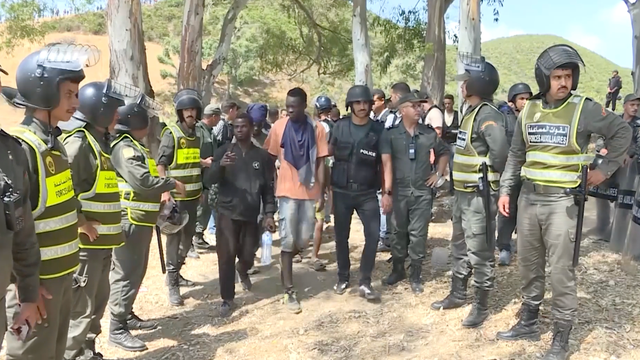
Morocco intercepts migrants attempting to reach Spain's Ceuta and Melilla
Three youth centres equipped to serve 1,500 young people
Around 1,500 secondary-school students in southern and southeastern Madagascar will benefit from newly equipped Youth Corners in Manakara, Mananjary and Milenaka-Toliara II. With support from Norway and the UN Population Fund (UNFPA), the centres received computers, internet connections, musical instruments, sports equipment and recreational facilities. The centres also provide confidential information and support on sexual and reproductive health, relationships and prevention of gender-based violence, alongside Comprehensive Sexuality Education. The initiative is designed to give young people safe spaces combining digital access, education, recreation and confidential counselling, particularly in areas where access to youth-focused health and social services remains limited.
This story is written and edited by the Global South World team, you can contact us here.