Vietnam boosts China ties as 'bamboo diplomacy' follows US upgrade
Vietnam boosts China ties as 'bamboo diplomacy' follows US upgrade
By Francesco Guarascio, Khanh Vu and Phuong Nguyen
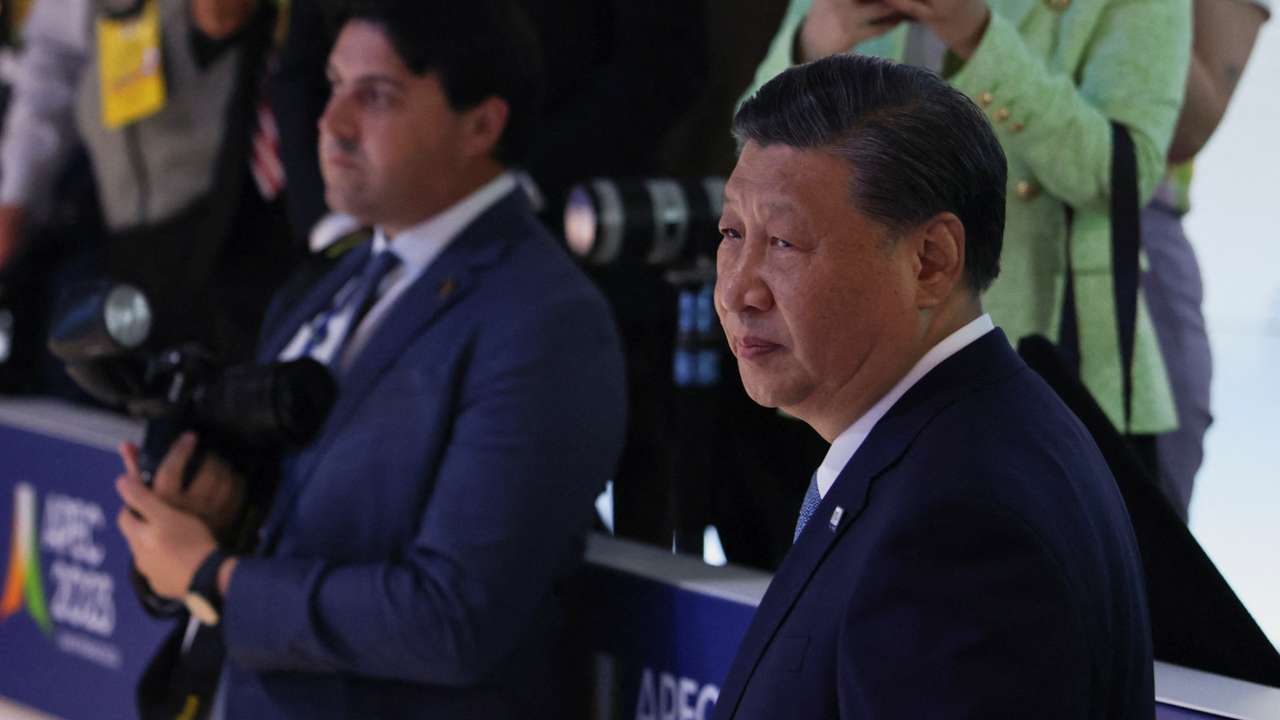
Communist-ruled China and Vietnam, at odds over claims in the South China Sea, agreed on Tuesday to boost ties and build a community with a "shared future", three months after Hanoi upgraded its formal relations with the United States.
On Chinese President Xi Jinping's first visit to Hanoi in six years, the two countries announced 37 deals, including on diplomatic ties, railways and telecommunications.
RECOMMENDED FOR YOU

A wake-up call: The countdown for Latin American democracy — Opinion
As China and the United States vie for influence in the strategic nation, the agreements mark an achievement of Vietnam's "Bamboo diplomacy", although analysts and diplomats said the improvement in relations could be more symbolic than real.
Vietnam agreed to "support the initiative of building a community of shared future for human kind", according to a joint statement shown to reporters on Tuesday, after sources said China had been pushing for it. The joint statement is expected to be formally signed on Wednesday.
The countries' diplomats had debated the "shared future" phrase for months, following Hanoi's initial reluctance to use it, say officials and diplomats.
The Chinese term literally means "common destiny", but its translation in English and Vietnamese is "common future", which may be seen as less demanding.
"One declaration, many translations," said a diplomat based in the Vietnamese capital, commenting on the interpretation of the term.
In diplomatic ties, the upgrade is symbolic, Le Hong Hiep, a specialist in Vietnamese strategic and political issues at Singapore's Iseas–Yusof Ishak Institute, said.
"Vietnam's mistrust of China runs deep, and from the Vietnamese people's viewpoint, there is little to no 'shared destiny' between the two countries, as long as China continues to claim most of the South China Sea," he said.
Despite close economic ties, the neighbours have been at odds over boundaries in the South China Sea and have a millennia-long history of conflict.
RECOMMENDED FOR YOU
New Asia Forum: Indonesia to set out progress on sustainable AI data centres
In a sign of possible de-escalation, however, they signed two cooperation agreements for joint patrols in the Tonkin Gulf in the South China Sea and to establish a hotline to handle fisheries incidents, according to one of the agreements.
RAILWAYS, DIGITAL SILK ROAD
Apart from taking ties to a level Beijing may consider above those with the United States, the upgraded status came with the announcement of 36 cooperation deals, according to a list of documents seen by Reuters, and the joint statement on diplomatic ties.
That was short of 45 initially proposed, according to one Vietnamese official, and missed agreements on critical minerals and rare earths on which Xi had urged more cooperation in an opinion piece published on Tuesday in a Vietnamese state newspaper.
Deals included two memoranda of understanding on cross-border rail development, including one mentioning developing aid.
Top officials in both countries had urged a boost to a rail link between the southern Chinese city of Kunming and the northern Vietnamese port of Haiphong, which crosses regions in Vietnam rich in rare earths.
China's ambassador to Vietnam Xiong Bo said earlier this week Beijing was ready to offer grants to develop rail connections, though the volume and terms of possible loans are unclear.
Boosting transport links would allow Vietnam to export more to China, especially farm products, while Beijing wants to further integrate the country's north with its southern supply chain networks, where Chinese firms are moving some operations.
RECOMMENDED FOR YOU

Thousands protest economic hardship and restrictions on freedoms in Tunisia
Stronger rail networks would speed the import of components from China for assembly in Vietnam, effectively expanding China's Belt and Road Initiative (BRI).
So far the Hanoi metro is Vietnam's only project to have received BRI loans and it has not been labelled as part of the initiative, as the country's leaders often grapple with widespread anti-Chinese sentiment.
The two countries agreed to jointly promote the "two corridors, one belt" initiative, which is the Vietnamese term for infrastructure projects supported by China.
Xi's visit is also expected to boost plans on what is known as the Digital Silk Road, and the two countries signed several deals to cooperate on telecommunications and the digital economy.
The content of the agreements is not known but officials had said the increased telecoms cooperation could include digital infrastructure such as 5G networks and undersea optical fibre cables.
This article was produced by Reuters news agency. It has not been edited by Global South World.