China slams new US AI chip restrictions targeting overseas data centres
Key Takeaways
- Beijing accused Washington of economic coercion and warned that it would defend Chinese companies' interests.
- New US licensing requirements cover advanced AI chips shipped to Indonesia, Malaysia, Singapore, Thailand and Brazil.
- he restrictions come amid scrutiny of Megaspeed over suspected semiconductor diversion and separate espionage allegations denied by China.
Beijing accuses Washington of using national security concerns to restrict China's technology industry as new US export controls target five countries.
China has accused the United States of using export restrictions to undermine its technology industry after Washington introduced new controls on advanced artificial intelligence chips supplied to overseas data centres.
Speaking at a Foreign Ministry briefing in Beijing on Tuesday, spokesperson Guo Jiakun criticised the measures, describing them as economic coercion and an interference in international trade.
"The move is yet another case of the US overstretching the concept of national security, and abusing export control measures to interfere in normal trade and tech cooperation between China and other countries and go after China’s high-tech industry," Guo said.
The US Bureau of Industry and Security announced new licensing requirements on Monday for advanced chips exported to Indonesia, Malaysia, Singapore, Thailand and Brazil.
RECOMMENDED FOR YOU

‘Politics is not a show’ - Delcy Rodriguez slams Maria Corina Machado's return
Washington said the restrictions were intended to prevent users subject to US controls from accessing American computing technology through data centres in other countries, including remotely.
China rejected the justification, arguing that the measures could disrupt international supply chains and harm Chinese businesses.
"Such typical economic coercion and long-arm jurisdiction run counter to the common understandings between the two countries, harm the legitimate rights and interests of Chinese companies, and disrupt global supply chains. China will do what is necessary to firmly safeguard its legitimate and lawful rights and interests," Guo continued.
The announcement came amid investigations involving Singapore-based data centre company Megaspeed and its relationship with American chipmaker Nvidia.
Former Nvidia chief executive Jensen Huang resigned last week following reports of a relationship with former Megaspeed executive Alice Huang, whom US officials suspect of working for Chinese intelligence.
Beijing has denied the espionage allegations.
Nvidia also launched an independent investigation into reports that its founder had been targeted by a foreign intelligence operation. Its board said it had no reason to believe US national security or company secrets had been compromised.
Separately, the US Commerce and Justice Departments confirmed that an investigation into suspected semiconductor diversion involving Megaspeed began in 2024.
RECOMMENDED FOR YOU
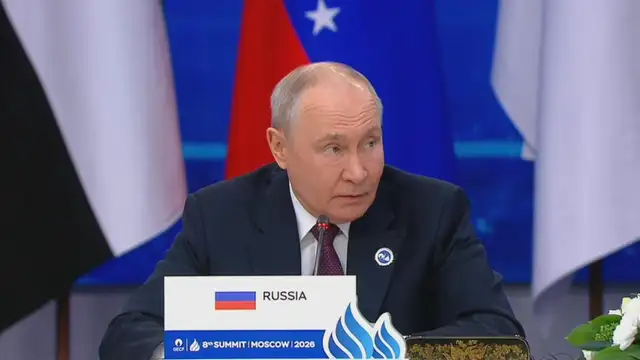
‘Is that fair?’ - Putin challenges EU over green energy demands on developing nations
Nvidia placed Megaspeed on its 'no sell' list in June 2025, the same month US investigators inspected the company's premises and interviewed Alice Huang.
Megaspeed has maintained that its operations are lawful and said it had appointed external lawyers to conduct an internal investigation.
Asked about the investigation, Guo reiterated Beijing's position on American semiconductor restrictions.
"I just answered a question relating to this subject. I need to stress that China’s position on US chip exports to China is consistent," Guo said when asked about the Megaspeed investigation.
The new licensing requirements could affect data centre operators in the five designated countries. However, the rules include a conditional exemption for companies headquartered in the United States or ultimately owned by US-headquartered companies.
During the briefing, Guo was also asked about President Donald Trump's suggestion that he "may" speak with North Korean leader Kim Jong Un during his visit to China.
The spokesperson said he did "not have information on that."
Trump arrived in Manila for meetings with Quad and Southeast Asian leaders before his scheduled visit to Shenzhen for the Asia-Pacific Economic Cooperation summit.
RECOMMENDED FOR YOU

Gambia Roundup: ECOWAS Court orders exhumation, Darboe pledges justice reforms and rural women demand electricity
The US president is also expected to hold talks with Chinese President Xi Jinping and Russian President Vladimir Putin.
This story is written and edited by the Global South World team, you can contact us here.