Chinese cities dominate electric motorcycle adoption as urban bans accelerate transition
Cities in China are leading a rapid global shift towards electric motorcycles, driven by strict urban regulations and large-scale infrastructure, with adoption rates nearing full electrification in some major metropolitan areas.
Cities in China are leading a rapid global shift towards electric motorcycles, driven by strict urban regulations and large-scale infrastructure, with adoption rates nearing full electrification in some major metropolitan areas.
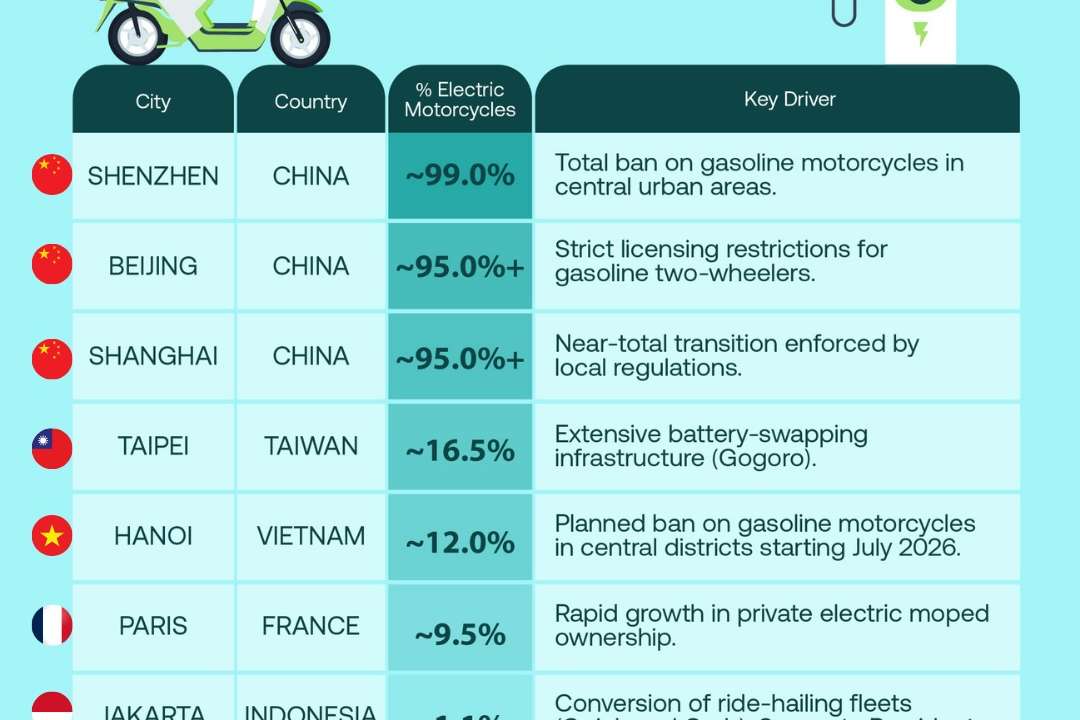
New data shows Shenzhen at the forefront, with nearly 99% of motorcycles now electric, followed closely by Beijing and Shanghai, where electric two-wheelers account for more than 95% of the total.
Shenzhen’s near-total transition has been largely enforced through a ban on gasoline-powered motorcycles in central districts, a policy approach replicated in several Chinese cities.
Beijing has taken a similar route, imposing strict licensing limits on petrol-powered two-wheelers. At the same time, Shanghai has relied on local regulations to drive a near-complete shift to electric alternatives.
RECOMMENDED FOR YOU

More than 6 billion people are now online as global internet access reaches new high
China’s broader push has made it the world’s largest market for electric two-wheelers, with more than 300 million electric bikes and scooters in use nationwide, according to the International Energy Agency (IEA).
Beyond regulation, infrastructure has played a decisive role.
In Taiwan’s capital, Taipei, electric motorcycles account for around 16.5% of the fleet, supported by an extensive battery-swapping network led by Gogoro. The system allows riders to exchange depleted batteries in seconds, addressing one of the key barriers to adoption: charging time.
In Southeast Asia, where motorcycles dominate daily transport, the shift is gaining momentum but remains uneven.
Hanoi reports around 12% electric motorcycle adoption, with authorities planning to ban petrol-powered bikes in central districts from July 2026 as part of efforts to tackle air pollution.
Indonesia’s capital Jakarta lags at roughly 1.1%, though policymakers are pushing conversion programmes for ride-hailing fleets such as Gojek and Grab. The government has also outlined ambitions to transition fully to electric motorcycles in the coming decades.
European cities are moving at a slower pace.
Paris, with about 9.5% electric motorcycle adoption, has seen growth driven mainly by private ownership of electric mopeds, supported by incentives and low-emission zones aimed at reducing urban pollution.
RECOMMENDED FOR YOU
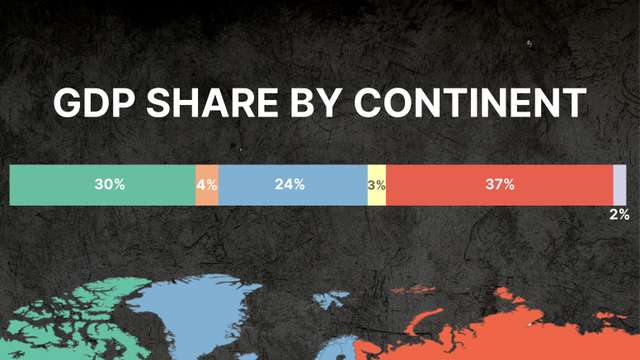
Asia produces the largest share of global GDP